
- Print Business Cards in Sugar Land – Same Day Service
- Copying Services
- Document Printing, Finishing & Lamination in Sugar Land
- Flyers
- Print Banner in Sugar Land | Same-Day Banner Printing Near Me
- Graphic Design
- Photo Printing
- Postcard Printing
- Document Printing
- EDDM Full Service Postcards
- FotoZoomer Large Format Printing


What Is Sublimation Printing: A Complete 2026 Guide
Businessmailboutique
11645 S. Hwy 6
Sugar land, Texas 77498 United States (US)
Email: info@businessmailboutique.com
You’re probably here because you’ve seen a custom mug, shirt, or plaque with a print that looks like it’s part of the item, not glued on top of it. You run your finger across the surface, and it feels smooth. No raised ink. No sticker edge. No peeling corner. For a small business owner in Sugar Land, that usually leads to the same question: what is sublimation printing, and is it something I should use for my products?
That question comes up a lot in a print shop. Someone wants staff mugs, event giveaways, team jerseys, photo gifts, or branded drinkware. They’ve read a few online guides, but most of those stop at the basic definition. They don’t really help you decide whether sublimation makes sense for your business, whether a DIY setup is realistic, or when it’s smarter to let a local shop handle it.
At its simplest, sublimation printing is a heat-transfer process that puts color into a material instead of leaving color sitting on top of it. That’s why the finish looks clean and lasts so well on the right products. The process has roots in France in the 1950s, with 1957 often identified as the milestone year and Noël de Plasse named as the developer who helped turn the idea into a practical printing method through Sublistatis SA, according to this history of sublimation printing.
For small businesses, that history matters less than the practical takeaway. Sublimation is excellent for certain products, limited on others, and often misunderstood. Once you understand where it shines, it gets much easier to choose the right printing method for mugs, shirts, signs, and promotional items.
Table of Contents
- Introduction What Is Sublimation Printing
- How Sublimation Printing Works The Science Behind the Magic
- The Sublimation Toolkit Equipment and Materials You Need
- Advantages and Limitations of Sublimation Printing
- Common Sublimation Applications From Mugs to Signage
- Sublimation Versus Other Customization Methods
- Your Guide to Professional Sublimation Services
Introduction What Is Sublimation Printing
A customer brings in a photo mug they got as a gift and asks, “Can you make more of these for my office?” That’s usually the easiest way to explain sublimation. The image on that mug doesn’t feel like a decal because, in a real sense, it isn’t one.
Sublimation printing uses special ink, transfer paper, heat, and pressure to move a design into a compatible surface. On the right blank, the color becomes part of the product rather than a layer sitting on top. That’s why a sublimated mug, ornament, metal panel, or polyester shirt can look so crisp and feel so smooth.
People often think of it as a “shirt printing” method, but that’s too narrow. It’s used on apparel, mugs, plaques, key chains, coated metal, and many other custom items. It’s also not brand new. The process developed from mid-century research that later became a commercial printing method, which helps explain why it’s such a mature and reliable option today on polyester and polymer-coated products.
Smooth finish is usually the first clue you’re looking at a sublimated item.
The part that confuses most buyers is simple. Sublimation is powerful, but it’s not universal. It doesn’t work on every shirt, every mug, or every surface. The blank itself matters just as much as the artwork.
That’s where small business decisions get real. If you’re ordering branded products for a school event, a realtor closing gift, a gym, or a local festival booth in Sugar Land, the question isn’t just “Can this be printed?” The better question is “Is this the right material for sublimation, or should I use a different method?”
How Sublimation Printing Works The Science Behind the Magic
A good way to understand sublimation is to follow what happens during one real order. Say a Sugar Land bakery wants logo mugs for customer giveaways. The logo is printed onto special transfer paper first, then pressed onto a coated mug with heat and pressure. What looks like a printed sheet at the start becomes part of the mug’s surface by the end.

A simple way to understand the ink change
With vinyl or screen printing, the design sits on top of the item like a layer. With sublimation, the dye moves into the coating or polyester fibers. It works more like staining wood than placing a sticker on glass.
WhiteWall explains that sublimation printing uses transfer paper, heat, and pressure to move sublimation dye into a receptive substrate. Under the press, the dye changes state and bonds within the material instead of resting on the surface, which helps explain the clean detail and long-lasting finish described in WhiteWall’s sublimation guide.
If you want a plain-language explanation of why that leads to permanent print results, focus on the word infusion. The color is not just placed onto the product. It becomes part of it.
The three-step process in plain English
For a small business owner, the process is easier to follow as three simple actions:
- Print the artwork onto sublimation transfer paper using sublimation ink.
- Press the transfer onto the product with controlled heat, pressure, and time.
- Let the dye bond with the polyester surface or polymer coating as the item cools.
Practical rule: If the blank cannot accept sublimation dye, the print quality will fall apart no matter how sharp the design looks on your screen.
That single rule answers a lot of common questions. Why can one mug print beautifully while another fades or peels? Why does one shirt look bright while another looks washed out? The difference is usually the blank, not the logo file.
That matters if you are deciding whether to do this in-house or hand it to a local shop. The science sounds simple, but consistent production depends on matching the right artwork, the right press settings, and the right blank. For a one-off craft project, trial and error may be fine. For school spirit wear, realtor gifts, staff polos, or event merch in Sugar Land, a bad batch costs time, money, and sometimes the customer relationship too.
One detail surprises many first-time buyers. The transfer sheet often looks dull before pressing. That is normal. The color develops fully during the heat cycle, when the dye moves into the product.
A short visual helps make the process click:
The Sublimation Toolkit Equipment and Materials You Need
If you’re thinking about doing this in-house, the shopping list is straightforward. Getting consistent results is the harder part.
What each tool actually does
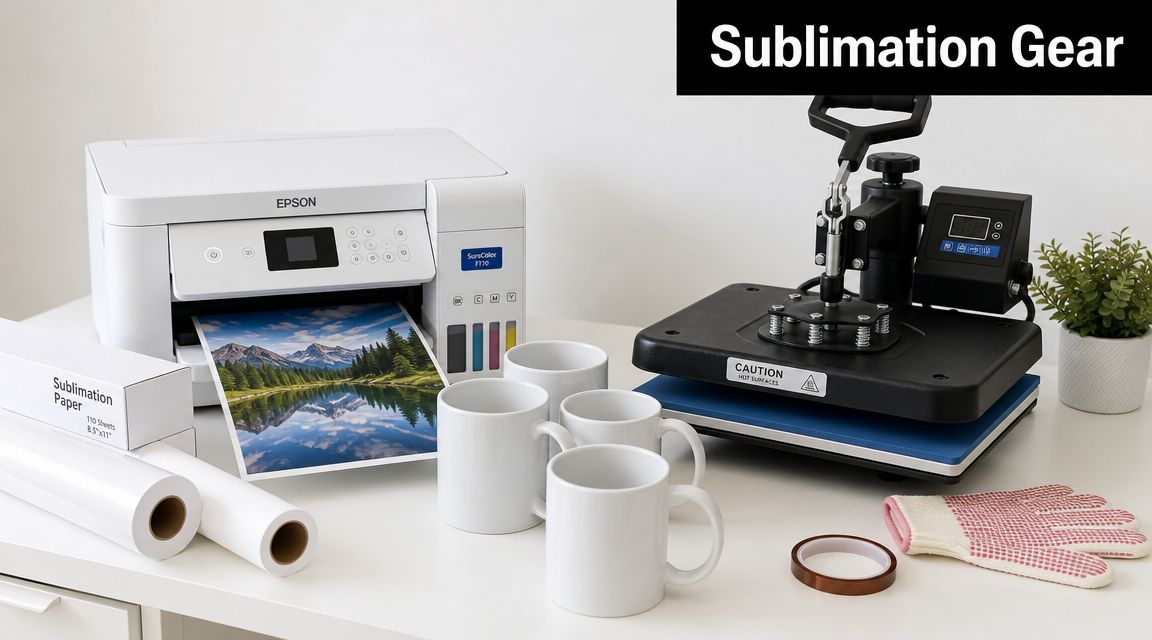
A sublimation setup usually includes these core pieces:
- Printer: This prints your design onto transfer paper using sublimation ink. A standard office printer with regular ink won’t do the job.
- Sublimation ink: This is the dye that changes state during pressing and bonds with the compatible surface.
- Transfer paper: This holds the printed design until the press cycle moves the dye into the product.
- Heat press: This applies the pressure and heat needed for the transfer.
- Blanks: These are the items being decorated, such as mugs, shirts, plaques, key chains, or coated metal panels.
- Color workflow tools: Shops often use RIP software and controlled color settings because the final appearance depends on the substrate, coating, and how transparent sublimation inks behave.
Many new users focus almost entirely on the printer. That’s understandable, but it’s incomplete. The blank and the press matter just as much.
For apparel projects that don’t fit sublimation’s material rules, it helps to understand alternatives like custom T-shirt printing options before buying equipment you may not use for the bulk of your work.
Converted printer or dedicated sublimation printer
This is one of the most common DIY questions. Can you convert a printer, or should you buy one built for sublimation from the start?
Some beginner guides explain that certain Epson EcoTank-type printers can be converted with sublimation ink. They also note that quality depends heavily on temperature, paper, material, and pressing conditions. Perfect Colours adds an important point in its sublimation printer overview: sublimation quality isn’t just about the printer. It’s highly sensitive to coating quality, press calibration, and color management.
That’s the tradeoff.
- A converted printer can lower the barrier to entry for a small shop or hobby setup.
- A dedicated sublimation printer usually makes more sense when consistency matters more than experimentation.
- Either way, you still need the rest of the workflow dialed in.
A good print starts before the press closes. It starts with the right blank, the right paper, and a press that’s actually running the temperature you think it is.
One local option for custom product work is Business Mail Boutique LLC, which offers sublimation printing services as part of its print shop lineup in Sugar Land. That kind of service can make sense when you need finished items without maintaining your own equipment.
Advantages and Limitations of Sublimation Printing
Sublimation has a strong reputation for good reason. It can produce beautiful custom products. But it also has some strict rules, and most bad experiences happen when someone ignores those rules.

Where sublimation really shines
When sublimation is matched with the right product, it offers a combination that’s hard to beat.
- Smooth finish: There’s no heavy layer of ink sitting on top of the item.
- Strong durability: The color is part of the material, so you don’t get the same peeling or cracking concerns people associate with surface-applied decoration.
- Sharp detail: Fine lines and photo-style graphics can reproduce cleanly.
- Full-color flexibility: This is especially useful for logos, gradients, patterns, and photographic designs.
- Useful product range: It works across many coated and polyester-based products, from wearables to rigid gift items.
For a small business, that means sublimation can be a great fit for team jerseys, branded mugs, office gifts, promotional drinkware, photo panels, and event merchandise. It’s also appealing when you want a polished retail look without a thick printed feel.
Where people get tripped up
This is the part many online guides gloss over. Printful notes that the process is primarily for light-colored polyester-rich fabrics and coated hard goods, not cotton or uncoated surfaces. The same guide points out that many buyers assume it works on any mug or shirt, when the key decision is about substrate chemistry, and that blank selection becomes the true bottleneck for quality, cost, and failure rate in Printful’s sublimation explanation.
That one point clears up most confusion.
Here are the limitations that matter most in practice:
| Issue | What it means for you |
|---|---|
| Cotton shirts | Standard sublimation isn’t the right choice for them |
| Dark garments | The process works best on light-colored items |
| Uncoated mugs or metal | The dye won’t properly bond without the right receptive coating |
| Poor-quality blanks | Even a good design can produce disappointing results |
| Inconsistent setup | Press temperature, pressure, and color handling affect the final look |
The mistake isn’t choosing sublimation. The mistake is choosing sublimation for the wrong blank.
A lot of frustration comes from trying to force one process onto every product. If you sell natural-fiber apparel, dark fashion garments, or items without a proper coating, another method will usually be the better route.
For a small business owner, this is good news, not bad news. It means the decision gets simpler once you stop treating sublimation like a universal answer.
Common Sublimation Applications From Mugs to Signage
A Sugar Land business owner usually asks a practical question here: what can I sell, gift, or display with sublimation that looks polished enough to represent my brand?
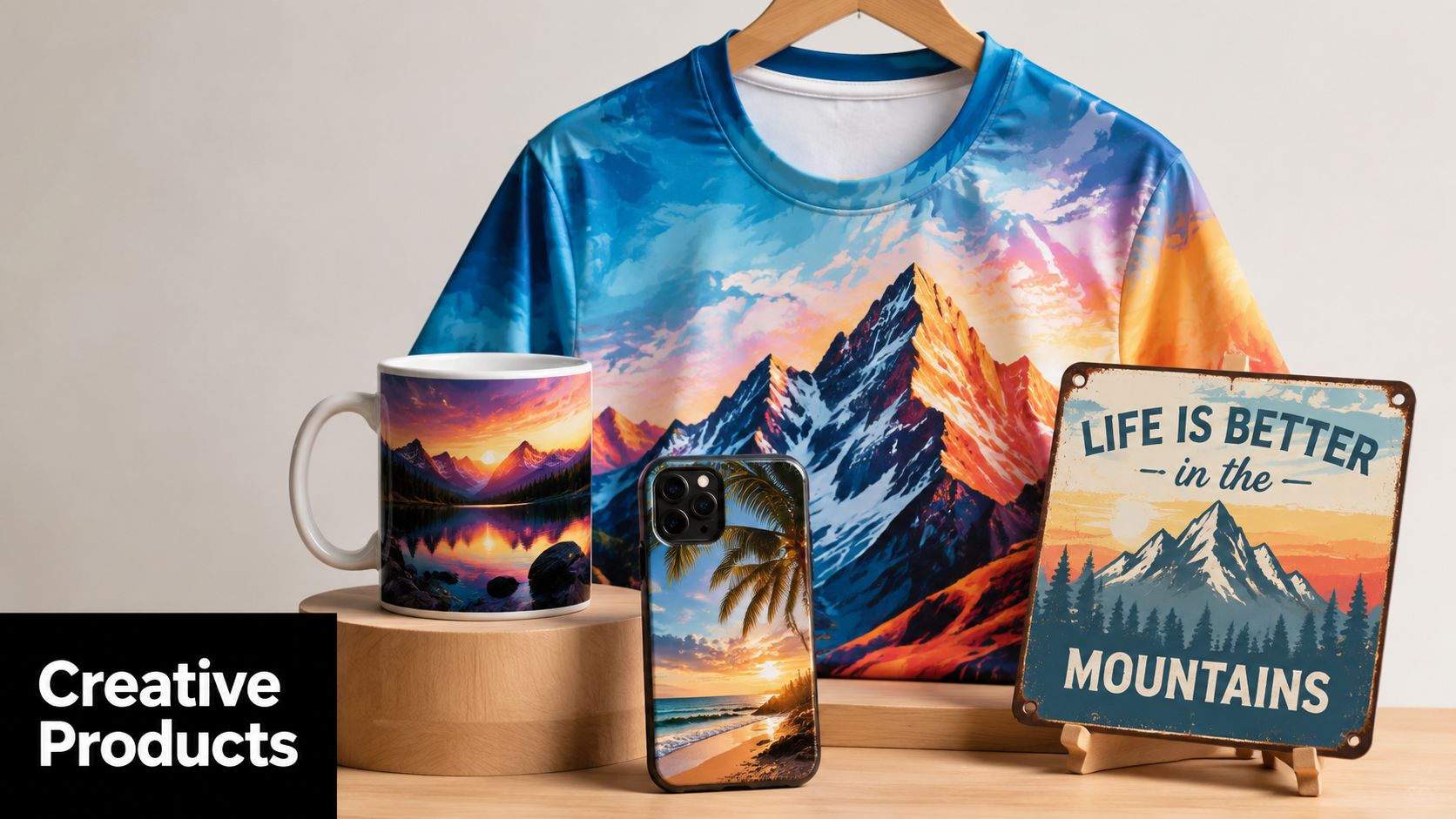
The short answer is products people use and keep. Sublimation is often a strong fit for branded drinkware, polyester apparel, photo gifts, and selected display pieces. For a small business, that matters because these are the items that can turn a logo or design into something useful instead of something that gets tossed in a drawer.
Products that make sense for small businesses
Some products are easier wins than others.
- Drinkware: Mugs and tumblers are popular for client gifts, staff appreciation, school events, and retail merch.
- Polyester apparel: Performance shirts, team jerseys, and spirit wear are some of the most natural uses because the process handles bright, detailed graphics well on the right fabric.
- Desk and office items: Mousepads, name plates, and small branded accessories can give a front desk or office a more finished look without requiring a large order.
- Photo products: Plaques, ornaments, and coated panels are a good match for family keepsakes, awards, and fundraiser items.
- Display pieces: Coated metal signs and similar hard goods can work well for branded décor, wayfinding, and short-run promotional displays.
That range is one reason small companies notice sublimation early. You can test product ideas in small batches instead of ordering a huge run and hoping it sells.
Why these applications work in the real world
Sublimation tends to shine on products where color, detail, and a clean finished surface matter. A mug with a full-color logo feels more giftable than a plain giveaway. A youth sports jersey needs bright graphics that look built into the shirt. A photo panel has to look sharp up close, not just acceptable from across the room.
A good comparison is paint versus stain on wood. Some decoration methods sit more obviously on top of the item. Sublimation becomes part of the surface on compatible products, which is why mugs, performance apparel, and photo items often look so crisp.
For Sugar Land businesses, the business question is usually not “Can sublimation print on a lot of things?” The better question is “Which of those things make sense for my customers, my budget, and my turnaround time?”
A realtor might want a small batch of closing gifts. A school booster club may need fundraiser merch without a large minimum. A café may want souvenir mugs and seasonal items. Those are real buying situations where DIY can sound appealing at first, but blank selection, color setup, and pressing consistency often decide whether the final product looks sellable.
Some projects also outgrow sublimation fast. If you need oversized event graphics, storefront displays, or large promotional pieces, wide-format printing services for signage and displays may be the better fit for the job.
A good sublimation product feels finished and intentional. That matters when the item carries your business name.
For many small businesses, that is the main appeal. You can create short-run custom products that look professional, test new ideas without heavy inventory risk, and choose local production help when you want fewer surprises.
Sublimation Versus Other Customization Methods
The best printing method depends on the product, not the hype. Sublimation is excellent in its lane. Outside that lane, other methods usually make more sense.
How it compares in real buying decisions
If you want a polyester team jersey with bright all-over color, sublimation is often the obvious fit. If you want a cotton staff tee, you’re probably looking at DTG or another apparel method. If you want a simple one-color name on a shirt, HTV may be perfectly fine. If you need a large run of matching shirts, screen printing often enters the conversation.
That matters for promotional planning too. Before you choose the decoration method, it helps to decide what kind of promotional items to give away and what material those items are made from.
The most practical question isn’t “Which print method is best?” It’s “Which method fits this product, this artwork, and this order?”
Quick comparison table
| Method | Best For | Fabric/Material | Feel on Fabric | Durability |
|---|---|---|---|---|
| Sublimation | Polyester apparel, coated mugs, photo products, hard goods | Polyester-rich fabrics and polymer-coated items | Very smooth because the dye goes into the material | Strong on compatible blanks |
| DTG | Detailed graphics on cotton apparel | Often chosen for cotton garments | Softer than vinyl, but still a printed layer | Good when matched to the right garment and care |
| HTV | Names, numbers, simple logos, short-run customization | Common on many apparel types | Noticeable layer on top of fabric | Can hold up well, but it remains a surface application |
| Screen Printing | Larger apparel runs with repeat designs | Common across many garment types | Ink sits on the garment surface | Strong when properly produced |
A few rules help make the comparison easier:
- Choose sublimation when the blank is polyester or polymer-coated and you want a clean, embedded look.
- Choose DTG when the job centers on cotton apparel and full-color shirt graphics.
- Choose HTV for simple personalization, especially names and numbers.
- Choose screen printing when you need repeat apparel production at scale and the artwork suits that workflow.
No method wins every category. Good print buying starts with material compatibility and use case, not with the machine name.
Your Guide to Professional Sublimation Services
For some businesses, DIY makes sense. If you’re producing a steady stream of compatible products, have time to learn the process, and don’t mind testing blanks, a small in-house setup can work.
When DIY makes sense and when it doesn’t
The challenge is consistency. Dye-sublimation typically runs in a high-heat range of around 350°F to 450°F, and insufficient heat can prevent full dye-to-gas conversion while excessive heat can distort the substrate or cause color shifts. Professional shops use calibrated equipment for consistency, as explained in this dye-sublimation temperature overview.
That’s why a local service can save time and waste when the order matters.
DIY often fits experimentation, prototypes, and low-risk internal projects. Professional production makes more sense when you need repeatable color, clean placement, dependable blanks, and fewer ruined items.
If you’re also comparing apparel methods beyond sublimation, these DTF printing insights from Dirt Cheap Headwear are useful because they help clarify when a different transfer process may fit your product mix better.
Questions to ask a local print shop
Before placing an order, ask direct questions:
- Can you provide a proof? This helps catch layout issues before production.
- What blanks do you use? The substrate quality affects the finished result.
- Is this item suitable for sublimation? A good shop should answer clearly, not vaguely.
- What file format do you prefer? Clean artwork prevents avoidable problems.
- Have you produced this type of item before? Experience matters on mugs, plaques, apparel, and shaped products.
Bring your logo in a high-quality file if possible. If you have brand colors, mention them early. And if the item must match an existing product, say that up front.
If you need custom mugs, plaques, key chains, signage, or other branded products in Sugar Land, Business Mail Boutique LLC offers printing and sublimation services alongside shipping, mailbox, and business support services, which can be helpful when you want one local place to handle both production and pickup.

Related posts

Custom Memorial Glasses Engraved in Three Hours in Sugar Land
When a customer needed eight personalized glasses for a memorial, Business Mail Boutique completed the engraving or...

Custom Martini Glass Engraving in Sugar Land, TX
Custom Logo Engraving on Martini Glasses in Sugar Land, Texas.
Business Mail Boutique recently completed a beautiful custom engravin...

Custom Engraved Wine Glasses for a Golf Club Event in Sugar Land, TX
Custom Engraved Wine Glasses for a Golf Club Event in Sugar Land.
Custom wine glass engraving in Sugar Land, TX at Business Mail Bouti...