- Print Business Cards in Sugar Land – Same Day Service
- Copying Services
- Document Printing, Finishing & Lamination in Sugar Land
- Flyers
- Print Banner in Sugar Land | Same-Day Banner Printing Near Me
- Graphic Design
- Photo Printing
- Postcard Printing
- Document Printing
- EDDM Full Service Postcards
- FotoZoomer Large Format Printing


Businessmailboutique
11645 S. Hwy 6
Sugar land, Texas 77498 United States (US)
Email: info@businessmailboutique.com
Promotional Items for Give Away
You’re probably seeing branded tumblers at chamber breakfasts, logo tote bags at weekend markets, and custom pens on counters all over Sugar Land. That usually leads to the same question: should your business be doing promotional items to give away too, or is it just more swag that ends up in a drawer?
The answer depends on the item, the audience, and the way you distribute it. A giveaway can be a wasted expense. It can also be one of the few marketing pieces that stays in someone’s home, car, desk, or bag long after an ad impression disappears. For a local business, that staying power matters because people often buy from the name they remember first.
Table of Contents
More Than Just Swag Why Giveaways Work
Promotional products keep working after the handoff. That’s the significant difference between a giveaway and a fleeting ad placement. The U.S. promotional products market is projected to reach $28.6 billion in 2026, and 87% of people keep promotional products for more than a year, according to industry statistics compiled here.
That matters for a Sugar Land business because local marketing usually isn’t about reaching everyone. It’s about staying visible to the right people until they need you. A branded mug in an office break room or a tote bag that rides along to H-E-B keeps your name in circulation without you paying again for each impression.
The mistake is treating all giveaways as equal. They’re not. A practical item acts like a small, portable reminder of your business. A flimsy novelty item acts like clutter.
Practical rule: If the item doesn’t solve a small everyday need, it probably won’t earn repeat attention.
That’s why giveaways work best when you stop thinking in terms of “free stuff” and start thinking in terms of retention. A useful item can sit on a desk, in a vehicle, at a reception counter, or in a kitchen for months. In local markets, repeated exposure builds familiarity, and familiarity often drives the call, visit, or referral.
A good giveaway also feels more personal than a banner ad. Someone physically takes it, keeps it, and uses it. That interaction is simple, but it’s powerful. If you choose well, the item becomes part of the customer’s routine instead of part of your leftover inventory.
Choosing Items That Connect With Your Audience
The fastest way to waste money is to pick something because it looks interesting in a catalog. The better approach is to ask one question first: what will this person use next week?
Start with daily use
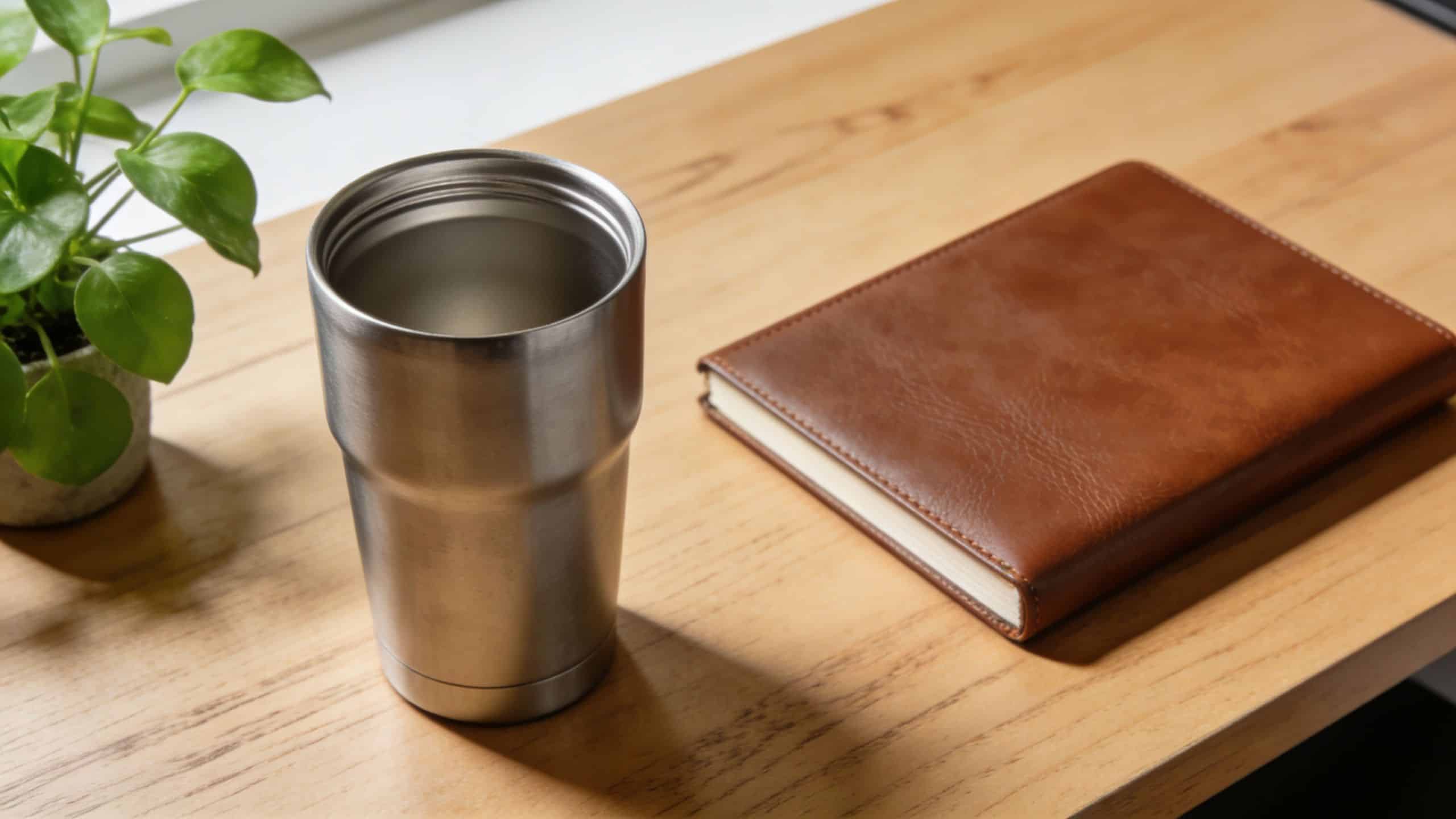
Usefulness beats novelty. 69% of people say they’d pick up a promotional item if it was useful, and high-utility items can generate strong lifetime visibility. A bag can generate 3,300 impressions, a writing utensil 3,000, and outerwear 6,100, based on consumer survey data and impression estimates here.
That tells you where to start:
-
Desk items: pens, notebooks, mouse pads, sticky notes
-
Carry items: tote bags, backpacks, keychains
-
Drinkware: mugs, tumblers, water bottles
-
Wearables: hats, polos, lightweight outerwear
If your customers use the item in public or in shared spaces, your logo gets repeated visibility. If they use it at home or at work every day, you get repeated recall.
A few local examples make the point clearer:
-
For a realtor: a laser-engraved keychain feels tied to the moment of getting a new home.
-
For a coffee shop: mugs and tumblers fit the customer’s existing habit.
-
For a contractor or service company: hats, writing instruments, and durable drinkware fit both staff use and customer giveaways.
For businesses considering wearable merch, custom hats with your logo in Sugar Land can make sense when the audience is likely to wear the item repeatedly rather than treat it as event swag.
Match the item to the moment
The right promotional item changes with the setting. What works at a high-traffic event often fails as a client thank-you gift.
Use this quick filter:
-
High-volume event
Choose low-cost, easy-to-carry items like pens, stickers, notepads, or tote bags. -
Relationship building
Pick fewer, better items such as a metal tumbler, engraved notebook, or quality apparel piece. -
Welcome or onboarding kit
Combine practical pieces. A notebook, pen, and mug work better together than one random novelty product.
Cheap only works when it’s still useful. Cheap and forgettable is expensive.
Personalization can also improve ordinary items. A standard notebook becomes more memorable with a clean logo treatment. A simple metal keychain feels more substantial when it’s laser engraved instead of printed. That’s often a smarter move than chasing trend-driven products that look exciting but don’t stay in rotation.
Planning Your Budget and Quantity
Most owners start with unit price. That’s understandable, but it’s the wrong first number. A giveaway program should be judged by response, retention, and referral value, not by whether you saved a few cents per item.
Think in outcomes not unit cost
One analysis found promotional products delivered an average ROI of $6.41 for every $1 spent, and they can generate 500% more customer referrals than other forms of advertising, according to compiled promotional product performance statistics.
That doesn’t mean every order will perform that way. It does mean giveaways deserve the same planning discipline you’d give direct mail, paid ads, or signage.
A practical budgeting lens looks like this:
-
Low-cost item, broad reach
Good for fairs, expos, community tables, school partnerships, and walk-in traffic. -
Mid-tier item, targeted use
Better for quote follow-ups, new client kits, and appointment-based businesses. -
Premium item, limited audience
Best for referral partners, top clients, closings, milestone gifts, and account retention.
When budget is tight, don’t automatically buy the cheapest option. A weak item can disappear in a day. A slightly better item can stay visible for months and bring more value from the same audience.
Set quantity by distribution plan
Quantity should come from your plan, not from the supplier’s bulk discount alone.
For example:
-
Trade booth or festival table: estimate your likely handouts, then keep a small cushion so you don’t run out early.
-
Customer appreciation campaign: order to your active client list, not your entire contact database.
-
Front-counter giveaway: start smaller, observe pickup rate, then reorder the winners.
A simple rule works well for first campaigns. Order enough to support one channel properly. Don’t split a modest budget across five item types and three distribution ideas. That usually leaves you with too little volume to learn what worked.
Better to run one focused giveaway with clear follow-through than scatter a mixed box of items across random moments.
Designing and Customizing Your Giveaways
Good customization does more than place a logo on an object. It changes how the recipient reads your business. Clean design says you pay attention. Poor execution says you rushed it.
What good customization actually does
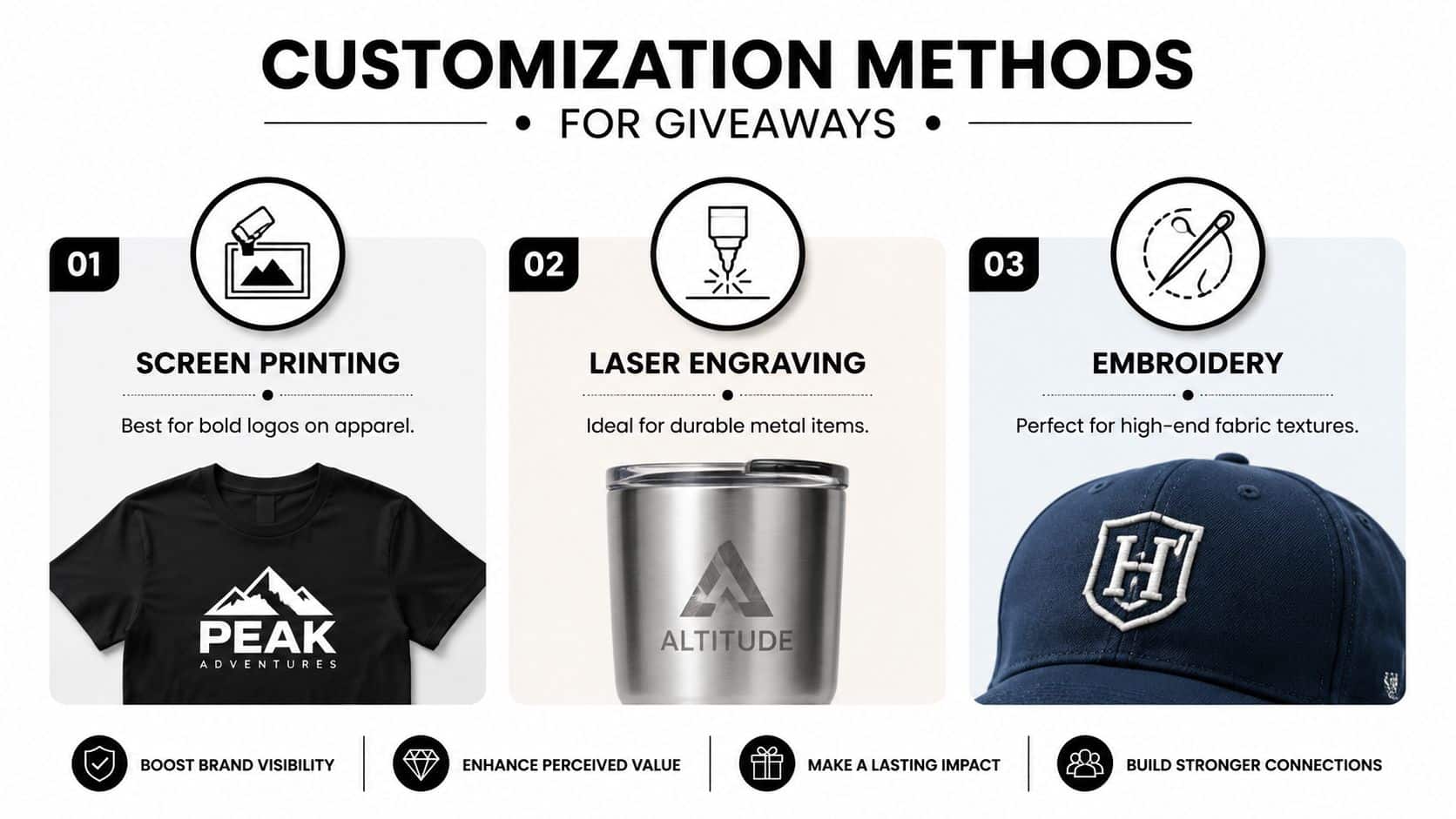
Quality matters because people connect the item to the company behind it. 72% of customers believe the quality of a promotional product reflects the company’s reputation, based on PPAI-reported findings.
That’s why design choices shouldn’t be an afterthought. If the imprint is tiny, hard to read, or fighting with the material, the item won’t do its job. If the logo is clean, appropriately sized, and matched to the surface, even a simple product can look polished.
For a local business, this usually means keeping the message tight:
-
business name
-
one clear logo
-
maybe a phone number or website if the item size supports it
Don’t cram every service onto a pen. Don’t use tiny text on textured fabric. Don’t place a detailed full-color logo on a product that needs a cleaner one-color mark.
Choosing your imprint method
Different products need different decoration methods. That’s where many first-time orders go sideways. The cheapest print method isn’t always the right one for the item.
| Method | Best For | Look & Feel | Example from Business Mail Boutique |
|---|---|---|---|
| Screen Printing | T-shirts, tote bags, basic promotional apparel | Bold, simple, high-visibility branding | Logo tote bags or event shirts |
| Laser Engraving | Metal, wood, coated drinkware, keychains, plaques | Permanent, precise, upscale | Engraved key chains or metal tumblers |
| Embroidery | Hats, polos, jackets, fabric bags | Textured, durable, premium | Logo hats or stitched polos |
If you’re comparing print options across signs, wearables, engraved items, and event materials, this Sugar Land print shop guide for businesses gives a useful overview of common production categories.
A few trade-offs matter in practice:
-
Screen printing works well for bold logos and volume orders.
-
Laser engraving gives metal and wood items a more permanent, gift-worthy feel.
-
Embroidery adds texture and durability on fabric, but very small details may need simplification.
-
Sublimation is useful when you need full-color graphics on compatible surfaces like mugs or plaques.
Pick the method that fits the product, not the one that sounds most impressive.
Managing Production and Shipping Timelines
A strong idea can still fail if the boxes arrive after the event. Timing problems usually come from late approvals, artwork issues, or assuming every item can be turned around at the same speed.
Build your schedule backward
Start with the date you need the items in hand. Then back up from there.
A realistic order flow usually includes:
-
Item selection
You choose the product, quantity, and imprint method. -
Artwork setup
The logo file gets sized and adjusted for the product. -
Proof approval
You review placement, spelling, colors, and layout. -
Production
The item gets printed, engraved, embroidered, or sublimated. -
Delivery or pickup
The final order gets shipped or collected.
Proof approval is where delays often happen. If three people need to approve the logo placement, build that into your schedule early. If the event is fixed, treat your approval deadline as fixed too.
Order date matters less than approval date. Many jobs stall because the proof sits untouched.
Where local production helps
Online vendors can work well for commodity items with long lead times and simple art. But if your order includes multiple pieces, last-minute changes, or a hard event date, local coordination often saves trouble.
That’s especially true when your campaign mixes promotional items with printed support pieces like flyers, signs, or handouts. In Sugar Land, a local center can also simplify the back end. PackageHub shipping and business services in Sugar Land covers shipping and business-service needs that often come up around event preparation and client distribution.
For first campaigns, keep the timeline simple. Pick one item. Finalize the logo early. Approve the proof quickly. Then leave yourself buffer time for any correction, shipping delay, or packaging issue.
Smart Distribution for Maximum Impact
Distribution is where a good product either performs or disappears. Handing out everything to everyone feels busy, but it usually lowers the value of the item and the quality of the interaction.
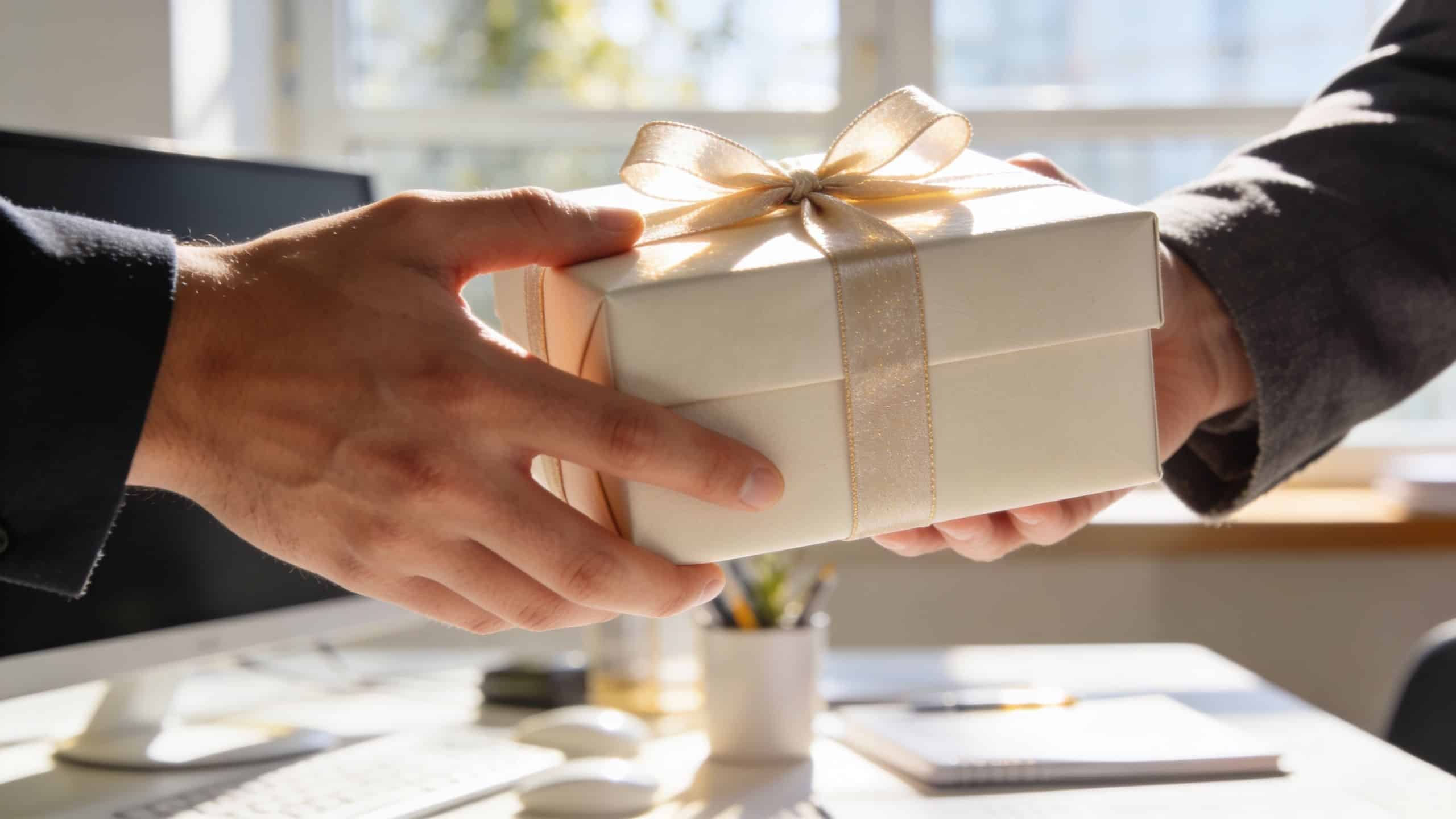
Put items where intent is already high
The best local campaigns give items to people who are already close to acting. That could be a new client, a warm lead, a referral partner, or a customer who just made a purchase.
A few examples work well in Sugar Land:
-
At the front counter: include a branded pen or notepad with each qualifying order.
-
For new clients: build a welcome packet with a business card, printed insert, and one practical giveaway.
-
For home-service businesses: leave behind a magnet, pen, or small branded item after the job is complete.
-
For community events: reserve your better items for conversations with qualified prospects instead of open grab bins.
-
For referral partners: deliver a more polished item such as a tumbler, engraved desk piece, or apparel item they’ll keep.
That last point matters. Not every giveaway should be distributed the same way. A tote bag for a public event and an engraved gift for a closing appointment can both work, but they serve different jobs.
The item also works harder when it’s paired with a specific ask. “Take one” is weak. “Here’s a notebook for your first appointment packet” gives the item a purpose and ties it to the relationship.
Use giveaways to support other marketing
Promotional items perform better when they’re part of a broader campaign. Adding a giveaway to the media mix can increase the effectiveness of other media by up to 44%, as noted in the earlier PPAI-cited research.
That means the item should reinforce something else you’re already doing:
-
direct mail campaign
-
event booth
-
seasonal promotion
-
grand opening
-
customer onboarding
-
referral outreach
A simple example is a mailed offer followed by an in-store pickup item. Another is a local event table supported by matching flyers, signs, and a useful giveaway tied to the event message.
Here’s a practical look at giveaway thinking in action:
The strongest promotional items to give away aren’t the flashiest. They’re the ones people keep, use, and associate with a business that seems organized and thoughtful. If you choose for utility, customize with restraint, and distribute with intention, giveaways stop being filler and start acting like durable local marketing assets.
If you want help turning a giveaway idea into something practical, Business Mail Boutique LLC in Sugar Land handles services that often sit around the same campaign, including print materials, laser engraving, sublimation, shipping support, and other business-service tasks that come up when you’re preparing for an event, mailing, or client handoff.

Related posts
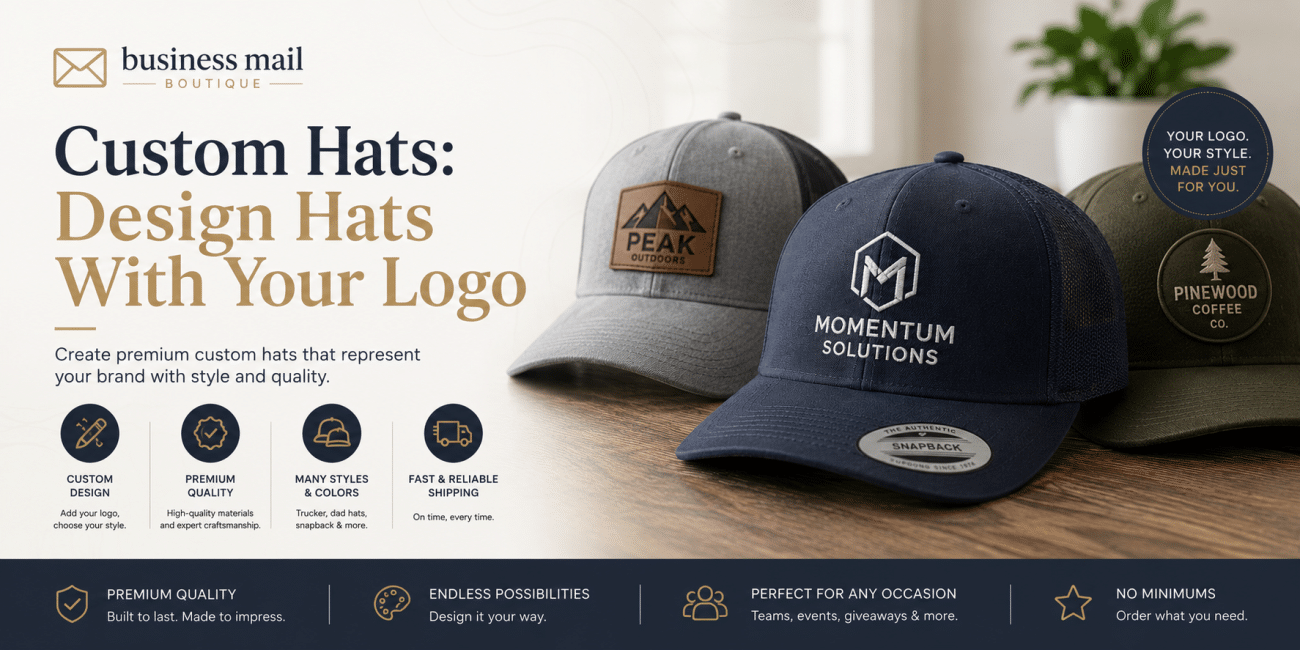
Custom Hats with Logo: A Small Business Guide for 2026
You're probably ordering custom hats with logo for one of three reasons. An event is coming up fast, your team needs to look more put-t...