- Print Business Cards in Sugar Land – Same Day Service
- Copying Services
- Document Printing, Finishing & Lamination in Sugar Land
- Flyers
- Print Banner in Sugar Land | Same-Day Banner Printing Near Me
- Graphic Design
- Photo Printing
- Postcard Printing
- Document Printing
- EDDM Full Service Postcards
- FotoZoomer Large Format Printing


Engraving near me
Businessmailboutique, 11645 S. Hwy 6, Sugar land, Texas 77498, United States (US) - Phone: 281-875-0161 Email: info@businessmailboutique.com
Route
Same Day Engraving
You’re probably here because you need something made personal, and you need it to feel intentional. Maybe it’s a retirement plaque, a branded mug for a client gift, a cutting board for a wedding, or a keychain that turns a small item into a keepsake. Customers don’t typically walk into a local shop asking about beam settings or cutter geometry. They ask a simpler question: “Can you engrave this, and will it look good?”
That’s the right question.
Good engraving isn’t just putting text on an object. It’s choosing the right process for the material, preparing the artwork so it reads clearly, and knowing where a design will succeed or fail before the machine ever starts. That’s what separates a clean, durable result from something that looks rushed, crooked, too faint, or poorly placed.
Table of Contents
- The Timeless Art of Personalization Through Engraving
- What Exactly Is Engraving
- Common Engraving Methods Explored
- Popular Materials and Gift Ideas for Engraving
- Preparing Your Artwork and Item for Engraving
- Your Local Engraving Expert in Sugar Land
The Timeless Art of Personalization Through Engraving
A lot of engraving jobs start the same way. Someone has the gift, the deadline is close, and the item feels almost right but not finished. A plain watch becomes a graduation gift with a date on the back. A simple plaque becomes an award someone will keep and appreciate. A mug goes from off-the-shelf to unmistakably theirs.
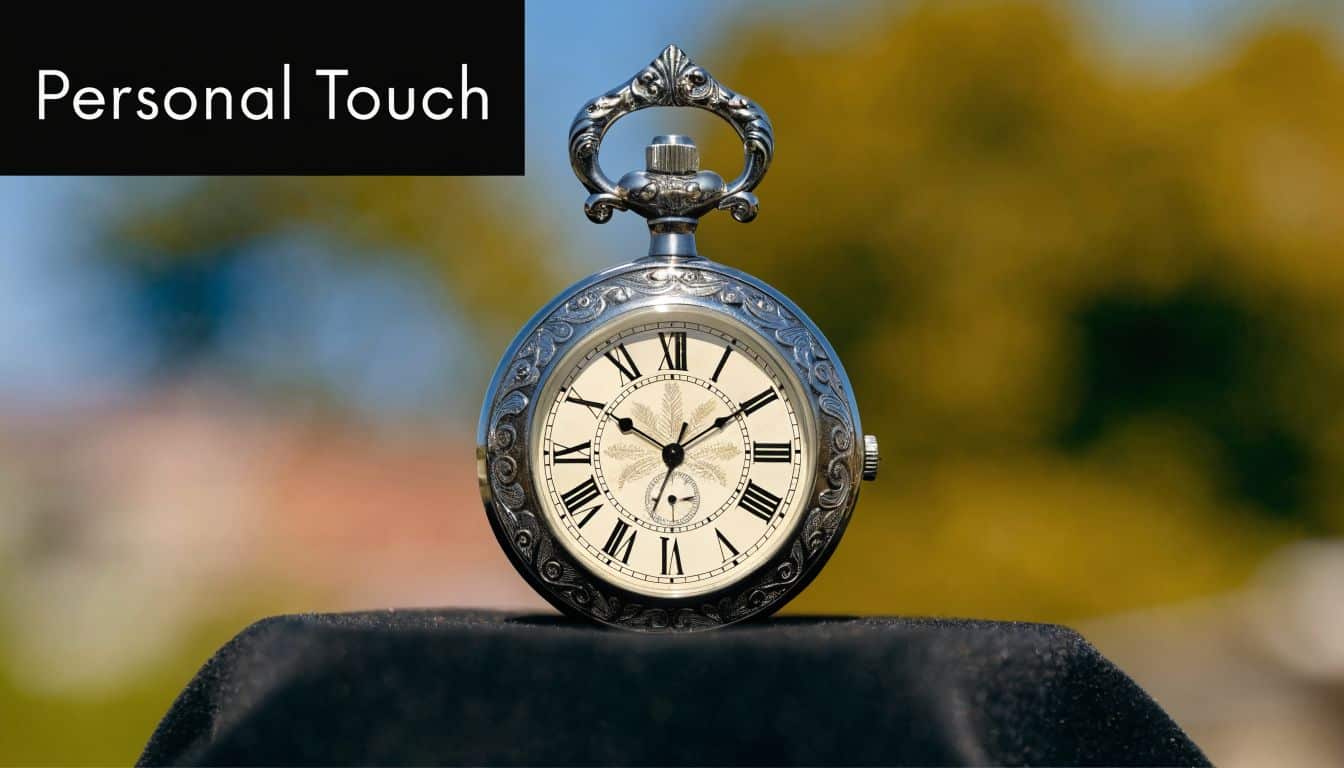
That lasting quality is a big reason engraving has stayed relevant for so long. Engraving is one of humanity’s oldest crafts, with archaeological evidence dating back approximately 540,000 years, and the earliest known engraving was discovered on a shell from Java, Indonesia. By around 3,000 years ago, engraving on jewelry had become an established art form, showing how long people have used carved marks to add meaning and permanence to objects, as noted in this history of engraving.
Why engraving still matters
Printed decoration has its place. Vinyl has its place. Ink marking has its place.
But engraving does something different. It becomes part of the object itself. The mark isn’t just sitting on top of the surface. It’s cut into it or burned into it, depending on the method and material. That’s why customers often choose engraving for gifts, recognition pieces, memorial items, and branded products that need to feel durable.
Practical rule: If the message matters, engraving usually feels more permanent than a surface-applied decoration.
A local shop can also help with the part customers don’t always see coming. Not every font engraves well. Not every logo scales down cleanly. Not every stainless tumbler, plaque plate, or glass piece takes the same method. The best results come from matching the item, the design, and the process from the start.
What Exactly Is Engraving
At its core, engraving is material removal. Something cuts, scratches, or vaporizes part of a surface to create letters, artwork, patterns, or texture. That’s the simplest definition, and it’s the one that matters most when you’re deciding what to engrave.
A useful way to think about it is this. If you carved initials into wood, you wouldn’t be applying a label. You’d be changing the material itself. Professional engraving works on that same principle, just with more control, cleaner tools, and better alignment.
What makes engraving different from printing
Printing places ink on a surface. Sublimation transfers a design into a coated layer. Adhesive vinyl sticks to the outside. Those methods can look sharp, but they’re not the same as engraving.
Engraving creates a mark through physical change. Depending on the process, that mark may be:
- Indented into the surface
- Etched or burned into a top layer
- Textured so you can feel it with your fingertips
- Color-shifted because the material reacts to heat or cutting
That difference matters in real use. A plaque nameplate that’s mechanically engraved has a classic, cut look. A laser-marked tumbler often shows strong contrast and crisp detail. A printed design may be the right choice for some products, but it won’t give the same tactile or carved effect.
What customers usually notice first
Individuals rarely question whether a mark came from a spinning cutter or a focused beam. They notice three things:
| What you notice | What it means |
|---|---|
| Depth | Is the design cut into the item or mostly surface-marked |
| Contrast | Does the engraving stand out clearly against the material |
| Finish quality | Are the edges clean, centered, and suited to the item |
Those three points affect the final feel more than technical jargon does.
A good engraving should look intentional from arm’s length and still look clean up close.
Why the item itself matters
The same name engraved on wood, brass, acrylic, and stainless steel will not look the same. The material decides a lot. Grain can change how wood takes detail. Metal can favor either deep cuts or high-contrast marking. Glass needs careful handling because customers usually want elegance, not a rough-looking patch.
That’s why the first shop question is often the right one: what exactly is the item made of? Once that’s clear, the rest gets easier.
Common Engraving Methods Explored
Customers usually run into two main engraving paths in a retail shop: laser engraving and mechanical engraving. Both can produce clean, professional work. They just do it in different ways, and the differences show up in feel, depth, material compatibility, and design style.
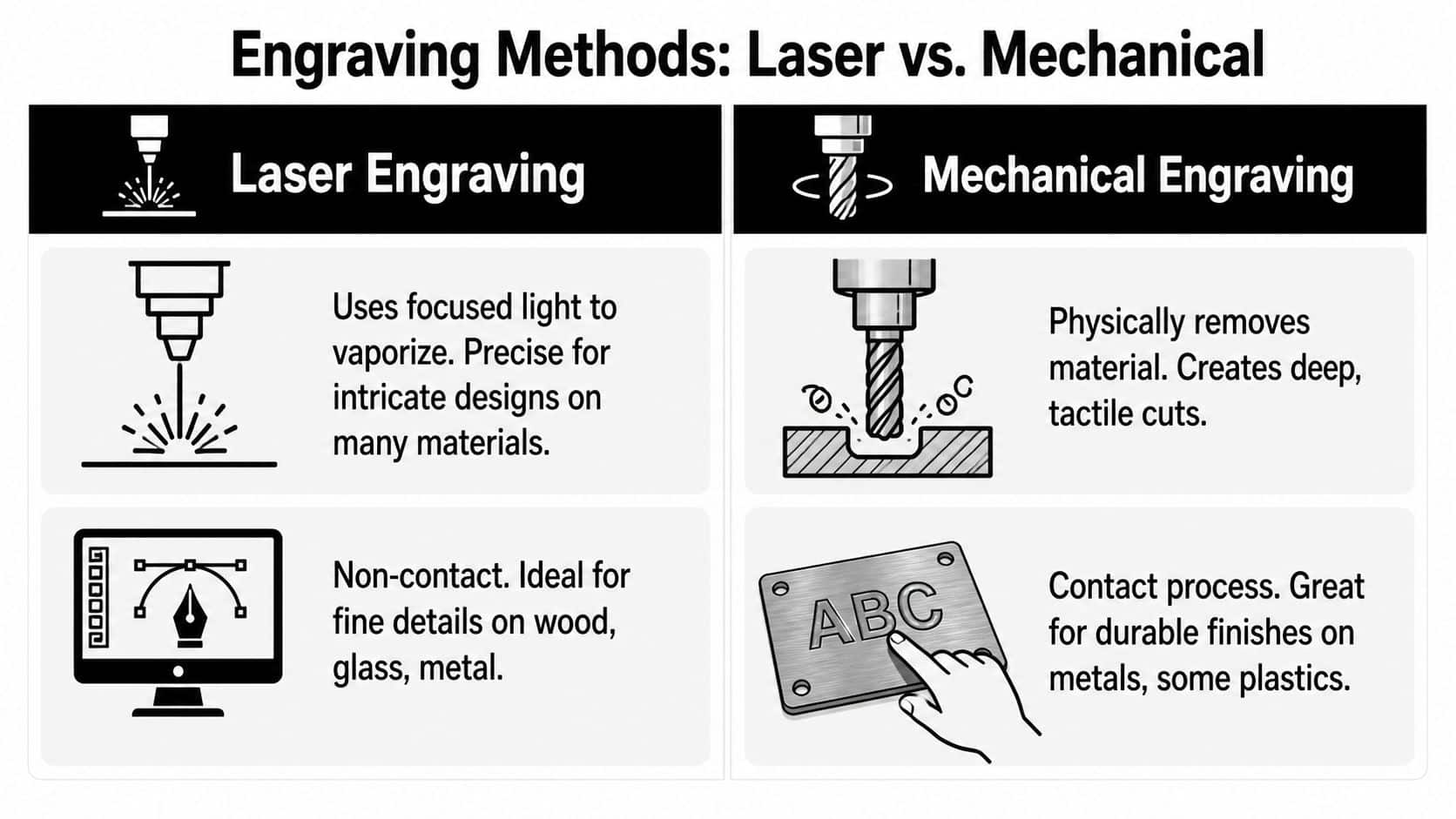
According to the overview on engraving methods and machine characteristics, computer-controlled laser engraving uses a focused beam to vaporize material with adjustable power of 30-100W and speed up to 1,000 mm/s, reaching fine resolution down to 0.01 mm for complex patterns on materials like wood or acrylic. In contrast, CNC mechanical engraving uses a diamond stylus or spinning cutter to physically carve the material with repeatability of 0.01 mm, which makes it useful when you want visible depth in metals and plastics.
Laser engraving
Laser engraving is the method many customers recognize first. It’s clean, fast to set up for many jobs, and very good at handling detailed artwork, logos, and fine text.
Because the laser doesn’t need to press a cutting tool into the material, it works well for designs with:
- Fine lines that need to stay sharp
- Complex logos with small interior shapes
- Photo-style art on materials that respond well
- Repeated production where consistent placement matters
For wood and acrylic, laser engraving often gives a crisp, high-detail result. On coated or treated metals, it can create strong contrast. On some gift items, that contrast is exactly what customers want because the design reads quickly without needing deep cuts.
A practical example is engraved decor made from basswood. A piece like this laser engraved basswood sign shows why laser is popular for home gifts and decorative products. It handles detailed graphics and script well, and it suits materials where a cut line would feel too harsh.
Mechanical engraving
Mechanical engraving uses a tool to physically remove material. That could be a diamond drag tool that scratches with control, or a rotating cutter that carves a deeper groove.
This method shines when customers want:
- A tactile result you can feel
- Traditional plaque and trophy styling
- Depth on metal or rigid plastic
- A classic engraved look instead of a heat-marked appearance
There’s also a visual character to mechanical work that some customers prefer right away. It looks carved because it is carved. On nameplates, brass plates, and many metal tags, that old-school look still reads as formal and durable.
Which one should you choose
The easiest way to choose is to match the goal, not the machine.
| If you want | Usually the better fit |
|---|---|
| Very fine detail on wood or acrylic | Laser engraving |
| A deeper, touchable cut on metal or rigid plastic | Mechanical engraving |
| Fast logo reproduction across similar items | Laser engraving |
| Traditional plaque or plate appearance | Mechanical engraving |
The wrong method can still make a mark. It just won’t always make the right-looking mark.
What doesn’t work well is choosing purely by habit. Some customers assume laser is always better because it sounds newer. Others assume mechanical is always better because it sounds more permanent. In practice, the item decides a lot. The best shops look at the material, the artwork, and the effect you want before recommending a process.
Popular Materials and Gift Ideas for Engraving
Most customers are surprised by how many items can take engraving well. Some materials give you bold contrast. Others give you depth and texture. The trick is choosing an item that suits both the design and how the piece will be used.
Wood and natural materials
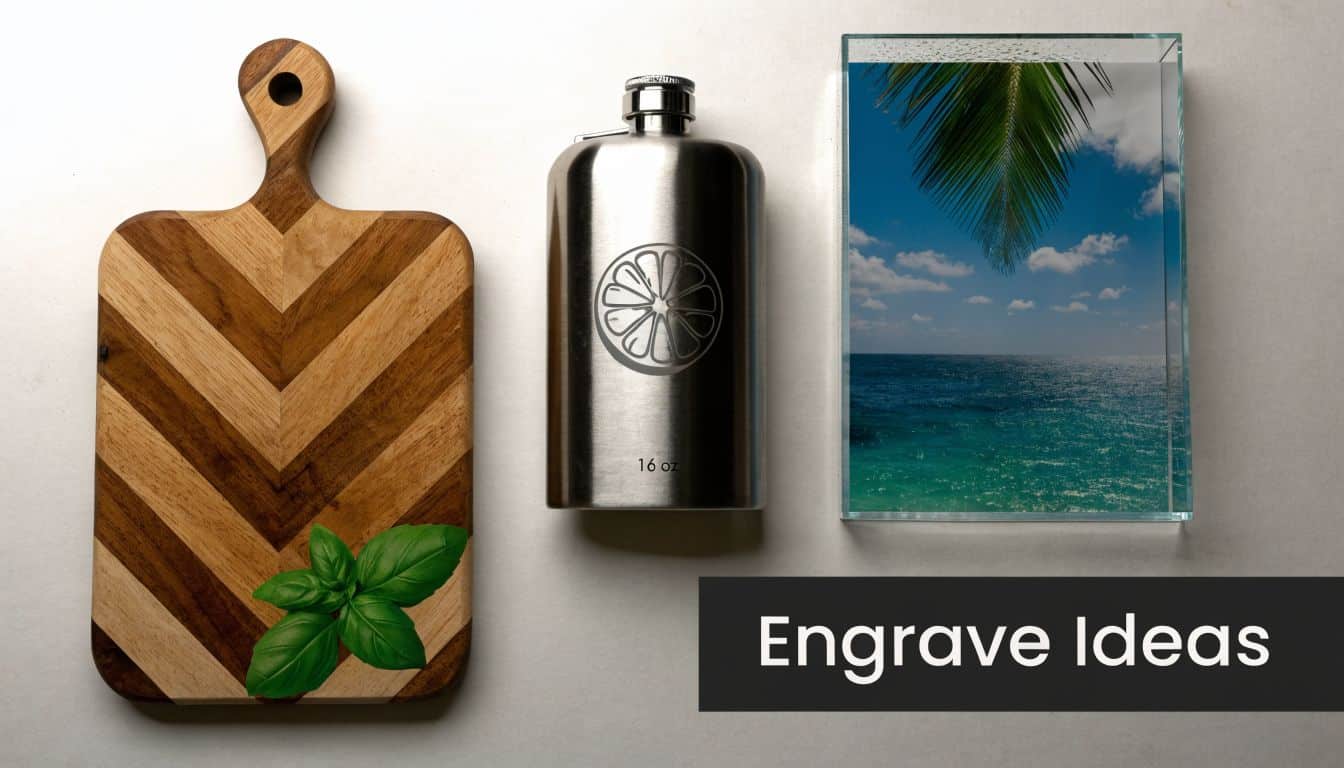
Wood is one of the friendliest materials for gift engraving. It works well for cutting boards, keepsake boxes, signs, ornaments, and decor pieces. Names, family recipes, monograms, and simple logos all tend to read well on wood.
What works best:
- Simple line art and bold text
- Rustic or natural-themed gifts
- Home decor that benefits from a warm, organic finish
- Engrave trophies and awards.
What to watch for is grain. Wood grain can add character, but it can also compete with tiny details. If the design is very delicate, a cleaner wood surface usually gives a better result.
Metal items
Metal covers a wide range of products. Stainless tumblers, flasks, keychains, pens, tags, plaques, and nameplates are all common engraving items. The final look depends heavily on whether the piece is bare metal, coated metal, brushed metal, or anodized.
For customer gifts and practical daily-use items, metal is hard to beat because it feels substantial. A custom engraved stainless steel mug is a good example of an everyday item that becomes more distinctive with a logo, name, or short message.
Glass acrylic and display pieces
Glass and acrylic are popular for awards, desk pieces, frames, and display signs. They give a cleaner, more polished look than wood, and they fit business recognition, memorial pieces, and event displays very well.
Customers usually like these materials for:
- Recognition awards
- Office signage
- Photo frames and display blocks
- Commemorative gifts
Acrylic is often more forgiving than glass for some applications. Glass has a refined look, but design placement and engraving style matter more because flaws are easier to notice.
This short video gives a feel for how engraved gift items can look in finished form.
Everyday gifts that work well
If you’re not sure what to bring in, these are usually safe, customer-friendly choices:
- Plaques and plates for awards, offices, and recognition
- Keychains and tags for branding, IDs, and quick personalized gifts
- Mugs and tumblers for staff gifts, events, and small business branding
- Watches, pens, and jewelry for milestone moments
- Frames and keepsakes for weddings, memorials, and anniversaries
The strongest engraving projects usually keep the message short. A name, date, initials, short quote, or clean logo tends to age better than trying to fit too much into a small space.
Preparing Your Artwork and Item for Engraving
Preparation makes the difference between a smooth order and a slow one. If you bring in the right file, choose sensible text, and know the material you’re handing over, the shop can spend more time dialing in quality and less time fixing preventable issues.
Bring the right artwork if you have it
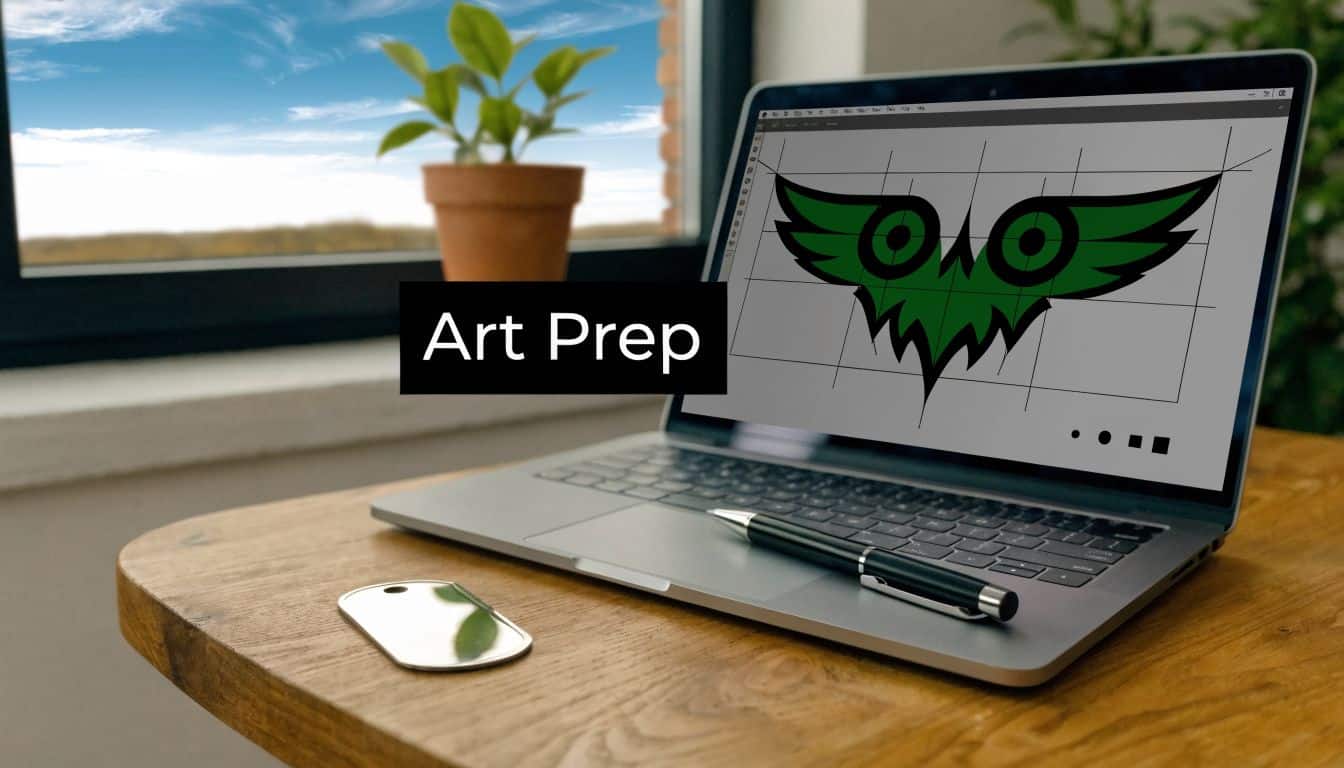
If you have a logo, clean artwork helps. Vector files are usually easier for line art and logos because edges stay crisp when resized. A high-quality image can still work for some jobs, but blurry screenshots and tiny social media graphics often cause trouble.
Bring:
- A vector logo if available, especially for business branding
- The exact spelling of names, dates, and titles
- A simple note on placement, such as centered, lower right, or back side only
If you don’t have polished artwork, that’s common. Many engraving jobs start with a basic idea, a phone photo, or text typed into an email. The important part is getting the content right before production starts.
Think about size placement and readability
Not every font that looks good on a screen will engrave well on a small object. Thin scripts can disappear. Tight letter spacing can fill in. Tiny details in a logo may look cluttered on a keychain or pen.
A short checklist helps:
- Choose readable fonts: Clean serif or sans serif fonts usually hold up better on small items.
- Keep the message brief: A few words often look stronger than a long paragraph.
- Match design to viewing distance: A wall plaque can carry more information than a cufflink or tag.
If you have to squint at the proof on screen, it probably needs simplification before engraving.
Curved items need extra setup
Mugs, tumblers, and other rounded items are common customer requests, and they’re also where setup matters most. A design that looks centered on a flat proof can distort on a curved surface if the item shifts during engraving.
As noted in this discussion of engraving challenges and curved-surface adjustments, a common issue in small business engraving is handling irregular or curved surfaces like mugs, where items can slip and distort the design. Professionals address this with rotary attachments and software adjustments such as lowering acceleration on the Y-axis to reduce slippage and using hatch angle arrays to improve uniform depth and contrast on non-flat surfaces.
That matters in plain customer terms. Curved items can look excellent, but they require more care than a flat plate or sign blank. If you’re bringing your own mug, bottle, or rounded gift item, expect the shop to inspect shape, coating, diameter, and available engraving area before confirming the layout.
What affects cost and turnaround
Customers often ask about price first, and the honest answer is that engraving cost depends on the job. The biggest factors are usually:
- Material type
- Item size and shape
- How much setup the artwork needs
- Whether the surface is flat or curved
- How many pieces you need
A clean logo on a standard flat item is usually easier to produce than custom artwork on an irregular object. Quantity can also change the workflow. A single personalized gift may require careful positioning. A batch of matching pieces may take more setup at the beginning but move faster once the process is locked in.
If you want the fastest quote, bring the item, the wording, and any logo file together. That avoids back-and-forth and helps the shop tell you quickly what’s realistic.
Your Local Engraving Expert in Sugar Land
When people want engraving locally, they usually want three things at once. They want the item to look polished, they want honest guidance on what will work, and they want to avoid wasting time on a process that should’ve been simple.
That’s where a local shop is useful. You can bring in the actual mug, plaque, tag, keychain, or gift item and get a practical answer before anything is engraved. If the font is too thin, it can be changed. If the surface is too curved for the layout you want, that can be discussed before production. If a different material would produce a cleaner result, you can find that out early instead of after the order is done.
For customers in Sugar Land, engraving services in Sugar Land are available for personalized gifts, plaques, key chains, mugs, and other custom items. Business Mail Boutique LLC also offers related services in the same storefront, including printing and other business services, which can be useful for customers ordering branded materials alongside engraved products.
What local customers usually need most
Some jobs are personal. Others are practical.
A few common examples:
- Small business branding: Mugs, tags, desk items, and presentation pieces
- Recognition and events: Plaques, awards, and office nameplates
- Personal gifts: Keepsakes for weddings, graduations, anniversaries, and memorials
- Short-run custom pieces: Items that need individual names or messages
Local engraving works best when the conversation is simple: here’s the item, here’s the message, and here’s how I want it to feel.
That’s the value of working with a nearby shop instead of trying to guess everything from a product page. Engraving is straightforward when the right method meets the right material. It gets expensive in time and frustration when those two don’t match.
If you’ve got an item in hand and want to know whether it can be engraved well, contact Business Mail Boutique LLC. Bring the item, your wording, and any artwork you have. A quick review can tell you what method fits, what the finished piece is likely to look like, and what options make sense for your timeline.

Related posts
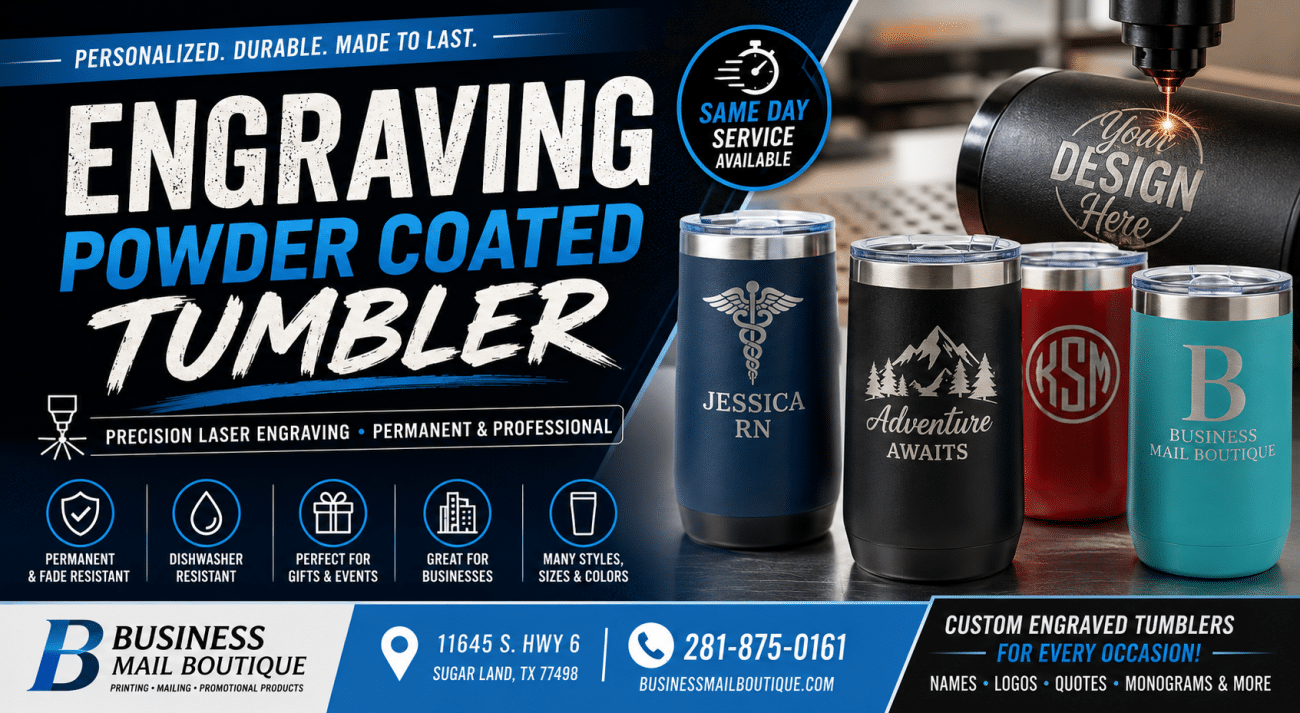

Engraving Powder Coated Tumblers – Custom Laser Engraving Services in Sugar Land
Engraving Powder Coated Tumblers – Personalized Gifts & Promotional Products in Sugar Land
Custom engraved powder coated tumbler...
Bulk Engraving Services for Businesses, Schools & Organizations in Sugar Land
Wholesale & Bulk Laser Engraving Services in Sugar Land, TX
Bulk Engraving for Businesses
Many companies order engraved product...
Engraving Name on Penset
Mastering Engraving Name on Penset: Your 2026 Guide
You've probably got a reason for this gift already. A graduation. A ...