
- Print Business Cards in Sugar Land – Same Day Service
- Copying Services
- Document Printing, Finishing & Lamination in Sugar Land
- Flyers
- Print Banner in Sugar Land | Same-Day Banner Printing Near Me
- Graphic Design
- Photo Printing
- Postcard Printing
- Document Printing
- EDDM Full Service Postcards
- FotoZoomer Large Format Printing


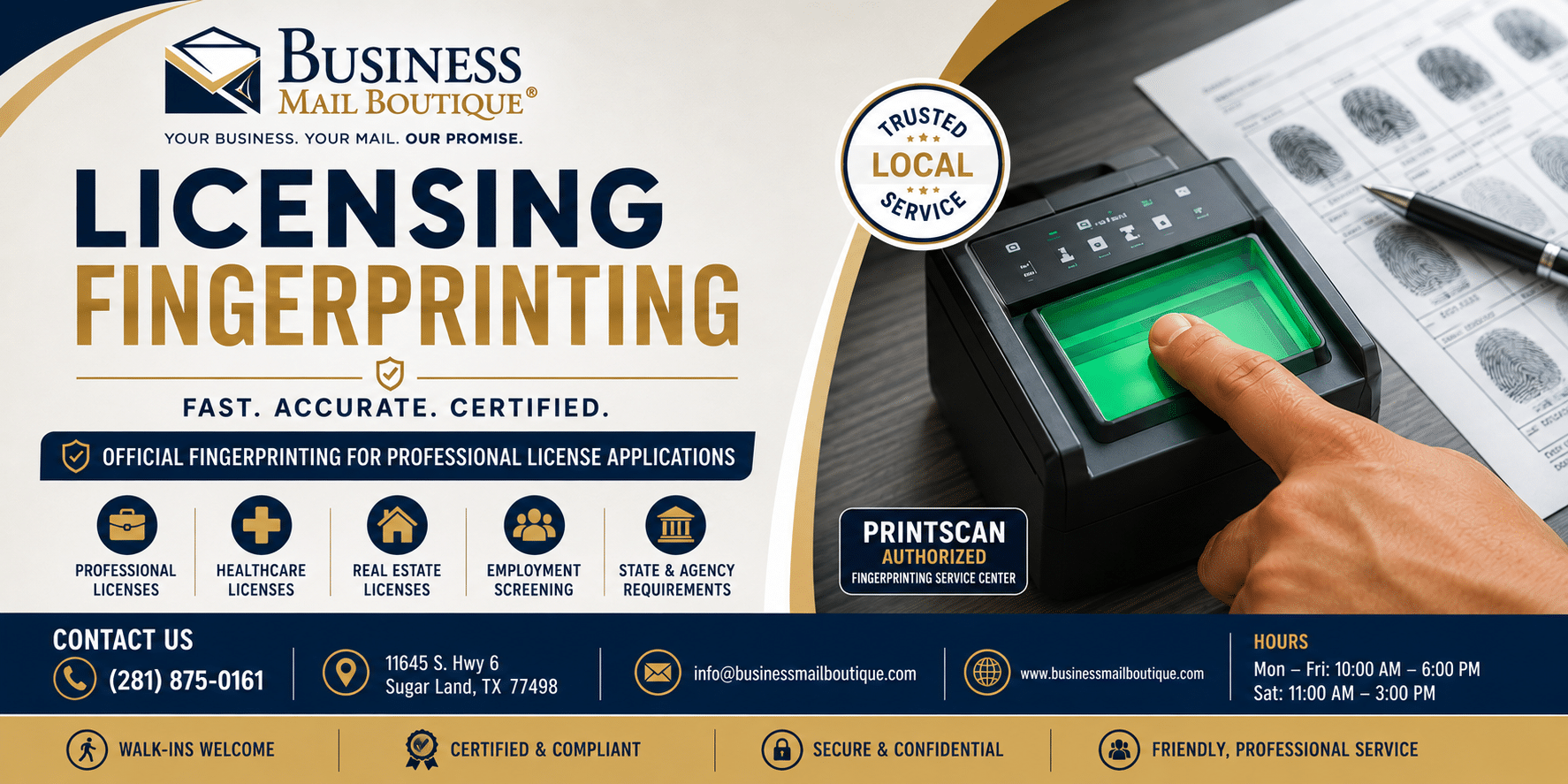
Licensing Fingerprinting.
Licensing fingerprinting made simple—learn what it is, live-scan vs FD-258, required documents, costs, scheduling, results, and common pitfalls.
Businessmailboutique
11645 S. Hwy 6
Sugar land, Texas 77498 United States (US)
Email: info@businessmailboutique.com
Route
You’re filling out a license application, the office says fingerprints are still missing, and now you’re trying to figure out whether you need a live scan, an FD-258 card, or some obscure form with the right ORI code. That’s the moment many people get stuck, not because the process is complicated, but because one small mismatch sends them back to the counter for a second trip. Licensing fingerprinting is the appointment you have to get right the first time.
What Licensing Fingerprinting Really Is
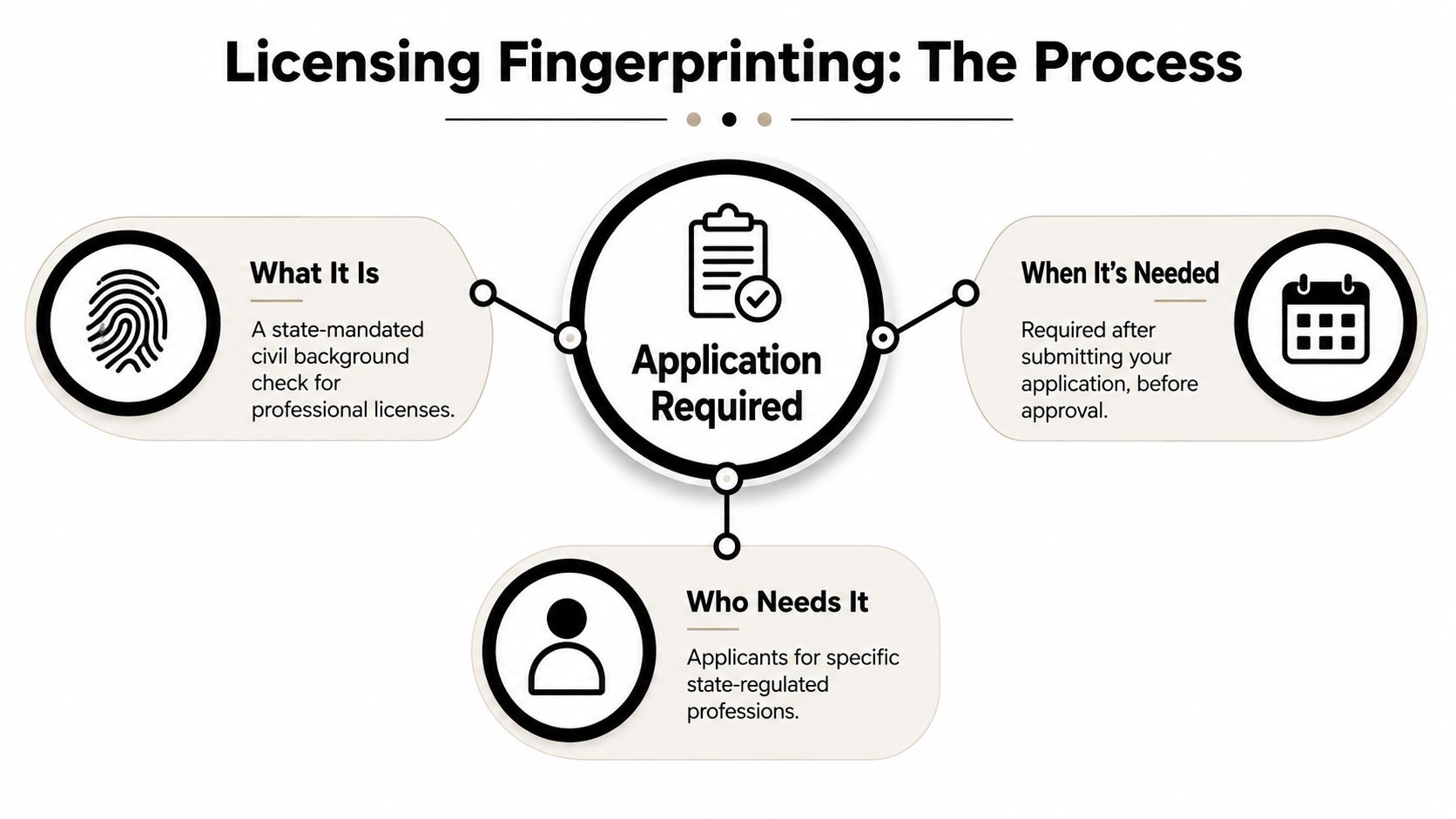
You sit in the waiting area with your application packet, and the only thing left is fingerprints. That is the moment people get stuck, and the usual culprit is a single mismatch that sends them back to the counter for a second trip. Licensing fingerprinting is a civil background check tied to a specific license request, not a criminal booking, and the agency asking for it sets the rules.
For federal context, the FBI says civil fingerprints have long been used for employment and licensing screening, and today its NGI system handles more than 165,000 daily searches against more than 194 million computerized criminal and civil fingerprint records as of February 2026, showing how central fingerprint screening has become in modern verification workflows (FBI fingerprint history and NGI scale). That history matters because licensing prints are checked through a system built to confirm identity and flag records that could affect approval, not to create a free-floating report you can reuse anywhere.
Who usually needs it
The list is broad because the requirement comes from the licensing authority, not from the applicant’s job title. Nurses, teachers, real estate agents, security guards, contractors, insurance applicants, and many other regulated professions can be asked to submit prints before approval.
Practical rule: if the board, employer, or agency says fingerprints are part of the application, treat them as a gate, not a formality. Get them done early enough that the license file does not sit incomplete.
That is the part people miss. Fingerprinting usually sits in the middle of the application timeline, after the paperwork starts but before the agency will close the loop. If the prints are missing, misrouted, or unreadable, approval stops right there.
If you want a broader paperwork checklist, this complete FAQ on fingerprinting is useful before you show up.
Live Scan vs Ink FD-258 Cards
Check what the agency accepts before you choose a capture method. Some licensing offices want live scan, some still want an FD-258 hard card, and some will accept one format only for a specific part of the process. If you guess wrong, you waste time, and the application sits until the prints are resubmitted.
Live Scan is the cleaner default
Live scan works better whenever the agency allows it. The technician rolls each finger on a glass platen, the system captures the images digitally, and the submission moves through an approved electronic channel tied to the agency’s request. That gives you cleaner capture, less handling, and faster correction if the print quality is off.
It also keeps you from handling an inked card after your hands are already marked. That is where people make sloppy mistakes, they smear a clean print, fill the wrong field, or bend the card before it dries. For agency-specific live scan guidance and hard-card options, see live scan and FBI FD-258 fingerprint cards.
FD-258 still has a place
Ink cards are old-school, but they still matter. If the agency does not take live scan, or if you are mailing prints from a site that does not offer an electronic channel, FD-258 is the fallback. The card has to be rolled carefully, left to dry, and mailed by the applicant without damage.
Do not assume one method works for every license. Some agencies still want a hard card backup even after an electronic capture, and that is exactly the kind of detail that gets people turned around at the counter. Confirm the requirement before you walk out the door.
| Factor | Live Scan | FD-258 Ink Card |
|---|---|---|
| Submission | Electronic | Mailed or hand-delivered |
| Quality control | Immediate | Delayed until review |
| Best use | Agency accepts digital prints | Agency requires paper or backup |
| Main risk | Wrong agency routing | Smudges, handling damage |
If the agency accepts live scan and you can reach a live scan site locally, choose that. If not, use the card route and protect it like a document you can’t replace quickly.
Documents and Forms You Must Bring
Show up with your ID and the wrong paperwork, and the counter slows down fast. The capture site needs the form that sends the prints to the right place, and that usually means the agency-specific authorization form with the correct ORI number.
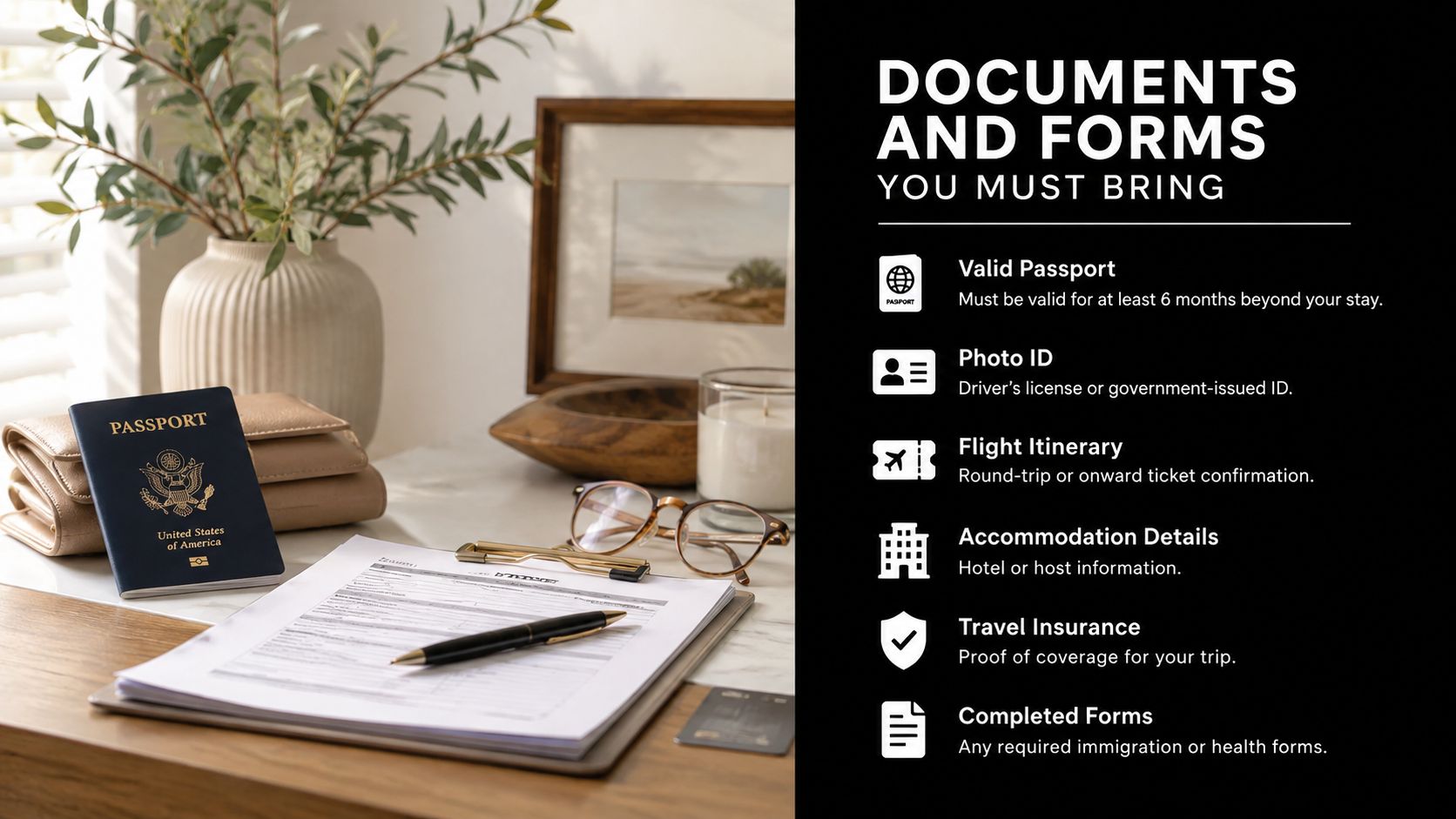
Bring these three items first:
- Government-issued photo ID: a valid driver’s license, state ID, passport, or permanent resident card.
- Agency request form: the form or QR code that matches the license application and points to the correct destination.
- Payment: the fee method the capture site accepts, since many storefronts will not start without it.
The form is the part people fumble. If your employer, school, or licensing board sent a separate instruction sheet, that sheet usually controls the submission, not the copy buried in your application packet. The operator cannot guess the right ORI code, and you should not ask them to.
If you want a plain-English walk-through of the paperwork side, the print and scan UPS store fingerprinting guide covers the forms people forget most often. For reminder timing, the best 2026 appointment reminder tools can help keep applicants from missing the appointment in the first place.
Treat fingerprints as a gate in the application process. Get them done early enough that the license file does not sit incomplete.
Scheduling and Completing the Appointment
Some places run on appointments only. Others, like a well-run walk-in storefront in Sugar Land, take applicants during posted business hours and keep the process moving without making you wait for a future slot. If your schedule is tight, walk-in access beats playing phone tag with a calendar.
What the visit actually looks like
The operator verifies your ID, checks the authorization form, and confirms the routing information before a finger touches the scanner or card. Then you clean your hands, roll each finger, and wait for the quality check. If one finger smudges or doesn’t read cleanly, the operator will redo it right then.
Keep your hands dry. Skip lotion before you go, and wear sleeves you can roll up without fuss. If you’re doing ink cards, don’t rush the drying part, because fresh ink plus a folded form is a bad combination.
A calm redo isn’t a problem. A smudged capture that gets mailed anyway is.
Appointment-based vs walk-in storefront
| Factor | Appointment-Based Location | Walk-In Storefront |
|---|---|---|
| Scheduling | Book ahead | Come during business hours |
| Wait time | Often predictable | Depends on customer flow |
| Best for | Planned submissions | Fast turnaround and last-minute needs |
| Human review | Varies by site | Immediate check at the counter |
For people juggling licensing deadlines, the scheduling part matters as much as the capture itself. If you’re coordinating reminders for a licensing cycle or office workflow, a tool list like best 2026 appointment reminder tools can help keep the rest of the process from slipping.
Once the prints are captured, an approved storefront can submit them through the proper channel right away. That’s the advantage over mailing a card yourself, less waiting, less handling, and fewer reasons for the packet to bounce back.
Costs, Turnaround, and What to Expect Next
The price at the counter is a stack of charges, not one clean number. You pay the capture fee to the operator or store, then the state or FBI processing charge gets passed through, and some agencies add their own handling fee on top. If you only look at the posted fingerprint price, you’ll walk in underprepared.
The method you choose changes the wait. Live scan usually comes back faster because the submission goes out electronically, while mailed FD-258 cards take longer because they have to be printed, mailed, and reviewed by hand. The result usually goes to the requesting agency, not straight to you, so your real follow-up is the application portal or your email inbox, not a paper notice in the mail.
Treat fingerprinting as the first checkpoint, not the finish line. Book the capture early, keep the receipt, and leave enough time for the agency to receive the submission before you expect a final decision.
A same-day fingerprint visit and license update rarely line up. That schedule is how people create avoidable delays for themselves.
Common Pitfalls That Delay Approval
The same mistakes show up at the counter again and again. They are basic, and that is why they keep slowing people down.

The failures that waste a trip
- Wrong ORI code: the prints go to the wrong destination or nowhere useful. Bring the agency form and verify the ORI before capture.
- Live scan used when hard cards are required: the agency rejects the format outright. Check whether your board accepts electronic submission before you show up.
- Smudged or incomplete ink cards: the fingerprint reader or reviewer can’t use them. Keep hands clean and let the operator re-roll bad prints immediately.
- Expired or mismatched ID: the name or document does not line up with the application. Bring a current government ID that matches your paperwork.
- Reused old fingerprint card: a stale card often is not accepted for a new request. Start with a fresh submission unless the agency specifically says otherwise.
- Assuming one set of prints covers every license: many agencies want a separate submission for each profession. Check the exact license request.
- Expecting the storefront to know the rules without the form: no operator should guess your agency’s instructions. Bring the request form, not just a verbal summary.
Keep the paperwork tight and the process gets easier. Bring the agency’s form, match the ID exactly, confirm the ORI, and choose the correct capture method before you get in line.
Book the capture early, keep the receipt, and give the agency enough time to receive the submission before you expect any final decision. A same-day fingerprint visit and license update rarely line up, and that is how people create avoidable delays for themselves.
A lot of applicants get caught by the same assumption, that fingerprinting is universal and portable. It is not. If the paperwork is wrong, the best operator in town cannot force the submission through.
Local Options and Your Next Step
If you’re in Sugar Land or anywhere in the Houston metro, a local walk-in shop saves you the part most applicants hate, the second trip. Business Mail Boutique at 11645 S. Hwy 6 handles live scan, FD-258 cards, FBI background checks, passport photos, notary, and mailbox rentals, so applicants can knock out the related errands in one stop. That matters when your license file depends on clean paperwork and a quick submission.
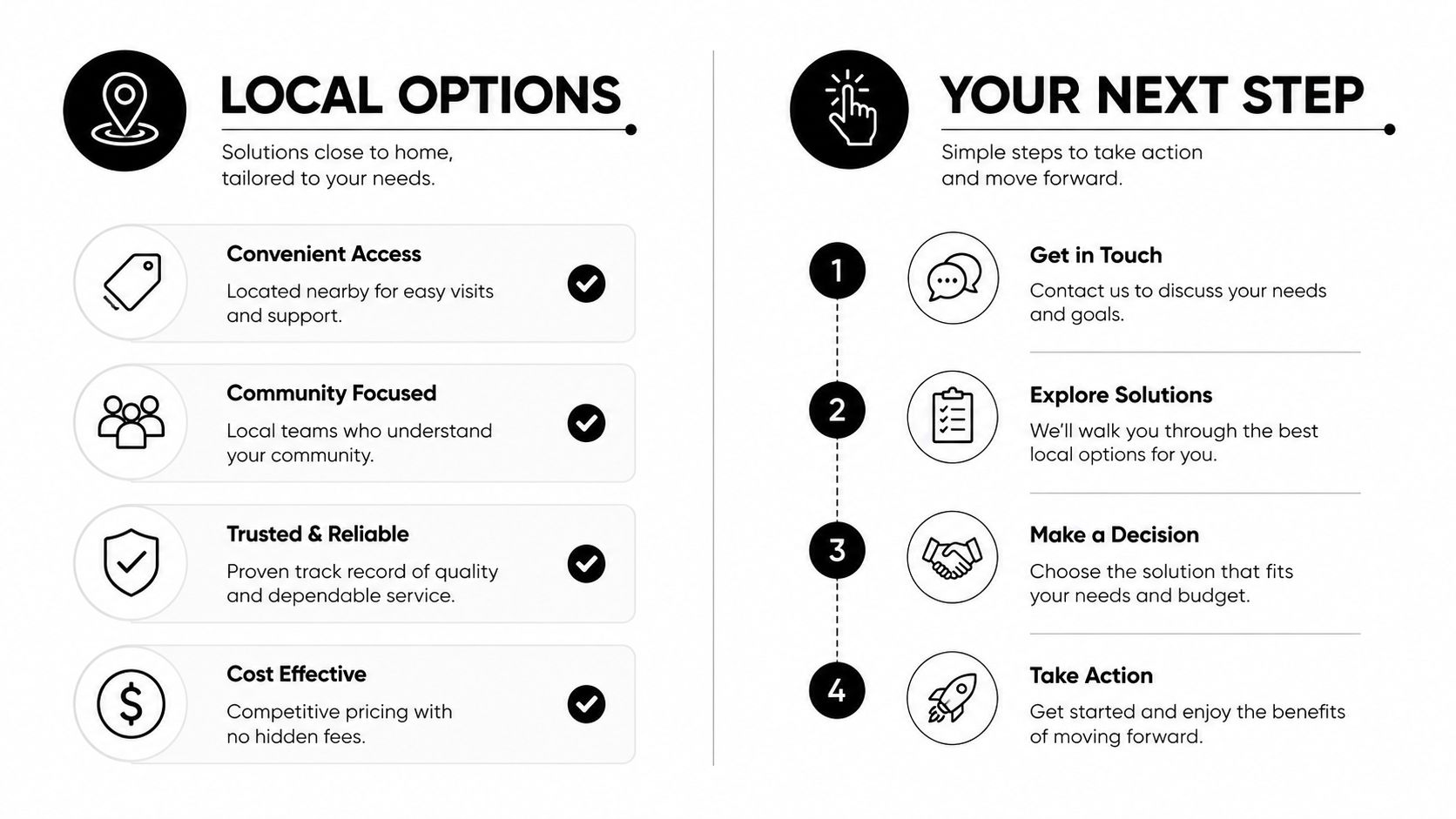
Here’s the short checklist I’d screenshot before leaving home:
- Confirm the agency’s submission method
- Bring photo ID and the authorization form
- Plan for 10 to 20 minutes at the counter
- Budget for the capture and processing fee together
That’s the whole game. Get the right form, bring the right ID, choose the right capture method, and let the operator catch errors before the prints leave the counter. Everything else in the licensing journey gets easier once this one step is done cleanly.
Business Mail Boutique LLC handles licensing fingerprinting along with live scan, FD-258 cards, FBI background checks, and the supporting services people usually need on the same errand. If you’re ready to get the appointment done without guesswork, visit Business Mail Boutique LLC and bring the form, ID, and agency instructions with you.

Related posts

Custom Memorial Glasses Engraved in Three Hours in Sugar Land
When a customer needed eight personalized glasses for a memorial, Business Mail Boutique completed the engraving or...

Custom Martini Glass Engraving in Sugar Land, TX
Custom Logo Engraving on Martini Glasses in Sugar Land, Texas.
Business Mail Boutique recently completed a beautiful custom engravin...

Custom Engraved Wine Glasses for a Golf Club Event in Sugar Land, TX
Custom Engraved Wine Glasses for a Golf Club Event in Sugar Land.
Custom wine glass engraving in Sugar Land, TX at Business Mail Bouti...