
- Print Business Cards in Sugar Land – Same Day Service
- Copying Services
- Document Printing, Finishing & Lamination in Sugar Land
- Flyers
- Print Banner in Sugar Land | Same-Day Banner Printing Near Me
- Graphic Design
- Photo Printing
- Postcard Printing
- Document Printing
- EDDM Full Service Postcards
- FotoZoomer Large Format Printing


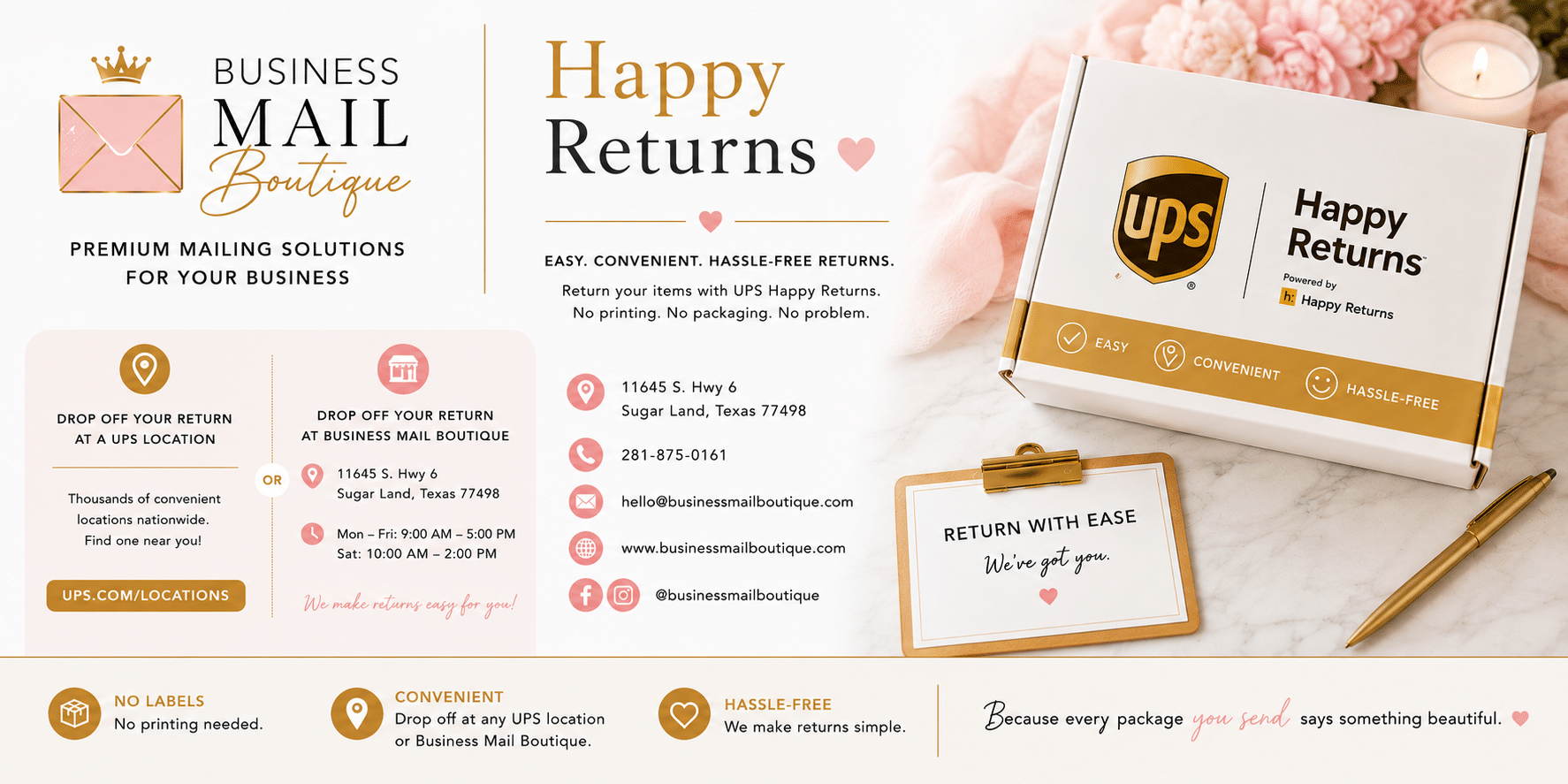
Happy Returns Explained: A Guide for Shoppers & Sellers
11645 S. Hwy 6, Sugar land, Texas 77498, United States (US) - Phone: 281-875-0161 Email: info@businessmailboutique.com
Route
You ordered something online, it arrived, and within minutes you knew it was going back. Maybe the size was off. Maybe the color looked different in person. Maybe the product was fine, but not fine enough to keep. For shoppers, the annoying part usually starts after that decision. You need a box, a printer, tape, a label, and then patience while the refund crawls through the system.
Sellers feel a different version of the same pain. A return is rarely just one package coming back. It’s customer support time, label cost, inbound handling, inspection, restocking, and the risk that a smooth purchase turns into a frustrating post-purchase experience. For smaller e-commerce brands, returns policy can subtly shape conversion, repeat purchase behavior, and margin.
That’s why Happy Returns matters. It sits at the intersection of customer convenience and reverse logistics discipline. It also fits into a broader conversation about reducing preventable returns in the first place. If you’re trying to shop smarter and end returns, tools that improve size and fit decisions can help on the front end, while a better returns network helps on the back end when a return still has to happen.
Table of Contents
- The Headache of Modern Online Returns
- What Is Happy Returns and How Does It Work
- The Happy Returns Process A Step-by-Step Guide
- Weighing the Pros and Cons of Happy Returns
- Alternatives for E-commerce Returns Management
- Your Local Returns Solution in Sugar Land Texas
The Headache of Modern Online Returns
A shopper orders two sizes because the product page leaves some doubt. One fits, one doesn’t. The return should be simple, but it turns into a small errand stack. Find packaging. Print the label. Repack the item. Drive to a drop-off point. Wait for the refund. None of that feels modern.
For a small seller, the same return lands very differently. The customer sees one shirt going back. The brand sees a chain of operational tasks. Someone has to authorize the return, generate the label, answer the “when will I get my money back?” message, receive the item, inspect it, and decide whether it can go back into sellable stock.
That friction has become more important because returns aren’t a side issue anymore. Happy Returns, founded in 2015, operates in a U.S. retail returns market projected at about $849.9 billion for 2025, and research also shows 86% of shoppers are more likely to buy from a retailer offering free, immediate-refund returns at third-party locations according to retail returns market data and Happy Returns adoption context.
Returns policy isn’t only a cost center. It’s part of the buying decision.
A core difficulty is that both sides want different things at the same time. Shoppers want less effort and faster refunds. Sellers want control, lower handling cost, and inventory back quickly. Traditional mail-back returns often satisfy neither side particularly well.
That gap is why Happy Returns has gained traction. It doesn’t remove the complexity of reverse logistics, but it moves a lot of it away from the shopper and standardizes more of it for the merchant.
What Is Happy Returns and How Does It Work
A shopper standing at a local drop-off counter usually sees a quick handoff. A seller sees something more useful. The return is being captured in a controlled system instead of arriving as another one-off parcel with its own label, box, and processing cost.
Happy Returns is a reverse logistics platform built around box-free, label-less returns. Instead of sending every item back as an individual shipment, the system accepts returns at in-person drop-off locations, bags and sorts them, and moves them through a consolidated network back to merchants.
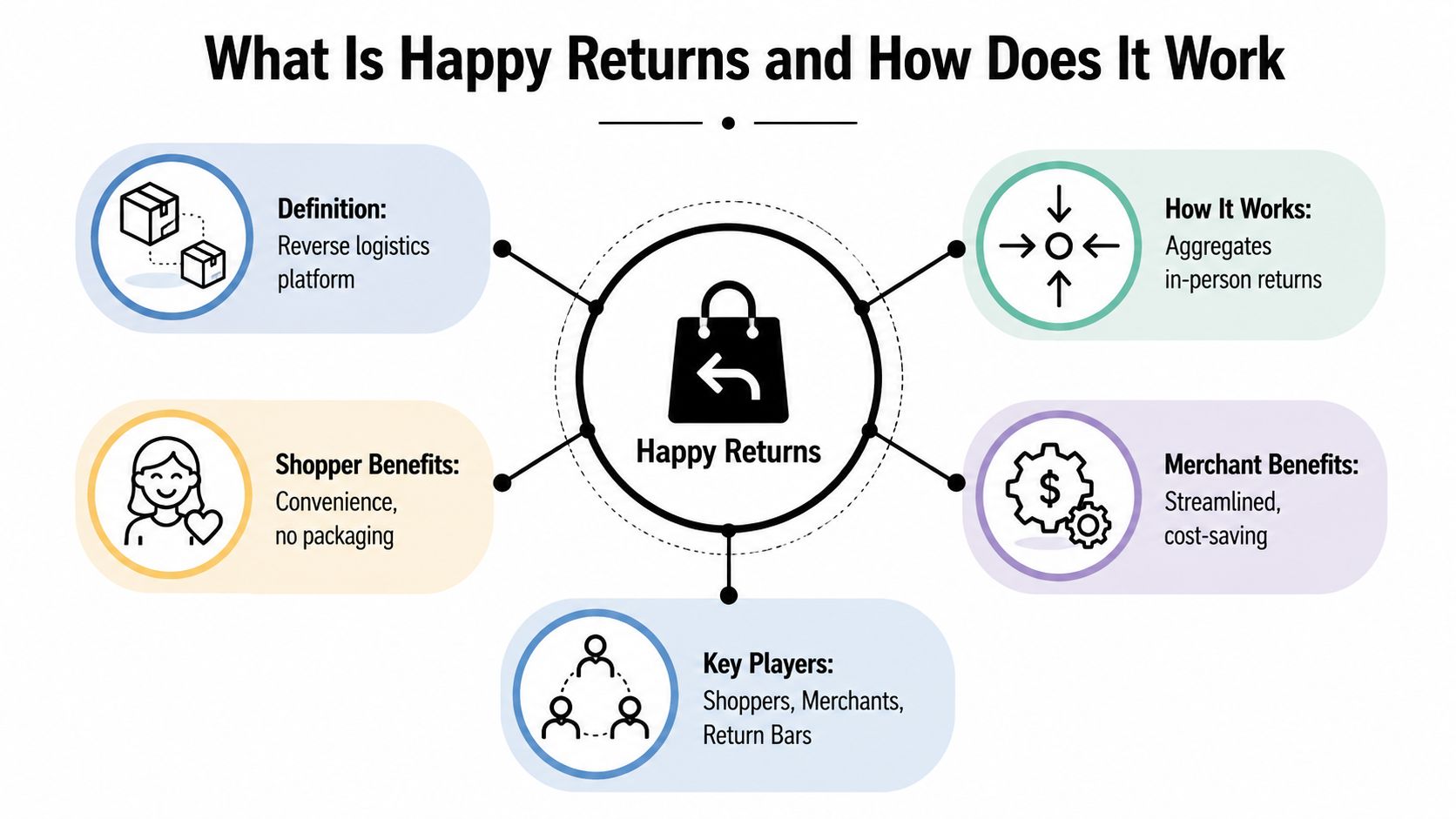
The core idea
Traditional returns create a separate shipping event for each customer. Happy Returns uses a shared intake model. The customer starts the return online, receives a QR code, and brings the item to a participating location without printing a label or finding a box first.
At the drop-off point, the item is accepted into the network and prepared for grouped transport. For merchants, that changes the shape of returns operations. Fewer individual inbound parcels means a more standardized flow, better visibility, and less dependence on each customer packing and labeling the item correctly.
That convenience does come with a condition. The merchant has to be set up to route returns through the program, and the shopper has to use a participating location rather than a standard carrier label.
Who’s involved
The system works because each party handles a specific part of the return:
- The shopper starts the return request and brings the item to the approved drop-off location.
- The merchant sets the return rules, approves eligible items, and receives the product back through the Happy Returns network.
- The Return Bar partner accepts the item, confirms the handoff, and moves it into the consolidated returns stream.
For larger brands, that structure can fit into an established returns program fairly quickly. For small and midsize e-commerce sellers, the practical question is different. Customer convenience is only part of the answer. They also need a local handoff point that is dependable, easy for buyers to find, and able to support the in-person side of the process consistently.
That local layer matters more than many guides admit.
A returns platform can define the workflow, but local partners carry out the customer-facing handoff. For sellers evaluating the experience at the counter, this guide to Happy Returns and UPS easy box-free drop-off shows what that looks like in practice and why local support completes the system rather than just extending it.
Why merchants care about it
Happy Returns appeals to merchants because it changes both customer experience and back-end handling. The shopper gets an easier drop-off process. The retailer gets a return stream that is more standardized than traditional mail-back methods.
That does not mean it solves every returns problem. Inspection rules, resale decisions, refund timing, and exception handling still need clear policies. But for brands that want fewer packing errors, less customer friction, and a return option that feels more like a service than a shipping chore, Happy Returns offers a practical model that connects national infrastructure with local execution.
The Happy Returns Process A Step-by-Step Guide
A customer starts a return on a phone during lunch, drops the item off on the way home, and leaves without printing a label or finding a box. On the seller side, that same return enters a controlled intake process instead of arriving as another random single-package mail-back. That difference is why this model gets attention from both shoppers and merchants, especially smaller brands that need convenience for customers without losing operational control.
A visual walkthrough helps:
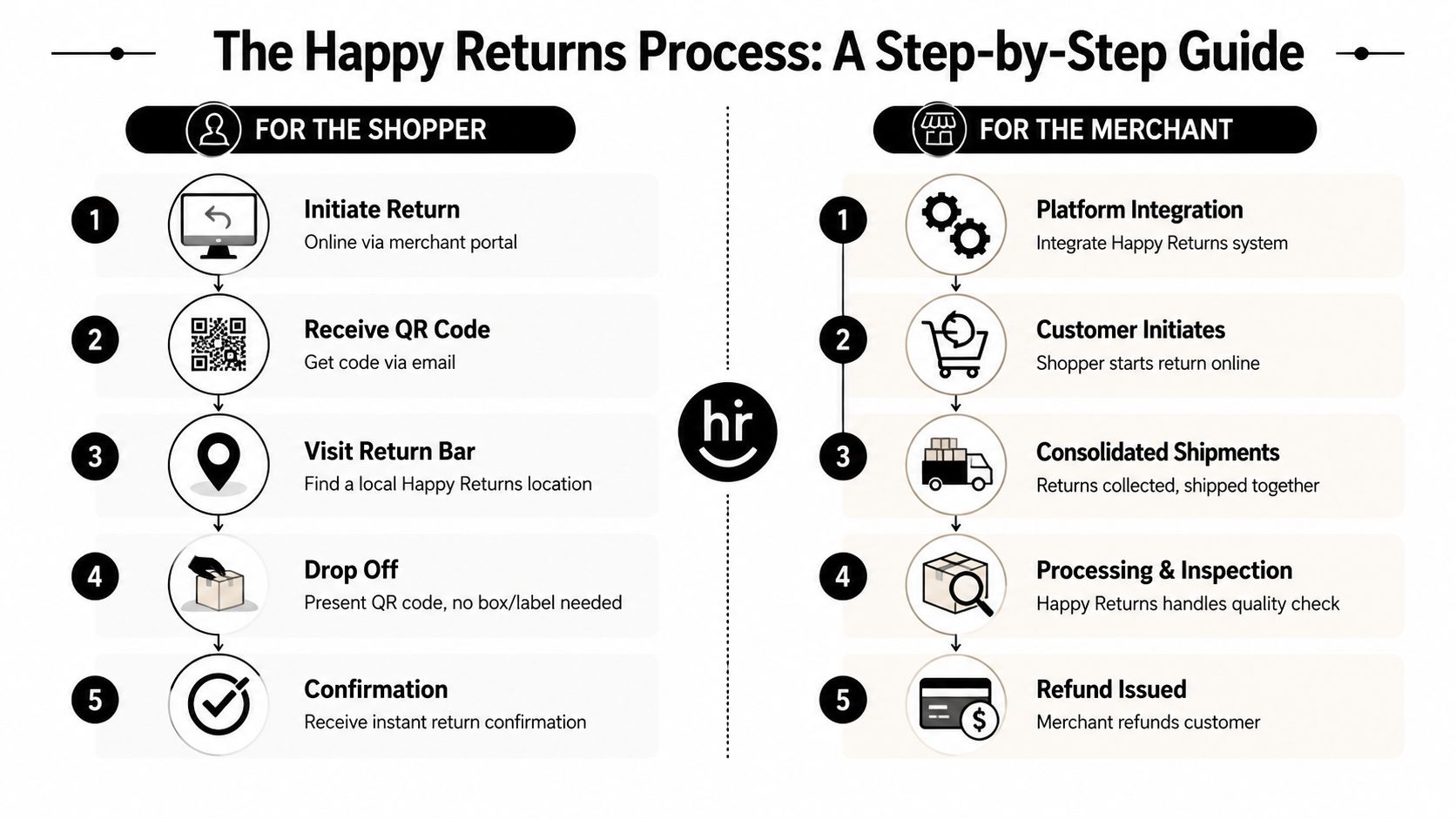
For the Shopper
From the customer’s point of view, the process is simple, but a few details still matter.
- Start the return online
The shopper opens the retailer’s return portal, selects the item, and chooses the Happy Returns option if it is available for that order. - Receive a QR code
Instead of printing a carrier label, the shopper gets a digital code by email, text, or inside the return flow. - Go to a Return Bar location
The item is brought to a participating drop-off point. For many eligible returns, no box is needed. - Hand over the item
Store staff scan the QR code, confirm the return, and accept the item into the network. - Receive confirmation
The shopper gets proof that the return was accepted. Depending on the merchant’s policy, the refund or exchange process may begin soon after the drop-off.
For shoppers, the main benefit is time. The return feels closer to a quick errand than a shipping task.
Practical rule: Bring the item in the condition required by the seller, along with tags, accessories, or original components. A fast counter drop-off does not override the merchant’s inspection standards.
This short video shows the handoff in a way most shoppers recognize immediately:
For the Merchant
The merchant workflow is where the model either saves time or creates exceptions. The mechanics are straightforward, but the setup decisions matter.
- Add Happy Returns to the returns workflow
The retailer connects the option to its return portal so eligible customers can choose an in-person drop-off instead of a mail-back label. - Apply return rules
The system checks eligibility based on the merchant’s policies. Some items can go through the QR-code route. Others may still require boxed shipment, manual review, or a different return path. - Accept consolidated inbound returns
Items are collected through the network and grouped before onward movement. That reduces the volume of individual parcels arriving one by one at the merchant or processor. - Inspect, sort, and restock
Teams process returns in batches instead of reacting to scattered single-item deliveries. That usually makes intake easier to schedule and easier to standardize. - Update the customer record
Once the handoff is confirmed and the item moves through the merchant’s workflow, the brand can trigger refund, exchange, or store-credit actions based on its policy.
For many merchants, the operational upside comes from consolidation. As noted earlier, retailers using this kind of drop-off network often report lower reverse-logistics handling costs than traditional mail-back returns because there is less packaging waste and fewer one-off parcels to process.
That benefit is real, but it is not automatic. Small and midsize sellers still need clear rules for damaged goods, final-sale exclusions, fraud checks, and products that should never enter a box-free return stream. They also need a local counter experience they can trust, because the customer judges the brand by the handoff, not by the software behind it.
A fallback path still matters. Some buyers will mail returns. Some products need a label. If your team handles both models, this guide to return label printing for small e-commerce teams is a useful operational reference.
Weighing the Pros and Cons of Happy Returns
Happy Returns is strong, but it isn’t universal. It works best when the convenience benefit for customers aligns with the merchant’s economics and product mix.
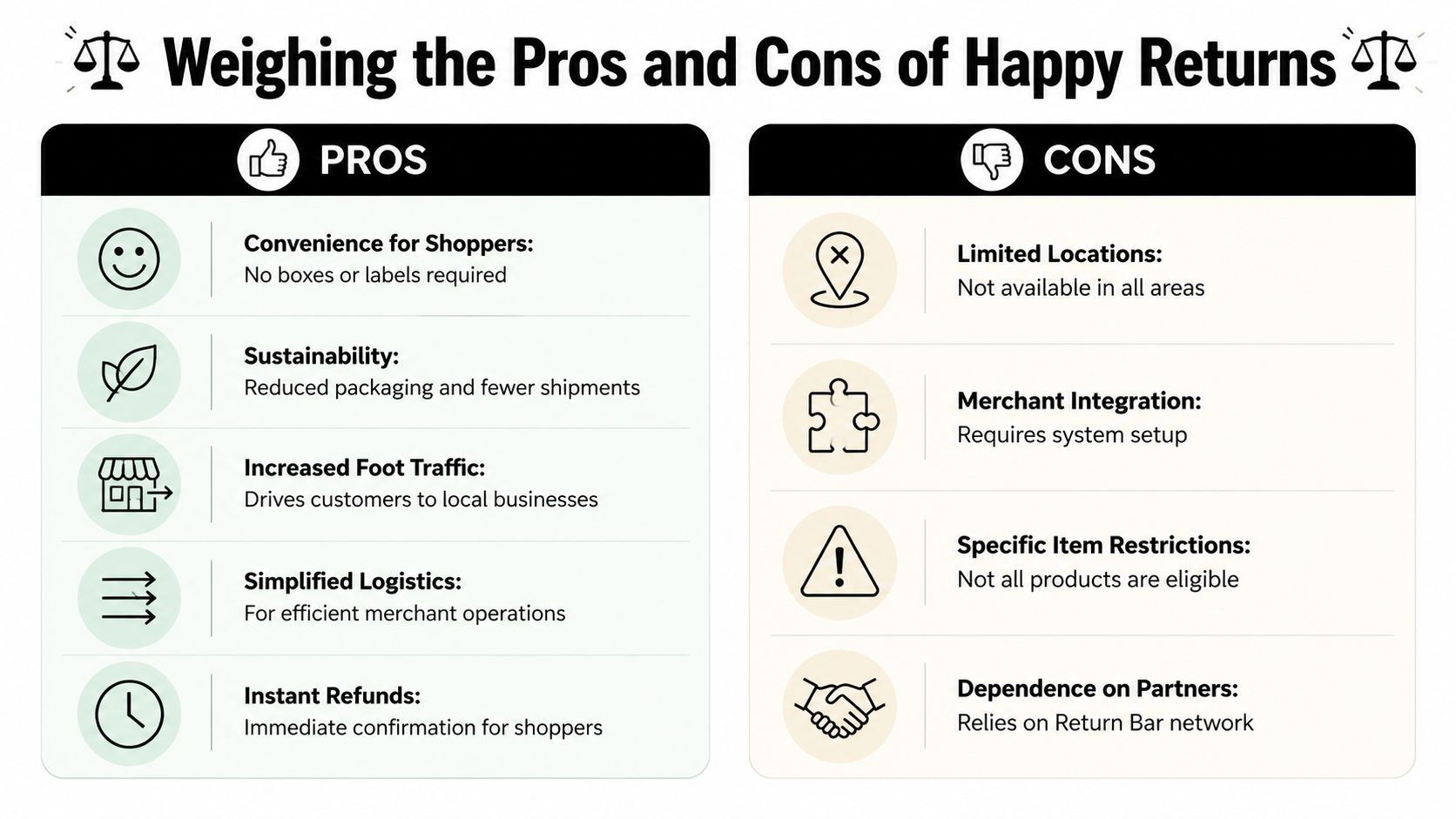
Where It Works Well
For shoppers, the advantages are obvious. No printer. No box hunt. No label confusion. The handoff is quick, and the refund experience is often faster and clearer than a mail-back process.
For merchants, the upside is usually operational. E-commerce return rates are around 20%, can reach 30% during holidays, while brick-and-mortar return rates are typically 8% to 10%. The average cost to process a single return can exceed 21% of the order’s value, according to RSR Research on returns economics. In that environment, a more efficient intake model matters.
Happy Returns also fits categories where customers value convenience enough to affect conversion. Apparel, footwear, and accessories are common examples because fit uncertainty creates more return activity than many other categories.
Where It Can Fall Short
The system depends on location coverage. If a shopper doesn’t live or work near a supported drop-off point, the convenience argument gets weaker fast. A good returns option still has to be reachable.
Some products also don’t fit neatly into a box-free network. Bulky items, fragile items, regulated products, and products that require special inspection rules may need a different path. Sellers should resist the urge to force every SKU through one returns channel.
There’s also a merchant-side trade-off that people underestimate. Easier returns can be good for conversion, but they can also make returning more likely. If your average selling price is low and your margin buffer is tight, increased convenience doesn’t automatically mean improved profitability.
The best returns system is not the one with the fewest customer clicks. It’s the one that protects the customer relationship without quietly destroying margin.
Alternatives for E-commerce Returns Management
Happy Returns is one model, not the only model. Most SMBs compare it against standard prepaid labels, in-box return instructions, or software-led workflows that still rely on parcel shipping for the physical move.
Two Common Models SMBs Compare
The practical question isn’t “Which system sounds modern?” It’s “Which system fits our products, return behavior, and staff bandwidth?”
| Factor | Happy Returns Model | Traditional Mail-Back |
|---|---|---|
| Customer effort | Lower when a nearby drop-off point is available | Higher because the customer usually needs packaging and a label |
| Packaging need | Usually box-free and label-less | Usually requires a box or mailer plus printed label |
| Merchant inbound flow | Consolidated and more standardized | Fragmented single-parcel arrivals |
| Best fit | Brands that benefit from convenience and repeat purchase lift | Brands that need universal parcel coverage or tighter item-level control |
| Risk to watch | Easier process may encourage more returns | Friction may suppress some returns but hurt customer experience |
If you run Shopify, your refund rules and communication flow matter just as much as the physical return method. This breakdown of Shopify refund workflows is useful because many SMB headaches come from policy setup, not only from shipping mechanics.
What SMBs Should Actually Model
For small and mid-sized businesses, making returns easier can increase return rates by 10 to 15 percentage points, and the main decision is whether that increase is offset by higher initial conversion or larger order sizes, according to this discussion of SMB returns trade-offs.
That means SMBs should test returns policy as a commercial lever, not just a logistics decision. Questions worth asking include:
- Which products return most often and why.
- Whether easier returns improve checkout confidence for hesitant buyers.
- How much staff time goes into exceptions such as lost labels, repacking questions, and refund status emails.
- Which SKUs should use different return paths instead of a single store-wide rule.
A lot of smaller brands make one of two mistakes. They either copy a large retailer’s easy returns promise without the margin structure to support it, or they keep a clunky return process that saves a little on paper while damaging trust.
Your Local Returns Solution in Sugar Land Texas
National systems are useful, but returns become real at the local handoff point. That’s where shoppers need practical help and sellers need consistency. In Sugar Land, Texas, that usually means less theory and more questions like: Do I need a box? Can someone scan my QR code? What if I only have the email? What if this return isn’t eligible for Happy Returns and needs another carrier instead?
What Local Shoppers Usually Need
Most consumers don’t want to decode a return policy. They want to know where to go and what to bring. A good local partner solves that quickly.
For a Happy Returns transaction, the shopper should usually bring the item in acceptable condition and have the QR code ready on a phone. If the retailer requires original tags or accessories, bring those too. The smoothest drop-offs happen when the customer arrives with the exact return authorization the merchant issued.
Some returns won’t be Happy Returns at all. They may be UPS, FedEx, USPS, or a merchant-specific mailed return. That’s why a one-stop shipping center matters. It reduces the number of failed trips when the return method changes from one retailer to another.
A local returns counter earns trust by handling exceptions well, not just easy drop-offs.
What Local Sellers Usually Need
E-commerce sellers in a local market often have a different set of problems. They may need a place to print labels, prepare customer returns, re-pack items for safe transit, or route inventory back to a warehouse without wasting staff time.
Local support complements a national network. Happy Returns can simplify eligible consumer handoffs, but sellers still need operational coverage for everything outside that lane. That includes non-eligible items, branded mail-back workflows, carrier-specific shipments, and occasional reboxing when original packaging is gone.
A strong local service point also helps sellers maintain discipline around return tracking. That means confirming which method the customer selected, matching the package to the right label or QR flow, and making sure the shipment enters the proper carrier stream the first time.
A Better Local Process
The best local returns process is simple and repeatable:
- Bring the item and the return authorization
That may be a QR code, prepaid label, or merchant email. - Confirm the return path at the counter
Is this a Happy Returns drop-off, a UPS shipment, a FedEx shipment, or a USPS return? - Package only when needed
Some returns are box-free. Others need secure packing because the merchant or carrier requires it. - Keep your receipt or confirmation
That’s your proof of handoff if a refund question comes up later. - Track exceptions early
If a retailer says the return was never received, the first thing you’ll need is the handoff record.
For local residents who need a participating location, this page on Happy Returns QR code acceptance in Sugar Land 77498 gives the practical next step.
Happy Returns is a smart system when the merchant supports it, the item fits the program, and the customer has convenient local access. But the broader lesson is bigger than one platform. Good returns management is hybrid. It combines digital authorization, clear policy, local handoff support, and a backup path for everything that falls outside the ideal flow.
If you need help with Happy Returns drop-offs, shipping labels, packing, or multi-carrier returns in Sugar Land, Business Mail Boutique LLC gives shoppers and e-commerce sellers one place to get it done correctly. Bring your QR code, label, or item, and the team can help you sort out the right return path without the usual runaround.

Related posts

Custom Brass Plate Engraving in Sugar Land | Business Mail Boutique
Custom Brass Plate Engraving in Sugar Land: A Personal Tribute to Remember
A few carefully chosen words can turn a small brass plate i...

Silver Bracelet Engraving in Sugar Land | Business Mail Boutique
Personalize silver bracelets with names, dates, and hearts at Business Mail Boutique in Sugar Land. Call 281-875-0161 for a quote.
ers...

Graduation Gift Engraving Sugar Land | Business Mail Boutique
Graduation Gift Engraving Sugar Land | Business Mail Boutique.
A Personalized Texas A&M Graduation Gift: Custom Glass Engraving in...