
- Print Business Cards in Sugar Land – Same Day Service
- Copying Services
- Document Printing, Finishing & Lamination in Sugar Land
- Flyers
- Print Banner in Sugar Land | Same-Day Banner Printing Near Me
- Graphic Design
- Photo Printing
- Postcard Printing
- Document Printing
- EDDM Full Service Postcards
- FotoZoomer Large Format Printing


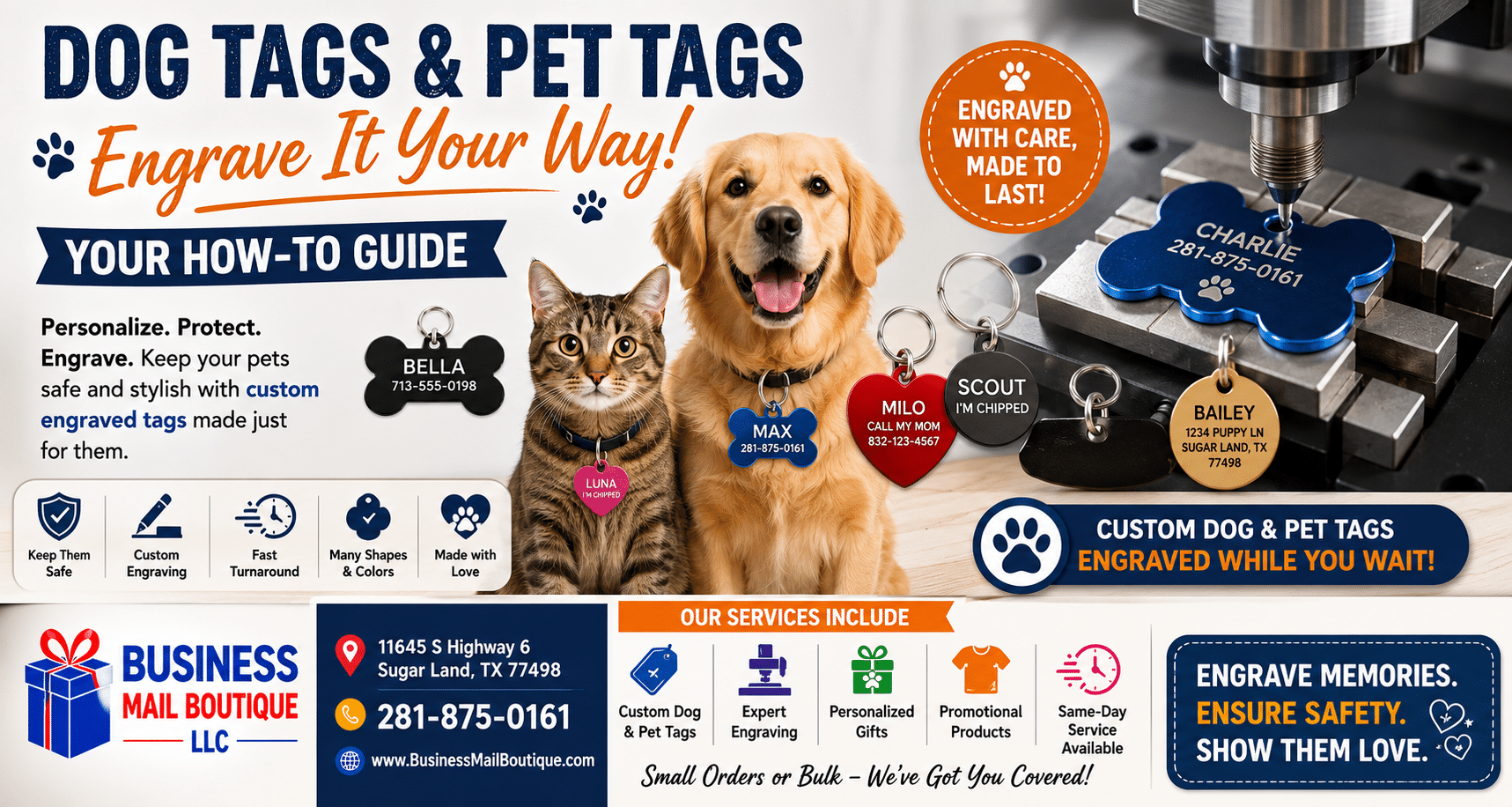
Dog Tags and Pet Tags Engraver: Your How-To Guide
11645 S. Hwy 6
Sugar land, Texas 77498 United States (US)
Email: info@businessmailboutique.com
Route
Your dog slipped out the front door. A neighbor grabs the collar, flips the tag over, and has about two seconds of patience before glare, tiny script, or a worn-out surface makes the contact info hard to read. That’s the primary job of a pet tag. It isn’t decoration first. It’s fast identification under stress.
That’s why a good dog tags and pet tags engraver thinks past the engraving machine itself. The right result comes from four decisions working together: material, size, information, and layout. If one part is off, even a beautifully made tag can fail when it matters most.
There’s also a big difference between generic online advice and ordering from a local shop. Online guides love software, fonts, and “permanent” marks. Real customers usually want something simpler: a tag that looks clean, wears well, can be read quickly, and can be ordered without guesswork.
Table of Contents
- The Foundation of a Great Tag Choosing Material and Size
- What Information Keeps Your Pet Safe
- Designing for Durability and Readability
- Placing Your Order at Business Mail Boutique
- From Order to Collar What to Expect Next
- Quick Questions for Your Pet Tag Engraver
The Foundation of a Great Tag Choosing Material and Size
The tag itself decides most of the outcome. Before anyone talks fonts or layout, the material sets the baseline for wear, weight, finish, and how well the engraving holds up over time.
Start with lifestyle, not color
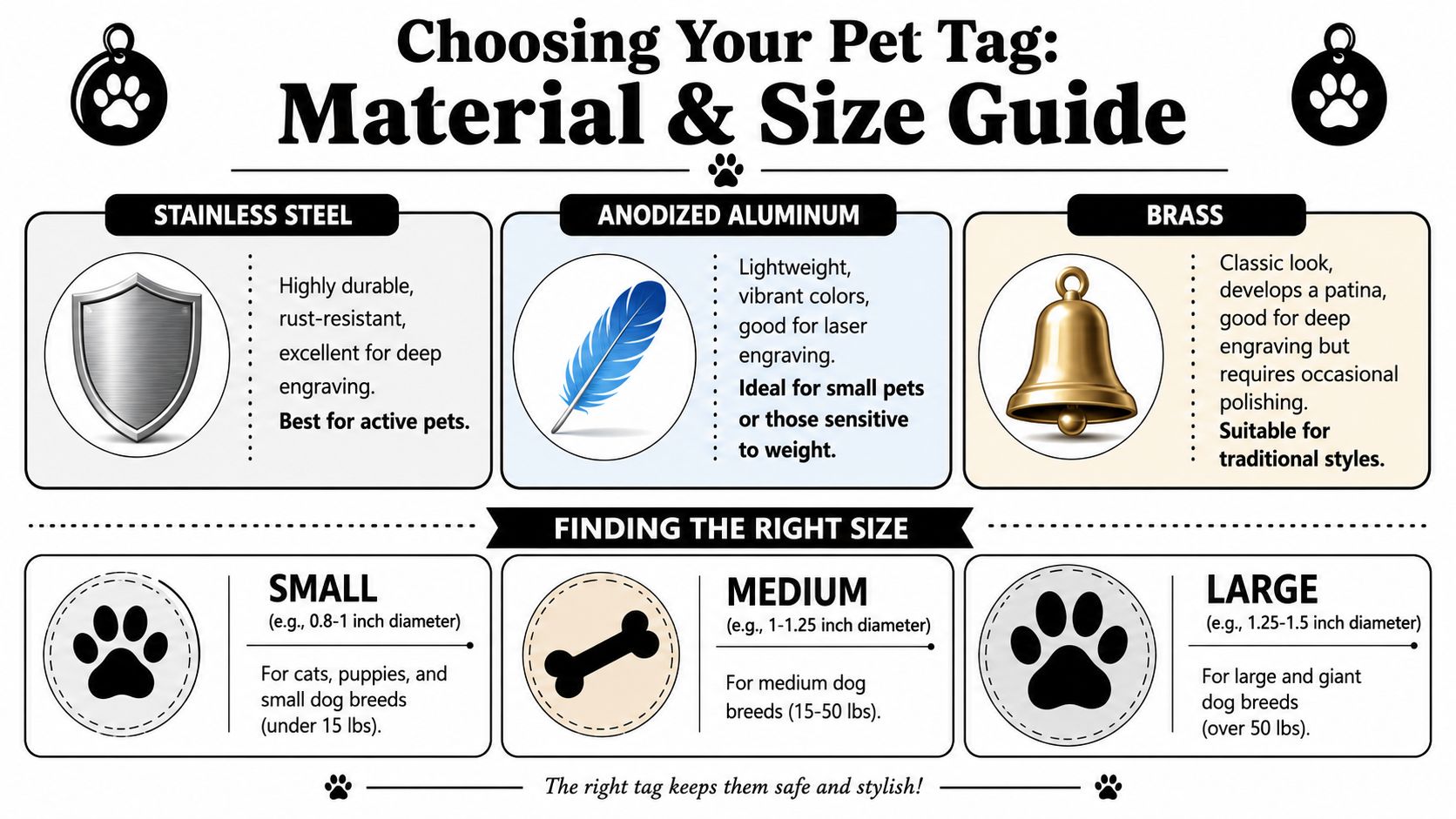
If your pet runs hard, swims, rolls in dirt, or drags tags across concrete, pick the tag for abuse first and appearance second. The engraving process also changes with the material. Fiber lasers are recommended for durable marking on metallic tags like stainless steel, while rotary engravers remain excellent for deeper cuts in softer metals. That’s why a good shop won’t treat every blank the same.
Here’s the practical version.
| Material | Durability | Best For | Notes |
|---|---|---|---|
| Stainless Steel | High | Active dogs, swimmers, rough daily use | Strong, rust-resistant, works well when you want a durable mark |
| Anodized Aluminum | Moderate | Small pets, lighter collars, color-coded tags | Lightweight and easy to wear, but finish choice matters |
| Brass | Good | Traditional styles, classic look | Takes a deep cut well and develops a patina over time |
Practical rule: Match the tag to the pet’s routine, not the checkout photo. A couch dog and a dock-jumping dog don’t need the same blank.
Stainless steel is usually the safest all-around choice if durability matters most. Anodized aluminum is a strong option when weight matters, especially for smaller pets. If you’re shopping for tiny breeds, this roundup of best small dog tags is useful because it shows how quickly oversized hardware becomes annoying on a light collar.
If you want to browse blanks made for engraving in these common metals, it helps to look at metal blank tag options in aluminum and stainless steel before finalizing your text.
Choose size by readability
Small tags look neat online. In person, they often force too much text into too little space. That’s where buyers get in trouble.
A tag should be large enough for clear lettering and small enough that it doesn’t bounce, twist, or irritate the pet. Bone, round, and heart shapes all work, but the usable engraving area matters more than the silhouette. Decorative cutouts and narrow borders eat up room fast.
Use this simple filter when choosing size:
- For cats and toy breeds: Keep the tag light and compact, but leave enough room for a phone number that isn’t cramped.
- For medium dogs: This is the easiest range. Most common blanks give enough space for balanced front-and-back engraving.
- For large dogs: Use the extra surface area. Bigger breeds can carry a larger tag comfortably, and larger text is easier for a stranger to read at a glance.
If a customer asks me what goes wrong most often at this stage, it’s this: they choose the smallest cute shape available, then try to fit a name, two phone numbers, an address, a microchip note, and artwork on it. The result may be engraved perfectly and still be hard to use.
What Information Keeps Your Pet Safe
A pet tag is a recovery tool. It should answer one question fast: who do I contact right now?
Put contact details first
The strongest tag copy is short, direct, and arranged for a stranger who’s standing in a driveway, holding a leash, and trying to help. Put the most important number in the clearest position. If space allows, add a backup number. That gives the finder a second path if the first call doesn’t go through.
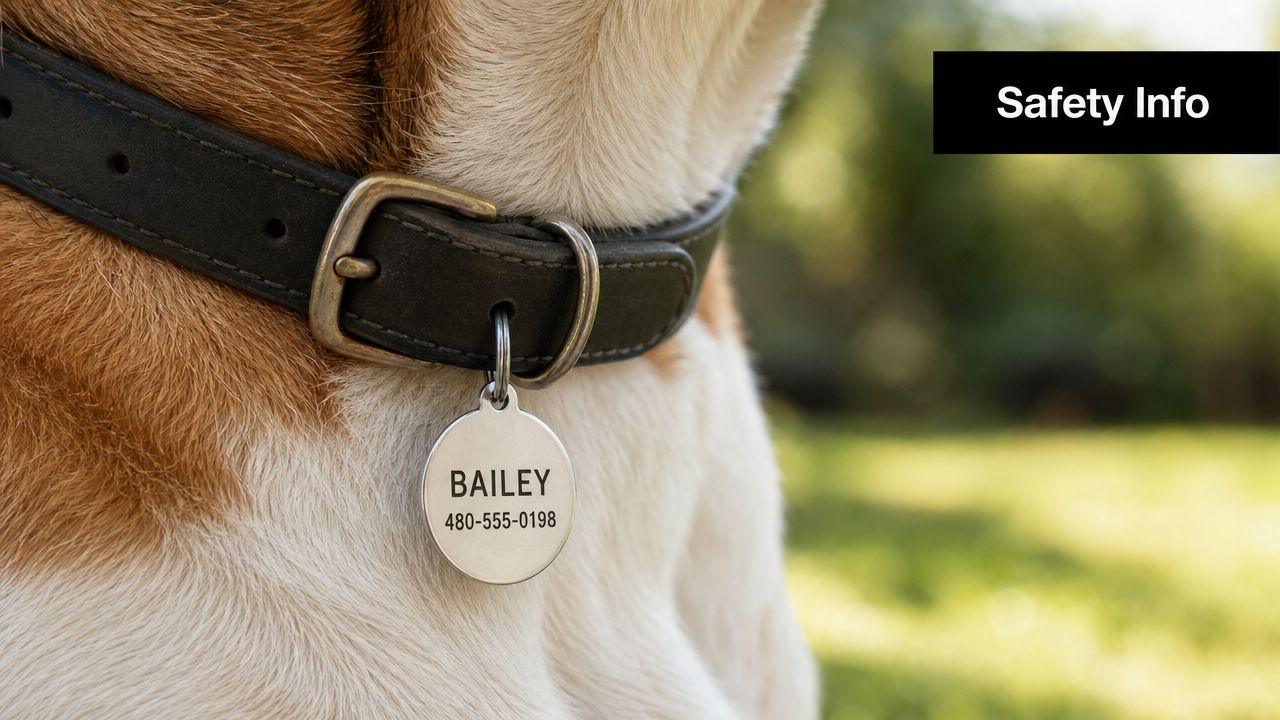
A clean tag usually works best with information in this order:
- Primary phone number
- Backup phone number
- Short medical or recovery note if needed
Short notes can be valuable when they change how someone responds. “Needs Meds” tells a finder not to wait around. “Microchipped” tells a vet clinic or shelter there’s another way to verify ownership if calls fail.
The best tag isn’t the one with the most information. It’s the one a stranger can act on without stopping to decode it.
Pet owners often ask whether to include the pet’s name. That choice depends on your comfort level. Some people like the friendliness of it. Others prefer to save room for contact details and skip anything nonessential. Both approaches can work, but the contact number should always win the space battle.
What to leave off
Long addresses, cute slogans, and too many labels usually make the tag worse. If the lettering gets smaller to fit extras, you’ve traded function for clutter.
Leave off anything that doesn’t help a finder make the next move. That often means skipping:
- Street address: Helpful in some cases, but often too space-hungry for small tags.
- Decorative phrases: “Best boy,” “escape artist,” or similar lines use room better spent on legible contact info.
- Too many identifiers: Breed, birthday, social handles, and long owner names rarely belong on the tag.
If you want your pet’s records organized beyond the tag itself, especially for boarding, travel, or vet visits, this guide on managing pet health documents is a useful companion. The tag should stay lean. The paperwork can carry the details.
A good engraving counter conversation usually ends with subtraction, not addition. Most tags improve when one line comes off.
Designing for Durability and Readability
A tag can be engraved permanently and still fail in real use. That happens when the lettering is stylish but not readable after glare, scratches, or low light enter the picture.
Use fonts that survive real life
One of the clearest pieces of practical advice in this space is also the most ignored. Simple block letters and short text hold up better because decorative fonts become unreadable with wear, glare, or low light, and the real test is whether a stranger can read the contact info quickly during a stressful pet recovery event.
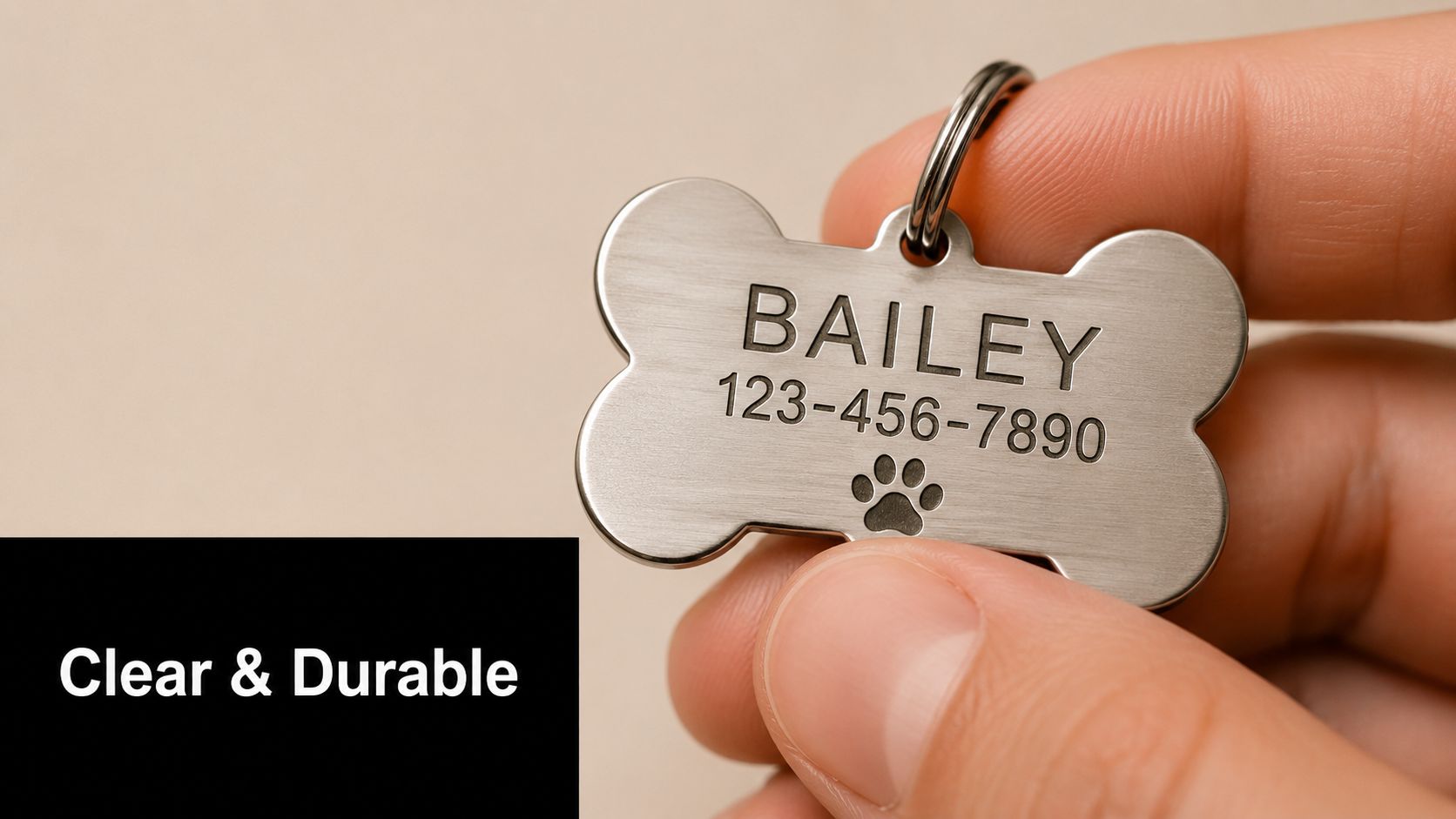
That’s why plain sans-serif lettering wins so often. It isn’t boring. It’s dependable. Thin scripts, novelty fonts, and crowded all-caps with tight spacing may look sharp on a screen proof, but they lose clarity once the tag starts living on a moving collar.
A few design choices consistently work:
- Simple block fonts: Easier to read at arm’s length.
- Short line lengths: Cleaner spacing and less visual crowding.
- Strong contrast in layout: Important lines should stand out first.
Build a simple visual hierarchy
If the phone number matters most, make it the anchor. Put it where the eye lands first. Secondary details should support that, not compete with it.
Icons are fine when they stay small and purposeful. A paw print or heart can personalize a tag, but only if it doesn’t steal the room needed for readable numbers. This is the same judgment used in other small-format engraved items, including custom engraved key chains, where surface area disappears fast once artwork and extra lines are added.
A tag doesn’t need to look empty. It needs to look obvious.
One layout I like for many pets is a name or short identifier on the front and the phone number on the back in larger, cleaner text. Another is putting the number alone on the front for the fastest possible read. The right choice depends on the blank size and how much room the material gives you.
What doesn’t work is trying to make a tiny tag do the job of a full record card.
Placing Your Order at Business Mail Boutique
Ordering a pet tag should be simple. Customers already know what they need, but they aren’t always sure how to translate that into a clean engraving file or an in-store request.
Ordering in store
In-store ordering works best if you want help choosing the blank, checking fit, or narrowing down the wording. Bring the core details you want engraved, and be ready to answer a few practical questions: what pet is this for, what collar size are they wearing, and do you want the tag to prioritize durability, light weight, or a specific look.
At the counter, the process is usually straightforward:
- Pick the blank: Material, shape, and size come first.
- Finalize the text: Shorter is usually better.
- Approve the layout: At this point, spacing and readability get cleaned up.
- Confirm pickup details: Helpful if you want to swing back later the same day.
A local engraving shop can catch problems fast. Maybe the font is too fine for the blank. Maybe the second phone number makes the lines too cramped. Those fixes are easy before engraving and annoying after.
Ordering online or by email
Remote ordering is a good fit if you already know your wording and don’t need hands-on help. Send the tag type you want, the exact text, and any layout preferences. If you have artwork, keep it simple and high-contrast. Tiny details don’t always translate well on a pet tag.
For customers planning local pickup, the easiest starting point is the Sugar Land engraving service page, which gives you a direct path to the local engraving option.
Before submitting, double-check these points:
- Spelling: Tag mistakes usually start here.
- Phone numbers: Read each digit twice.
- Front and back instructions: Don’t assume placement will be guessed correctly.
- Font expectations: If you care more about readability than style, say that plainly.
A quick look at the process helps if you like seeing how customization works before ordering:
The best online orders are the simplest ones. Clear text. Clear placement. No mystery.
From Order to Collar What to Expect Next
Once the order is placed, most customers want to know three things. How soon will it be ready, how do I get it, and how do I keep it readable?
Turnaround and pickup
Local engraving shops are often much easier to work with than large anonymous marketplaces because you can ask direct questions and get a direct answer. Many pet tag jobs are simple enough to move quickly, especially when the blank, text, and layout are already settled.
If you’re ordering locally, ask about same-day completion, pickup timing, and whether approval happens before engraving starts. That matters more than people think. A quick confirmation step catches number errors and spacing problems before they become replacement orders.
Pickup is also simpler with a neighborhood shop. You can review the finished piece in person, check the legibility, and make sure the attachment hardware fits the collar setup you’re using.
Care after engraving
Even a well-made tag needs basic care. Dirt, skin oils, salt exposure, and collar friction all affect how clean the surface looks over time.
Use these habits to extend legibility:
- Wipe it regularly: A soft cloth removes film and grime before they dull the face.
- Check the ring or clip: Lost tags often come from worn hardware, not failed engraving.
- Watch for surface buildup: Mud, dried soap, and residue can make good lettering look weak.
- Replace bent or damaged attachments: A strong tag won’t help if it falls off the collar.
Check the tag the same way you check the leash clasp. Small hardware failures create big problems.
If your pet wears multiple tags, don’t let them stack so tightly that they constantly grind against each other. That creates unnecessary wear and more noise. Some owners solve that with a separate ring arrangement or a quieter attachment style that reduces rubbing.
The final check is simple. Hold the tag at arm’s length and read it in average light. If that feels easy, the design is doing its job.
Quick Questions for Your Pet Tag Engraver
Some of the best questions come up right before someone orders. They’re practical, and they usually decide whether the final tag works beautifully or becomes a compromise.
Can you engrave a tag I already own
Usually, yes, if the blank material and surface condition are suitable for engraving. The main issue isn’t ownership. It’s whether the existing tag gives enough clean space for readable text and whether the material responds well to the right engraving method.
Bring it in if you’re unsure. A quick inspection can tell you more than a product listing ever will.
What if I need a replacement
Reordering is easiest when you keep the exact text and layout saved somewhere. A note on your phone works. A photo of the old tag works too, as long as the numbers are readable.
If your pet loses tags often, simplify the design on purpose. Pick a durable blank, keep the wording short, and use attachment hardware that’s less likely to snag or loosen.
How should I order for multiple pets
Order them together if you can. That helps you standardize style while still adjusting the size and material for each pet. A heavy tag that’s fine for a large dog may be annoying on a cat or toy breed.
For multi-pet households, use a simple system:
- Keep the layout consistent: Same structure across all tags reduces confusion.
- Adjust by pet size: Don’t force one blank on every animal.
- Label your order clearly: Include each pet’s name and front/back text separately.
- Think about collar color and finish: Contrast helps you identify the right tag quickly.
One final note that’s easy to miss. Dog tags have a long identification history. Military identification tags trace back to the American Civil War (1861 to 1865), when soldiers improvised ways to identify themselves before battle, and official advocacy for issuing an ID tag followed in 1899. The modern nickname “dog tag” was later popularized in 1936 when William Randolph Hearst used it while criticizing Franklin D. Roosevelt’s New Deal, helping cement the term in public language and military culture, according to the history of the dog tag. Pet ID tags developed separately in the late 19th century through local licensing systems and became more standardized as durable metal identification expanded during World War I, which shaped today’s focus on permanent, legible identification, as outlined in this history of pet ID tags.
That history still points to the same modern truth. Identification only works if people can read it fast.
If you want a tag that’s clean, durable, and easy to order locally, Business Mail Boutique LLC is a practical place to get it done. Bring in your wording, choose your blank, and get help balancing size, material, and readability so your pet’s tag works in real life, not just on a mockup.

Related posts

Custom Memorial Glasses Engraved in Three Hours in Sugar Land
When a customer needed eight personalized glasses for a memorial, Business Mail Boutique completed the engraving or...

Custom Martini Glass Engraving in Sugar Land, TX
Custom Logo Engraving on Martini Glasses in Sugar Land, Texas.
Business Mail Boutique recently completed a beautiful custom engravin...

Custom Engraved Wine Glasses for a Golf Club Event in Sugar Land, TX
Custom Engraved Wine Glasses for a Golf Club Event in Sugar Land.
Custom wine glass engraving in Sugar Land, TX at Business Mail Bouti...