
- Print Business Cards in Sugar Land – Same Day Service
- Copying Services
- Document Printing, Finishing & Lamination in Sugar Land
- Flyers
- Print Banner in Sugar Land | Same-Day Banner Printing Near Me
- Graphic Design
- Photo Printing
- Postcard Printing
- Document Printing
- EDDM Full Service Postcards
- FotoZoomer Large Format Printing


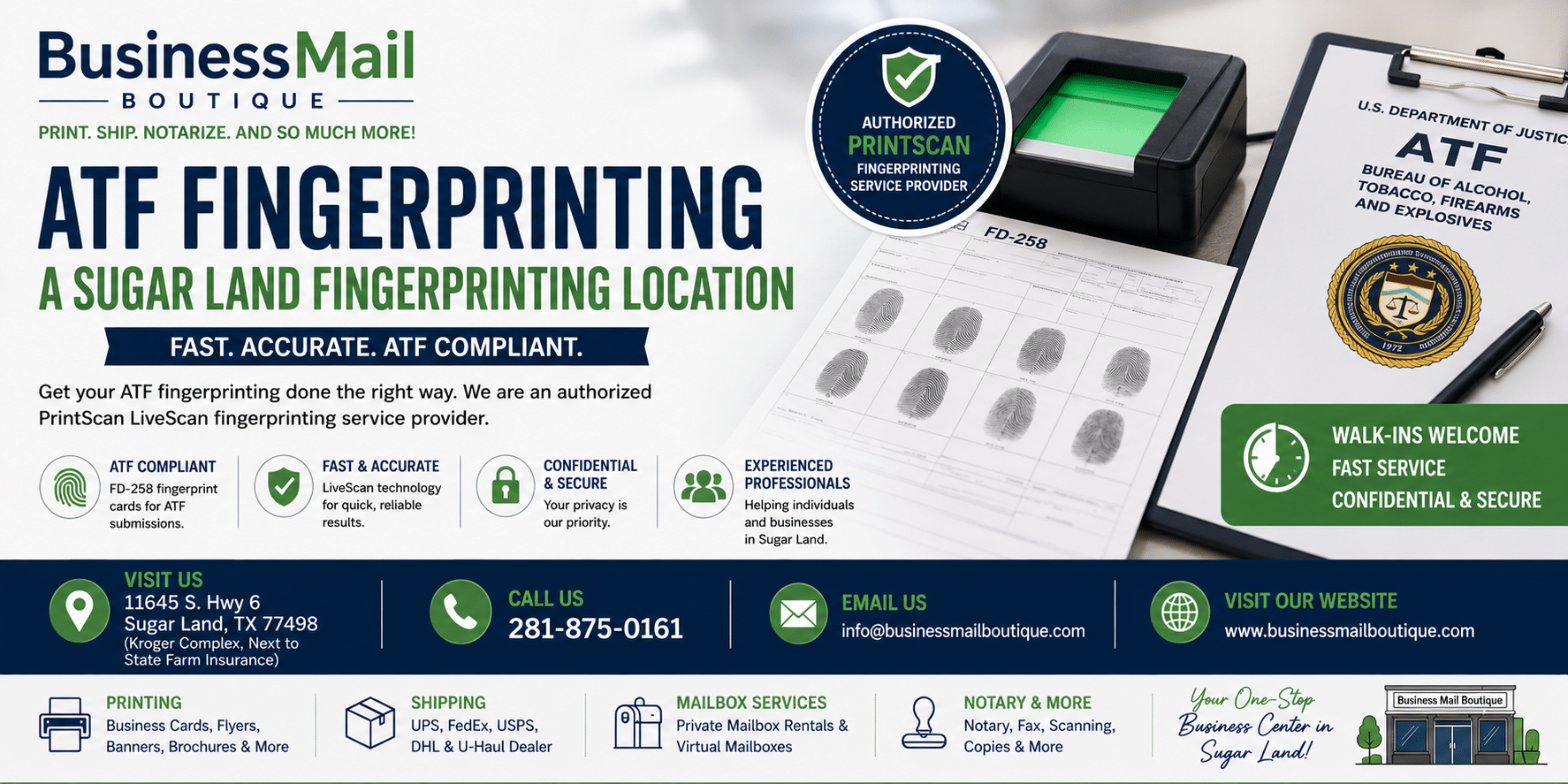
ATF Fingerprinting: A Sugar Land Finger printing Location
Need ATF fingerprinting in Sugar Land, TX? Our guide covers ink vs. electronic, forms, and step-by-step instructions for a fast, approved submission.
Businessmailboutique
11645 S. Hwy 6
Sugar land, Texas 77498 United States (US)
Email: info@businessmailboutique.com
Route
You’re probably in one of two spots right now. Either you’re halfway through an ATF application and just realized fingerprints are part of the process, or you already know you need them and you’re trying to avoid doing this twice.
That’s a smart instinct. ATF fingerprinting is one of those steps that looks simple until the details start piling up. Paper card or EFT file. Individual or trust. Upload or mail. Which form needs what, and when. A lot of online guides blur those lines, especially around eForms, and that’s where people lose time.
In Sugar Land, most applicants don’t need a lecture on federal paperwork. They need a clean, practical path from “I need fingerprints” to “my submission is done correctly.” That means knowing who needs prints, what to bring to the appointment, when an electronic file makes more sense than an ink card, and how to avoid mistakes that create delays.
Table of Contents
Who Needs ATF Fingerprints and What to Bring
Those who ask about ATF fingerprinting are typically applying in one of a few common situations. They’re filing a Form 1 to make an NFA item, filing a Form 4 to transfer one, or they’re listed as a Responsible Person for a trust or other legal entity.
If that’s you, don’t treat fingerprints like a generic background-check add-on. They have to match the identity details tied to your application. Clean capture is part of it, but so is showing up with the right information in hand.
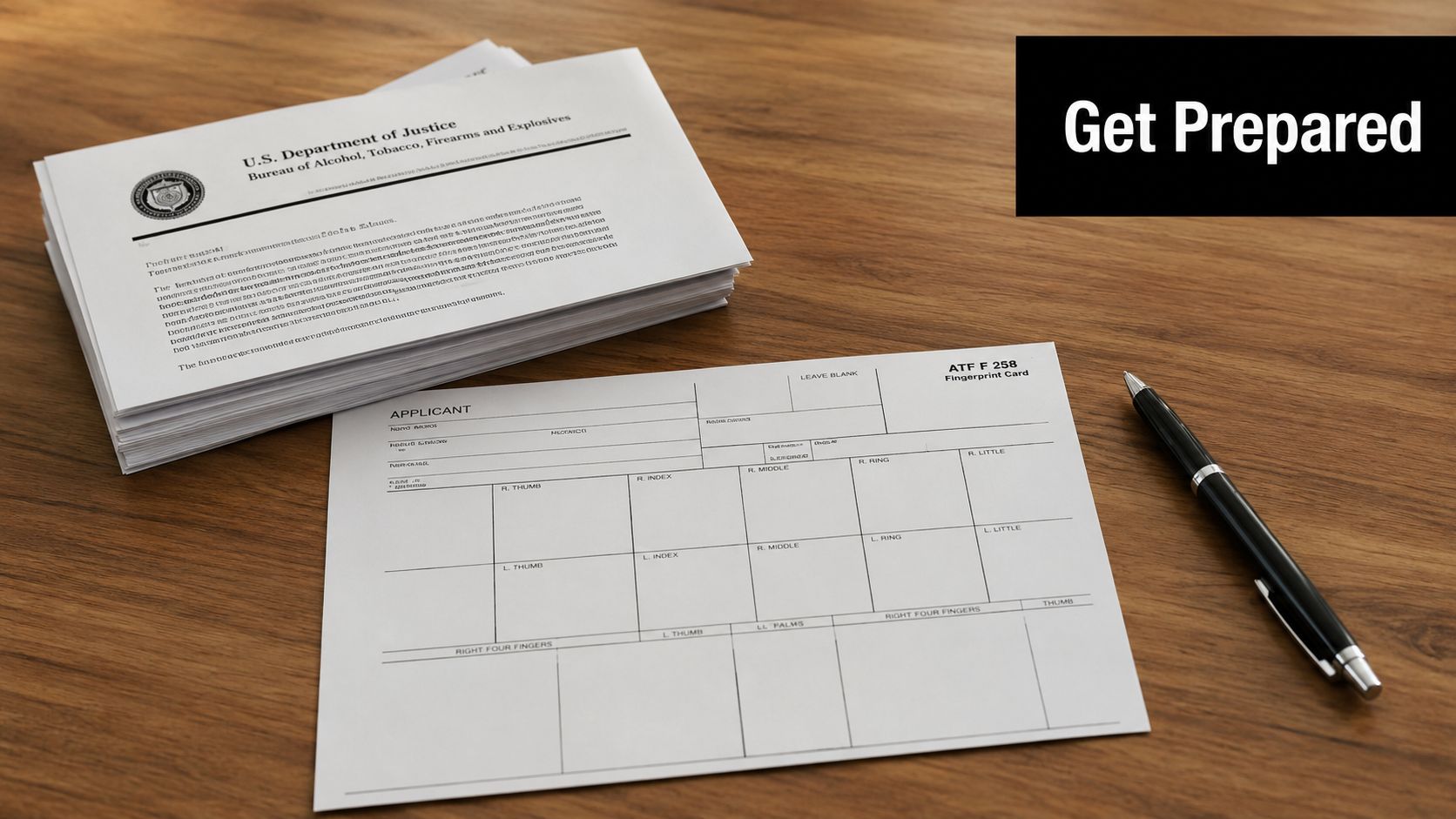
Common reasons people need ATF fingerprints
The practical trigger is usually straightforward:
- Individual NFA filing: You’re applying in your own name and need fingerprints tied to your personal application.
- Trust filing: One or more Responsible Persons need fingerprints that correspond to the trust submission.
- Entity filing: A corporation or legal entity may require fingerprints for the relevant Responsible Persons.
- Follow-through after starting eForms: You began online, then realized the fingerprint piece still has to be handled correctly.
Practical rule: Know your filing type before your appointment. The fingerprint step is much smoother when your name, entity status, and application path are already settled.
A lot of confusion starts because applicants assume every ATF process works the same way. It doesn’t. The fingerprint requirement may be similar, but the way your prints are packaged, uploaded, or mailed depends on the filing route you’re using.
What to bring to your appointment
Bring the basics, but bring the right basics.
- Current government-issued photo ID: Your name needs to match what you’re using on the application.
- Application details: If you’ve already started the ATF form, bring the control information, form type, or submission details you have available.
- Trust or Responsible Person details if applicable: If you’re filing through a trust, know exactly who needs prints.
- Your contact information: Email matters if you’re receiving a digital file or follow-up instructions.
- Any instructions from your dealer, attorney, or filing service: If someone else is helping with the application, their requirements can affect what fingerprint format you need.
A few small prep steps save a second trip. Check your ID before leaving home. Make sure your legal name is consistent across your paperwork. If you already know you need an EFT file rather than cards, say that up front so the capture is handled the right way.
Hand care also matters more than people expect. Dry, cracked, or dirty fingertips don’t capture well. Wash your hands, avoid heavy lotions right before the appointment, and don’t wait until after yard work or shop work if you can help it.
Ink vs Electronic Fingerprints Choosing Your Path
This is the decision that trips up more applicants than anything else. FD-258 ink cards are the traditional route. EFT files are the digital route used with ATF eForms. Both can be valid, but they don’t solve the same problem equally well.
The biggest mistake is assuming paper and digital are interchangeable in every situation. They aren’t. If you’re filing electronically, an EFT file usually removes friction.
When an FD-258 card still makes sense
Paper fingerprint cards still have a place. Some applicants prefer a physical record in hand. Others are working from instructions that specifically mention mailing cards. And if you haven’t fully committed to an eForms workflow, cards can feel more familiar.
That said, paper creates more handling points. Cards can smear, get bent, be filled out incorrectly, or arrive separated from the rest of the application trail if the mailing process isn’t handled carefully.
Why EFT is usually the cleaner option
The ATF has acknowledged that physical fingerprint cards are requested by the FBI in only 1.3% to 2.3% of NFA cases, while 97% to 98% are approved using descriptor data alone, according to the cited ATF discussion in this ATF fingerprint verification discussion. That’s why, in day-to-day practice, an EFT file is often the more efficient path for eForm applicants.
If you want a detailed look at the capture options, this overview of ink and live scan fingerprint capture is useful for understanding how the two methods differ in real-world use.
| Feature | FD-258 Ink Card | EFT Electronic File |
|---|---|---|
| Format | Physical fingerprint card | Digital fingerprint file |
| Best fit | Paper workflows or applicants who need cards in hand | ATF eForms workflows |
| Handling risk | Can smear, bend, or be mismatched during mailing | Avoids physical mailing of the print itself |
| Submission style | Typically mailed when required by the filing process | Typically uploaded during eForms submission |
| Speed in practice | Slower because shipping and manual handling can enter the process | Usually more direct for eForm 1 and eForm 4 applicants |
| Reusability | Limited by the condition and context of the card | Easier to keep for future digital use, depending on your recordkeeping |
If you already know you’re filing through eForms, deciding late to “just do paper” usually creates more work, not less.
The best path is the one that matches your exact submission method. Don’t choose based on habit. Choose based on how you’re filing.
Your ATF Fingerprinting Service in Sugar Land
The typical goal for a fingerprint appointment is simple. Attendees want to walk in with a question and walk out with something usable.
That’s why the local process matters. A good ATF fingerprinting appointment isn’t just about rolling prints. It’s about confirming identity, capturing clean prints, and making sure the output meets your ATF filing’s requirements.
What the appointment usually looks like
The process usually starts at check-in. Your ID is reviewed, your purpose for fingerprinting is confirmed, and the technician makes sure you’re being set up for the correct output, not just a generic fingerprint session.
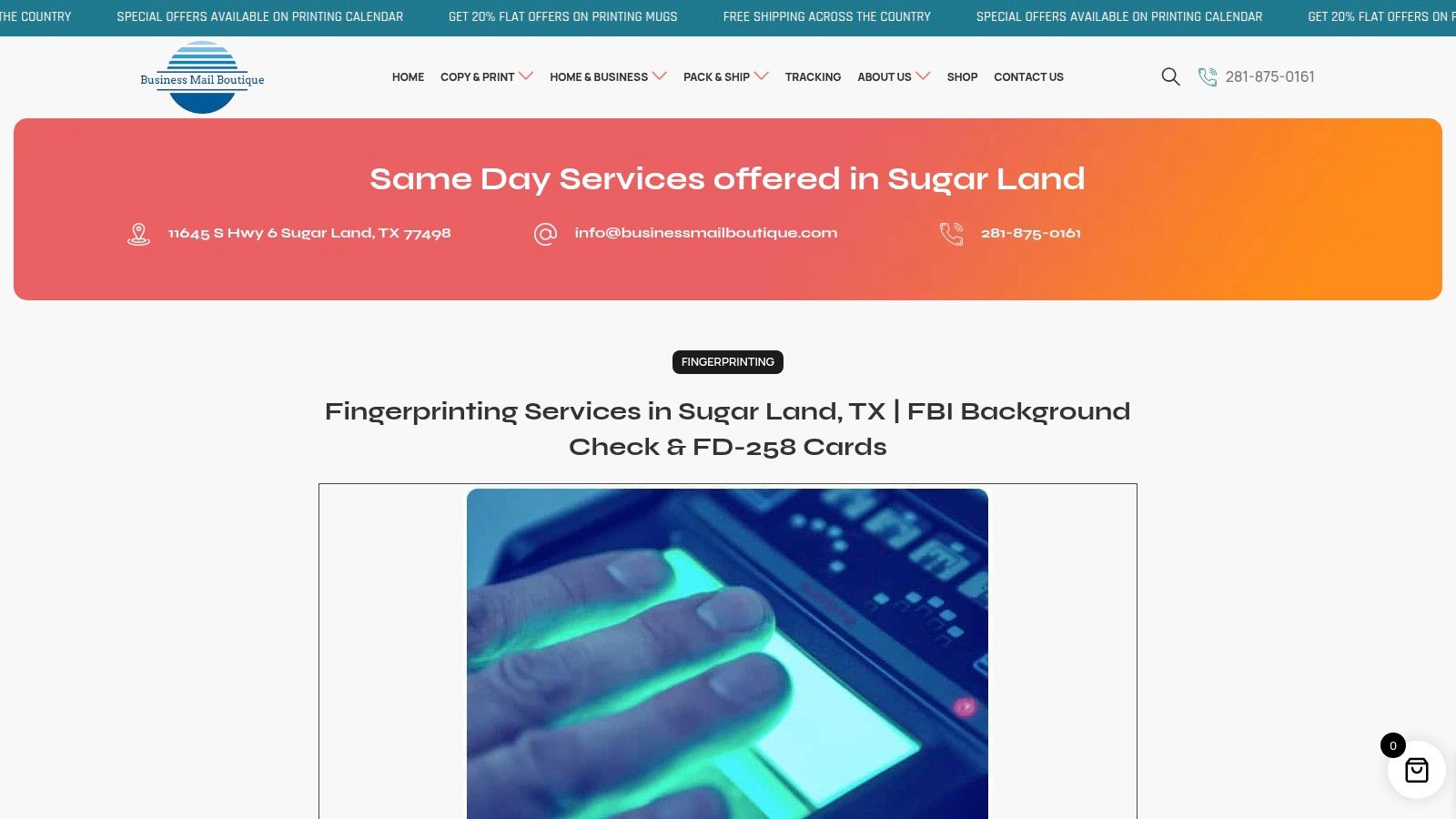
For digital capture, live scan equipment helps produce a cleaner result than many do-it-yourself methods. That matters because poor-quality prints are where avoidable trouble starts. If you’ve been trying to figure out where to get fingerprints done in Sugar Land, the main thing to look for is a provider that understands both capture quality and downstream submission needs.
This visual gives a good sense of the digital scanning setup applicants are looking for:
What you leave with
Your end result depends on the path you chose before the appointment. You may leave with printed FD-258 cards, a digital EFT file, or a clear understanding of how your file will be delivered securely.
That sounds obvious, but it’s where many applicants get tripped up. They assume “fingerprinted” means finished. It only means the capture step is finished. What matters next is whether the product you received matches your filing workflow.
- If you chose EFT: Confirm the file is intended for ATF use and that your identifying details match.
- If you chose FD-258 cards: Review the printed information before leaving.
- If you need multiple submissions: Ask whether you should leave with extra cards or retain your digital file for future use.
Local businesses that handle identity services well usually build their reputation the same way they build any strong local presence: with consistency, accuracy, and clear customer guidance. If you’re curious how that shows up online, these proven strategies for local dominance explain why businesses that communicate details clearly tend to earn trust faster.
The best appointments feel uneventful. That’s a good sign. No scrambling, no guessing, no “I think this is what the ATF wants.”
How to Submit Your Fingerprints to the ATF
Once your prints are captured, the job isn’t done. Submission is where small mistakes turn into long waits.
The cleanest way to think about this is to separate the process into two lanes. One lane is for EFT upload through eForms. The other is for paper FD-258 mailing when your filing path calls for it.
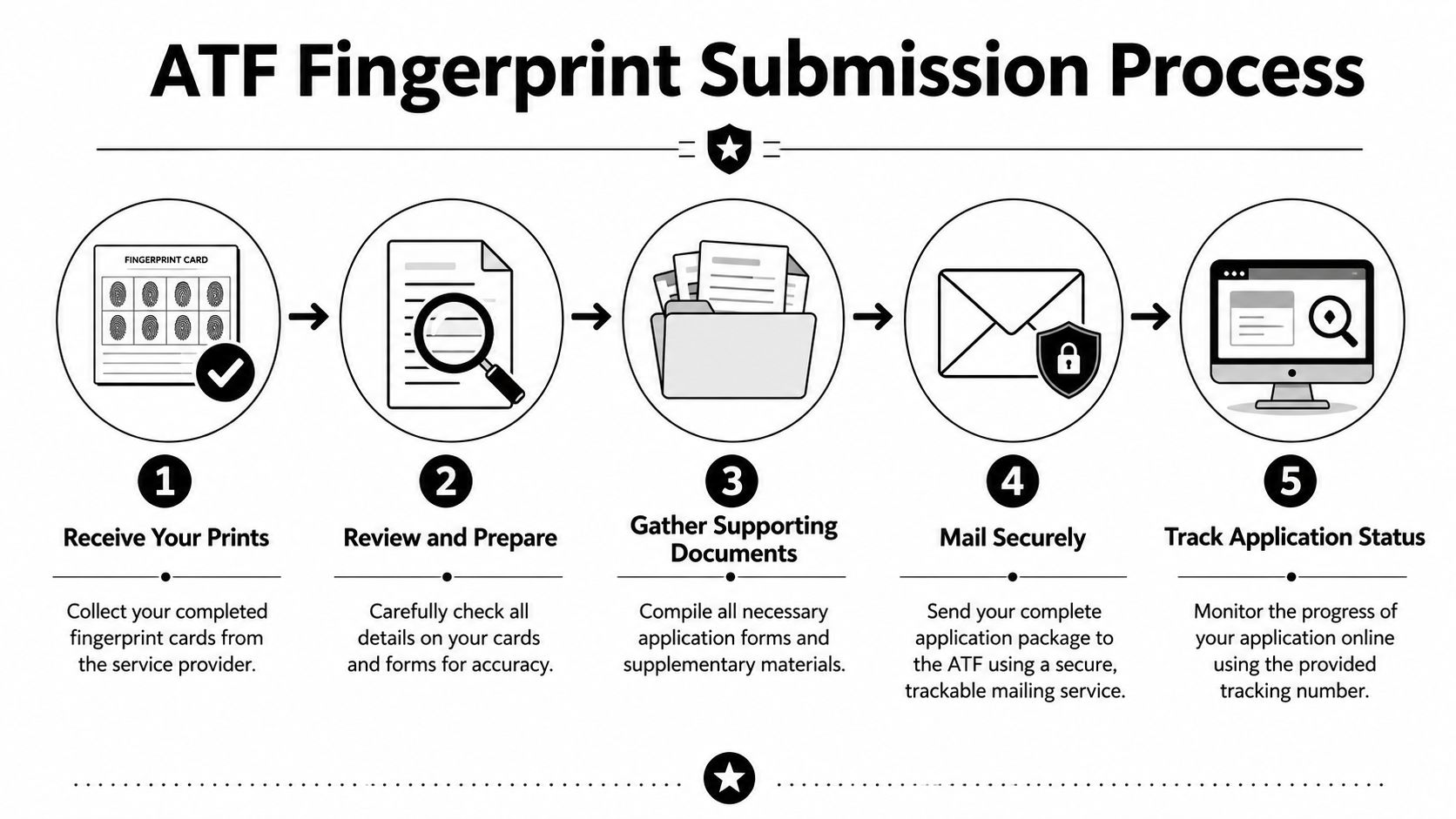
Uploading an EFT file through eForms
If you’re using an EFT file, stay organized and slow down at the attachment stage.
- Complete the eForms application carefully. Don’t rush the identity fields.
- Locate the fingerprint upload area for the responsible person or applicant profile within the filing flow.
- Upload the EFT file you received. Use the exact file prepared for ATF submission.
- Confirm the displayed identity details match the person tied to the application.
- Review before final submission. A correct file attached to the wrong person is still a problem.
Individuals sometimes sabotage their efforts by uploading an old file, the wrong person’s file, or a document that isn’t an EFT. Effective file naming is beneficial. Ensure your records are organized before logging in.
Review the name and date of birth shown in the system before you hit submit. That last check prevents a surprising number of avoidable errors.
Mailing FD-258 cards without creating problems
If your route requires paper cards, treat mailing as part of compliance, not as an afterthought. Don’t fold the cards. Don’t staple through them. Don’t assume the ATF can “figure it out” if your identifying paperwork is incomplete.
A practical checklist helps:
- Inspect the cards first: Make sure the prints and printed data are legible.
- Use the application-linked paperwork: Include the material needed to connect the fingerprint cards to the filing.
- Package flat and securely: Bent cards are asking for trouble.
- Use trackable shipping: That gives you proof of mailing and delivery.
- Keep copies of what you can: Maintain a record of the surrounding submission documents for your own file.
If you need to start with the correct paper format, this guide to the FD-258 fingerprint card in Sugar Land helps clarify what the card is and when applicants use it.
People often focus on the fingerprint capture itself and ignore packaging. In practice, a well-captured card can still create delay if the mailing side is sloppy.
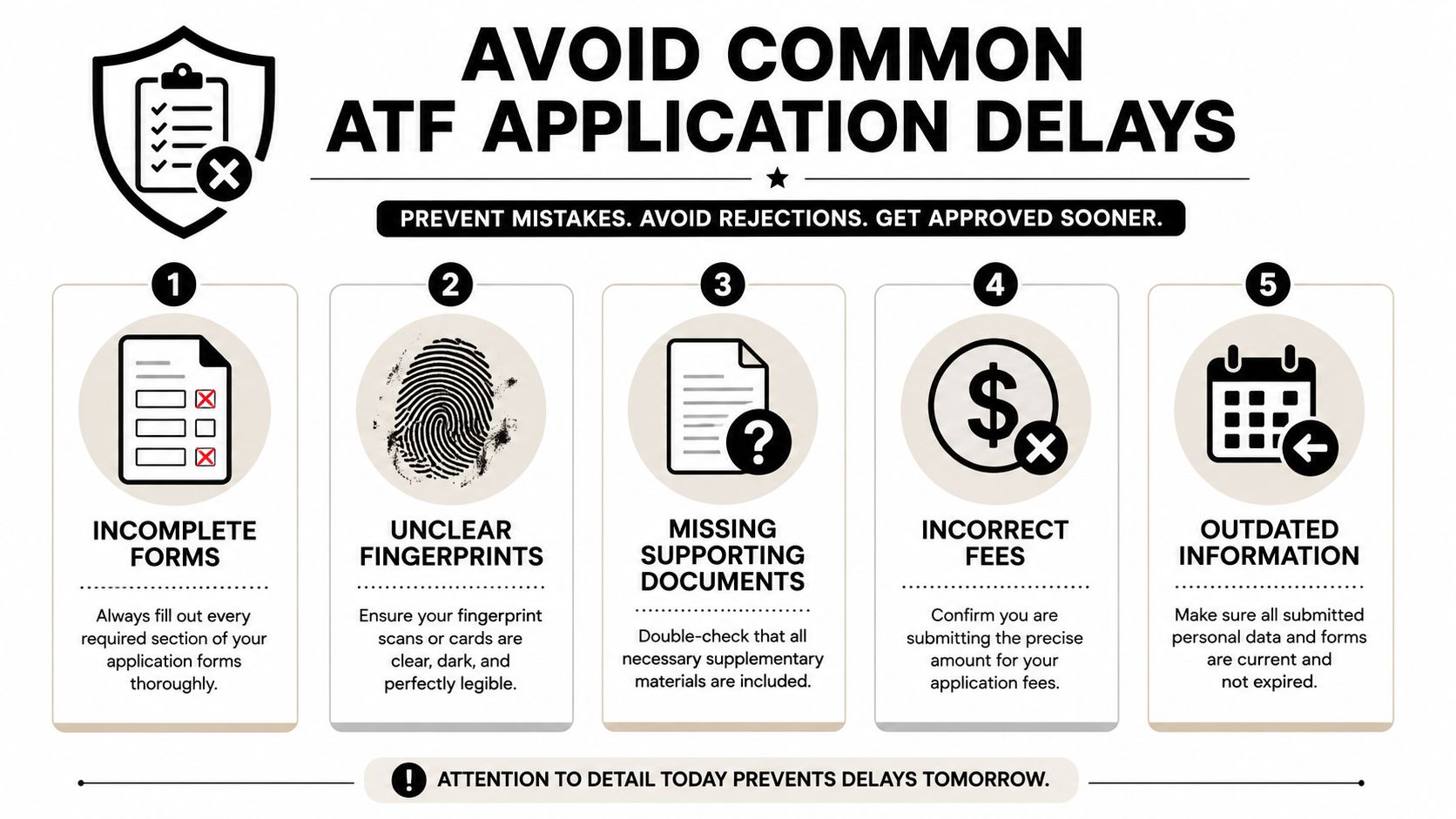
Avoiding Common Mistakes That Delay Your Application
Most applicants worry about the wrong thing. They worry about some mysterious ATF issue they can’t control, while overlooking the ordinary mistakes they can control.
The first one is print quality. The second is admin accuracy. Together, those two issues cause most of the headaches people blame on the system.
Print quality matters more than most people think
Forensic latent fingerprint individualization decisions show a 0.1% false positive error rate under controlled conditions, and the cited analysis notes that the rare errors were concentrated in low-quality or ambiguous prints in this fingerprint error rate study. For applicants, the lesson is simple. Bad prints create risk. Clean prints reduce it.
That doesn’t mean your application is being treated like a crime lab comparison. It means the underlying principle is the same. Clarity matters.
Common quality problems include:
- Smudging: Usually from poor rolling technique or movement during capture.
- Dry or damaged skin: Finger ridge detail can fade when fingertips are cracked or worn down.
- Over-inking on cards: Too much ink can blur ridge detail.
- Weak digital capture: Some fingers need multiple attempts to get a usable result.
One good set of prints is better than three rushed sets.
Administrative mistakes cause just as many headaches
The non-print side causes trouble too, often because it looks boring and people stop paying attention.
Watch for these issues:
- Name mismatch: Your ID, application, and fingerprint record should line up.
- Wrong file type: An image, scan, or random PDF isn’t a substitute for the right digital fingerprint file.
- Expired identification: If your ID isn’t current, the appointment may stall before it starts.
- Missing application context: Cards or files without clear connection to the filing can create confusion.
- Last-minute assumptions: Don’t assume your trust paperwork, photos, and fingerprints all move through the system the same way.
Applicants sometimes think the hardest part is getting fingerprinted. Usually it isn’t. The harder part is staying precise all the way to submission. That’s why professional capture and a short review before leaving the counter are worth it.
ATF Fingerprinting FAQs for Sugar Land Applicants
Some questions come up in almost every conversation about ATF fingerprinting. Not because the process is impossible, but because the rules and the practical workflow don’t always get explained in plain English.
A good FAQ should do what a good front counter conversation does. It should answer the underlying question behind the question. If you write customer-facing content yourself, these AISEOGrow’s FAQ page strategies are a useful example of how to structure answers so people can effectively use them.
Questions people ask before booking
Do I need paper cards or an EFT file?
It depends on how you’re filing. If you’re using eForms, an EFT file is often the cleaner fit. If your process calls for mailed fingerprint cards, FD-258 cards may still be the right choice.
Can I do ATF fingerprinting as a walk-in?
That depends on the provider’s daily flow, but many local applicants prefer calling ahead or booking so they don’t arrive with missing documents or the wrong expectations.
How long does the appointment take?
Usually not long if your ID is current and you already know which fingerprint format you need. Most delays happen before capture starts, not during capture.
Should I get extra cards?
If you’re using paper, having additional properly prepared cards can be useful. If you’re going digital, keeping your EFT file organized matters more than stacking extra paper.
Questions about changing ATF rules
Are fingerprints always going to be required for Responsible Persons?
Not necessarily. A 2025 proposed rule from the Department of Justice, RIN 1140-AA63, would remove the fingerprint card requirement for Responsible Persons on Forms 1, 4, 5, and 5320.23, according to the official rulemaking entry for RIN 1140-AA63. Because it’s a proposed rule, treat it as a possible change, not as current settled practice.
What does that mean for trust applicants in Sugar Land?
It means you should pay attention to timing. If your filing is happening now, follow the current requirements that apply to your submission. If your filing is later, especially for a trust or legal entity, watch for changes before paying for services you may not need.
Is the online advice I’m seeing always up to date?
No. A lot of ATF content online lags behind procedural changes or mixes old paper-centric advice with newer eForms realities. That’s why applicants should verify the current filing path before choosing paper or digital fingerprinting.
What’s the safest approach right now?
Match the fingerprint format to your actual filing method, keep your identification consistent, and don’t rely on assumptions pulled from old forum posts or recycled checklists.
If you need ATF fingerprinting, FD-258 cards, live scan capture, shipping help, printing, or notary support in one place, Business Mail Boutique LLC in Sugar Land offers practical, local help that keeps the process organized from start to finish.

Related posts

Custom Memorial Glasses Engraved in Three Hours in Sugar Land
When a customer needed eight personalized glasses for a memorial, Business Mail Boutique completed the engraving or...

Custom Martini Glass Engraving in Sugar Land, TX
Custom Logo Engraving on Martini Glasses in Sugar Land, Texas.
Business Mail Boutique recently completed a beautiful custom engravin...

Custom Engraved Wine Glasses for a Golf Club Event in Sugar Land, TX
Custom Engraved Wine Glasses for a Golf Club Event in Sugar Land.
Custom wine glass engraving in Sugar Land, TX at Business Mail Bouti...