
- Print Business Cards in Sugar Land – Same Day Service
- Copying Services
- Document Printing, Finishing & Lamination in Sugar Land
- Flyers
- Print Banner in Sugar Land | Same-Day Banner Printing Near Me
- Graphic Design
- Photo Printing
- Postcard Printing
- Document Printing
- EDDM Full Service Postcards
- FotoZoomer Large Format Printing


Bubble Wrap Alternatives: Sustainable Shipping
Businessmailboutique
11645 S. Hwy 6
Sugar land, Texas 77498 United States (US)
Email: info@businessmailboutique.com
Route
Ditch plastic for good! Explore 7 eco-friendly bubble wrap alternatives. Ship products safely & sustainably with honeycomb paper, mushroom foam, and more
You’ve just sold a fragile item online. You reach for the packing supplies, then stop. Is there a better way to ship than plastic bubble wrap, one that looks more professional, creates less waste, and still protects the item when the box gets tossed around in transit?
For a lot of small businesses, the answer is yes. Bubble wrap alternatives have moved well beyond “green but flimsy.” The global market for bubble wrap packaging is projected at USD 5.5 billion in 2026 and projected to reach USD 10.4 billion by 2036, while e-commerce and retail account for an estimated 42.0% share of that industry, according to Future Market Insights on bubble wrap packaging. That scale is one reason more sellers are testing paper wraps, molded fiber, compostable foams, and custom inserts instead of defaulting to plastic rolls.
If you’re comparing options because you want cleaner pack-outs, easier recycling, or help sourcing materials locally, this guide gets straight to the practical choices. If you still need traditional materials for certain jobs, you can also find bubble wrap in Australia. But for many day-to-day shipments, there are better fits now.
Table of Contents
- 1. HexcelPack – HexcelWrap Honeycomb Packing Paper
- 2. Ranpak – Geami Wrap ’n Go
- 3. Sealed Air – FasFil Paper Void-Fill Systems
- 4. Storopack – PAPERplus Paper Cushioning Systems
- 5. Pregis – EverTec Paper Padded Mailers
- 6. Green Cell Foam (starch-based) – TemperPack / Green Cell Foam
- 7. Mushroom Packaging (Ecovative) – Custom Molded Mycelium Cushioning
- Comparison of 7 Bubble Wrap Alternatives
- Pack Smarter, Not Harder, with the Right Partner
1. HexcelPack – HexcelWrap Honeycomb Packing Paper
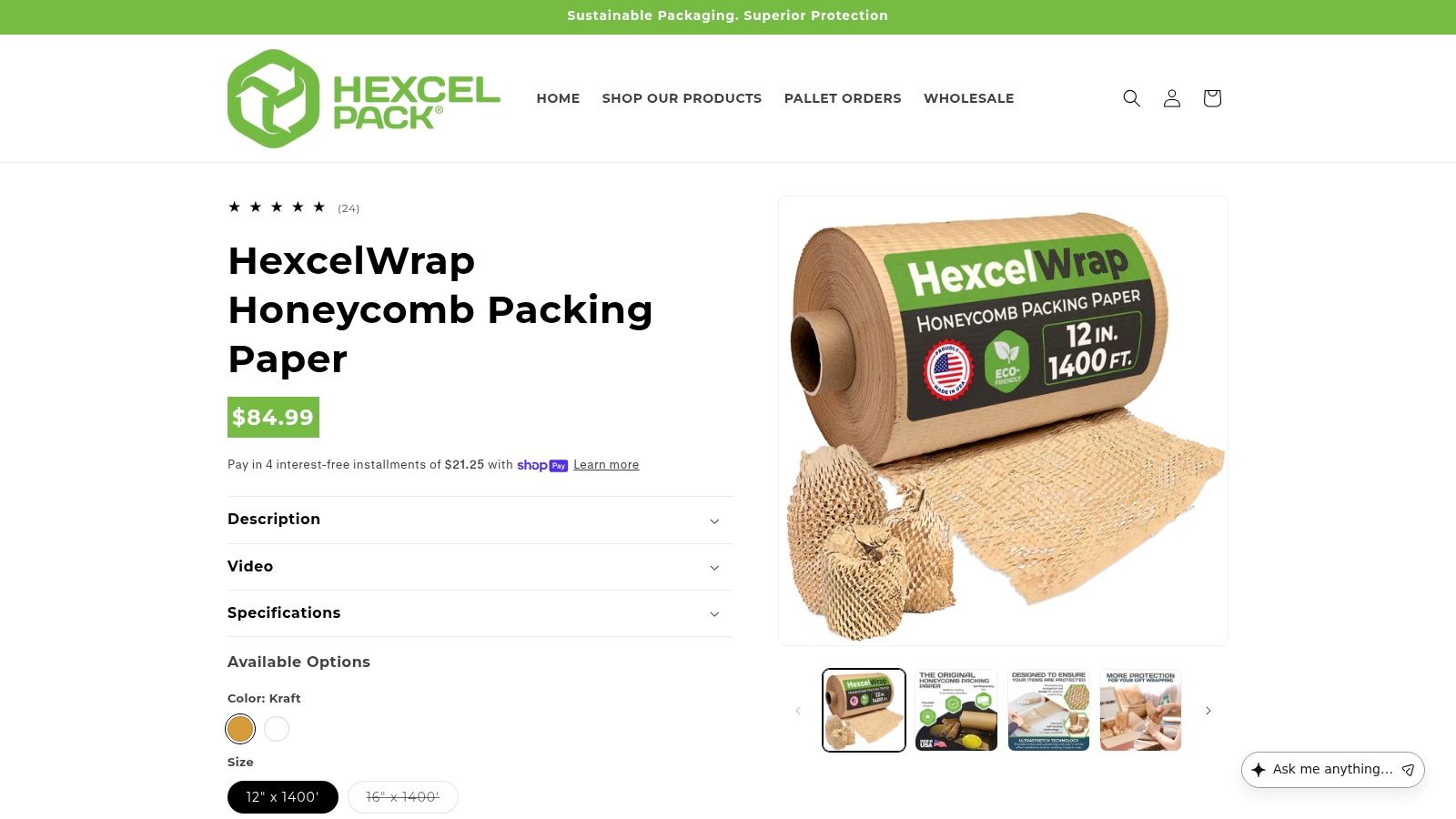
HexcelPack HexcelWrap Honeycomb Packing Paper is one of the easiest bubble wrap alternatives to put into a small operation without redesigning your whole packing bench. It stretches into a honeycomb pattern that grips onto itself, so packers often don’t need tape just to keep the wrap closed around the product.
That matters in real life. If you’re wrapping candles, ceramics, glass tumblers, jars, bath products, or boutique retail items, speed at the bench matters almost as much as the material cost. Honeycomb paper gives a cleaner presentation than a plastic roll and usually looks better the moment the customer opens the box.
Where It Works Best
HexcelWrap makes the most sense when you’re replacing hand-wrapped bubble on small parcels. It’s especially useful for irregular shapes because the paper cells conform around corners and curves better than flat kraft sheets.
- Best for boutique goods: It gives small brands a more polished unboxing than loose plastic wrap.
- Good for quick trials: Direct online ordering makes it easier to test without jumping straight into a big distributor relationship.
- Helpful in tight spaces: Compact dispensers fit better in a small back room than bulky protective packaging setups.
Practical rule: Use honeycomb wrap for surface protection and light-to-moderate cushioning. Don’t trust it alone on sharp metal edges, pointed corners, or anything that can cut through paper under pressure.
The trade-off is straightforward. Paper wrap is usually heavier than plastic air-based options, and it doesn’t like puncture hazards. If you ship hardware, machined parts, or anything greasy, you’ll probably need an interleaf, tissue, or a different system altogether.
One more reason paper wrap keeps gaining ground: traditional bubble wrap usually contains little recycled content, and existing recycled options typically contain less than 20% post-industrial waste, according to EcoEnclose’s overview of alternatives to bubble wrap. That’s one reason many shops are moving toward paper-based options when they can.
2. Ranpak – Geami Wrap ’n Go
Ranpak Geami Wrap ’n Go is what I’d point to when a shop wants a more polished packing station, not just a substitute material. This system turns die-cut kraft paper into a 3D honeycomb wrap right at the counter or bench, which is useful for stores that pack both retail purchases and e-commerce orders from the same space.
The big advantage is consistency. A compact converter keeps the wrap feeding the same way every time, which helps when multiple people are packing. If you’ve ever had one employee make neat, secure wraps and another burn through material with tape-heavy bundles, you know why consistency matters.
Best Use at the Counter or Small Pack Station
Geami Wrap ’n Go is strong for shops that want a customer-facing presentation. Gift stores, home goods sellers, specialty food shops, and local makers often care about how the package looks while it’s being wrapped, not just after it ships.
What works:
- Professional presentation: The interlocking paper cells look tidy and intentional.
- Good distributor coverage: Ranpak is widely recognized, which usually makes replenishment simpler than chasing niche materials.
- Useful for low to mid volume: It suits operations that need something better than hand-crumpled paper but don’t need a large automated line.
What doesn’t:
- Equipment commitment: You’re not just buying paper. You’re buying into a system and its supply stream.
- Not ideal for messy products: Oily parts, sharp pieces, or dirty industrial items can make paper wraps a poor choice fast.
If the package doubles as part of the brand experience, Geami often earns its keep even before you talk about sustainability.
From a market standpoint, alternatives are growing quickly. The global market for bubble-wrap alternative pads is projected at USD 310.0 million in 2026 and projected to reach USD 720.0 million by 2036, expanding at an 8.8% CAGR, according to Fact.MR’s bubble wrap alternative pads market analysis. That tells you this category isn’t fringe anymore.
3. Sealed Air – FasFil Paper Void-Fill Systems
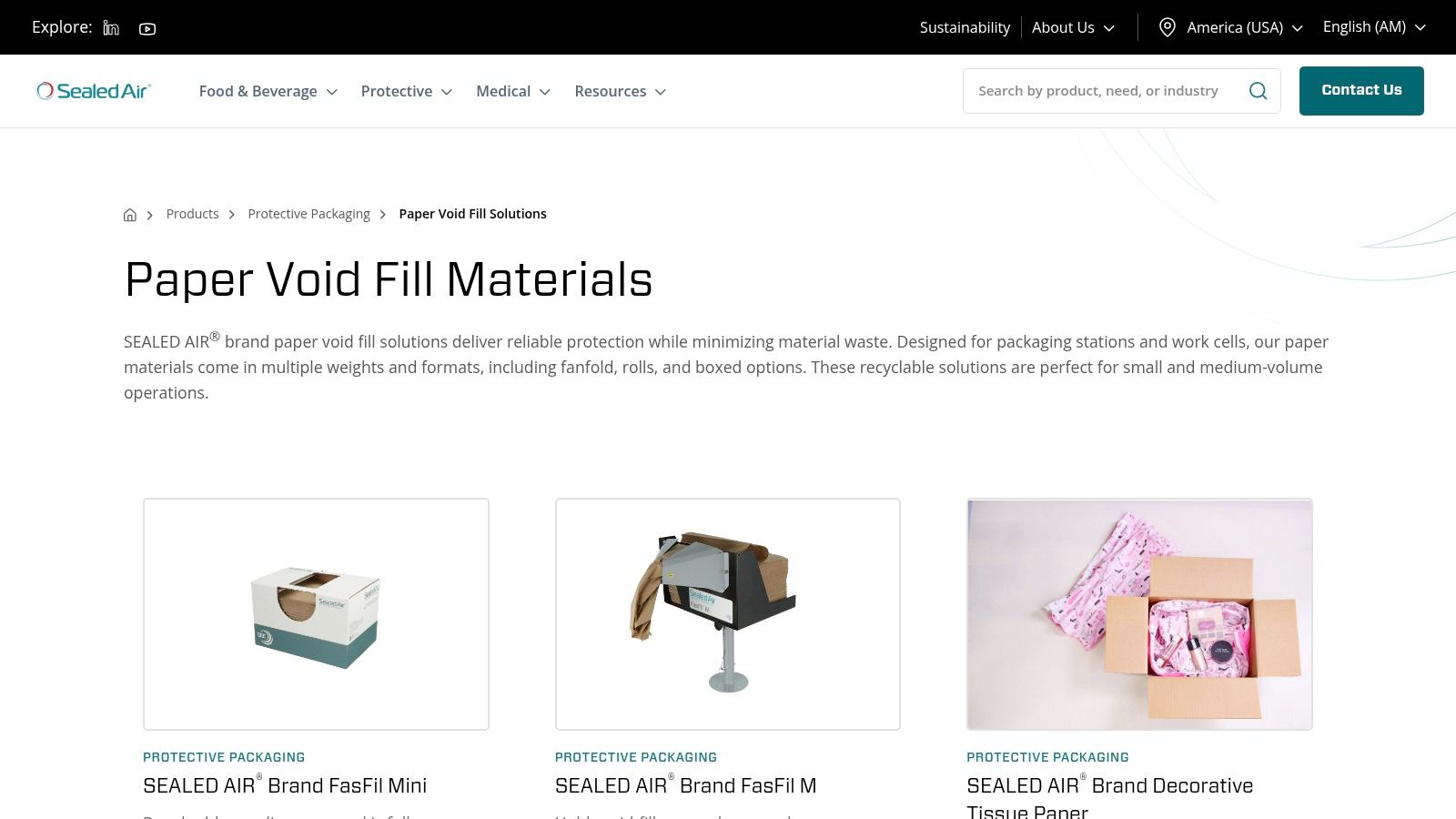
Sealed Air FasFil Paper Void-Fill Systems solve a different problem than wrap. They’re not really about cocooning a product. They’re about stopping movement inside the carton.
That distinction gets missed all the time. Sellers often use bubble wrap as if it’s doing every job at once: wrapping, void fill, blocking, and cushioning. It usually isn’t. If the item already has a decent retail box or a hard enough shell, paper void fill can be the smarter replacement.
What It Does Well and What It Does Not
FasFil systems range from simple manual dispensers to faster setups with programmable lengths. For operations shipping the same carton sizes repeatedly, that consistency helps packers move quicker and use less guesswork.
- Best at filling dead space: It stops products from rattling around in oversized cartons.
- Saves storage room: Paper ships and stores flat, which is easier than stacking bulky pre-inflated materials.
- Scales better than loose hand-crumpled paper: The output is more uniform from one packer to the next.
Here’s the limit. Void fill is not the same as cushioning wrap. If a fragile item needs direct impact protection, you still need a wrap, pad, insert, or suspension setup around the product itself.
Packing bench reality: If the product can hit the box wall, void fill alone isn’t enough.
This is also where shipping cost decisions come into play. Paper systems can increase parcel weight less than overpacking with layered wraps, but carton size still matters. If your box is too large, dimensional pricing can hurt you before material cost does. Business owners who want to control that side of the equation should review how dimensional weight affects shipping charges.
For many commercial shippers, paper remains the practical default. Bay Water Packaging’s review of research into bubble wrap alternatives notes that shredded paper and corrugated cardboard currently maintain the highest adoption rates in the commercial sector because they’re affordable, practical, and don’t require specialized processing equipment.
4. Storopack – PAPERplus Paper Cushioning Systems
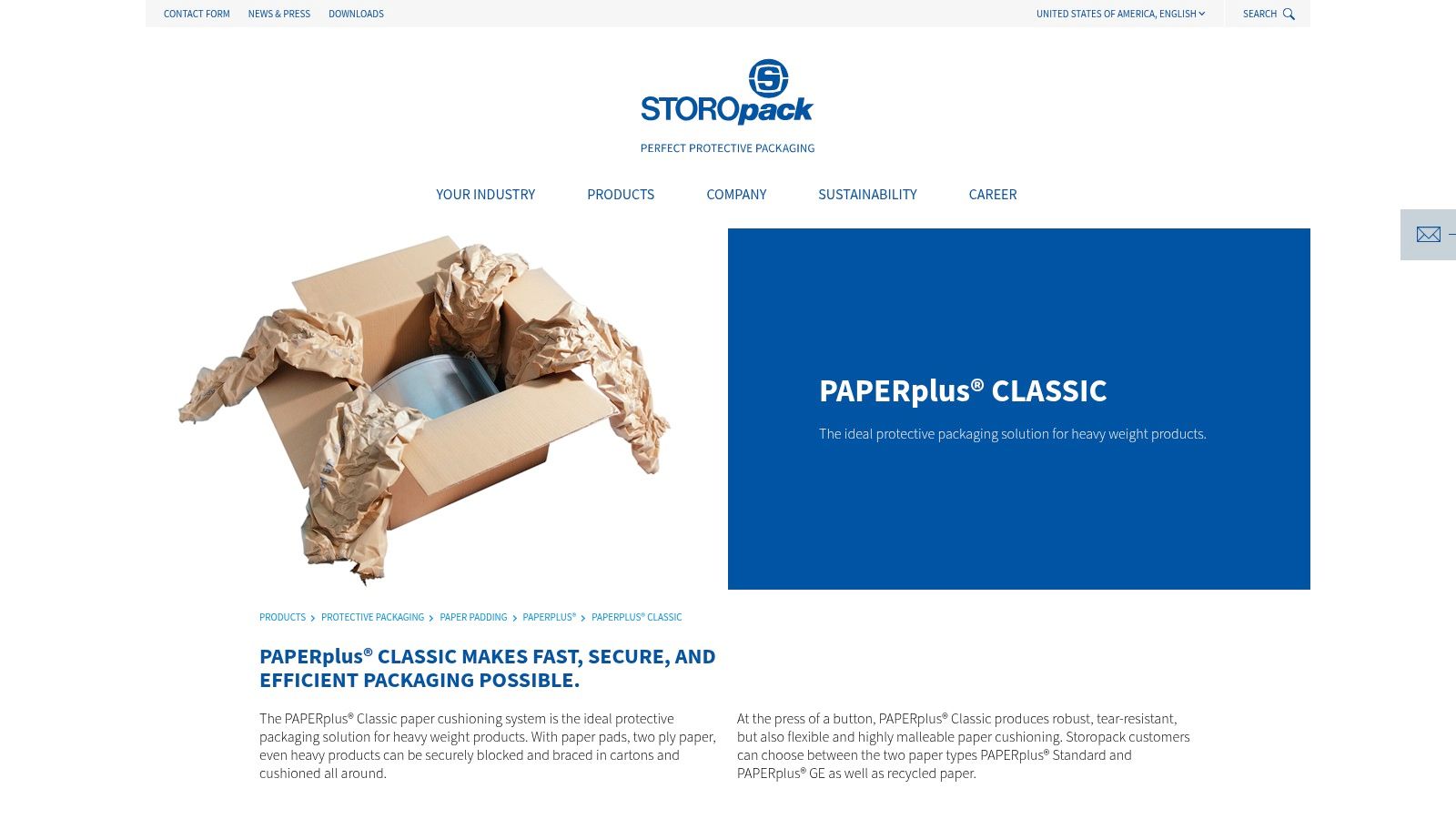
Storopack PAPERplus Paper Cushioning Systems are for the shipments that make basic honeycomb wrap feel too light. If you’re sending heavier items, mixed-weight orders, or products that need blocking and bracing, paper pads do a job that bubble wrap often struggles to do well.
Many small businesses level up by adopting this approach. Instead of wrapping something six times and hoping for the best, they use formed paper pads to build structure inside the carton. That gives the item less room to shift and gives the box better resistance against crushing.
When Paper Pads Beat Bubble Wrap
Paper pads are useful when the shipment needs structure more than softness. Think tools, dense kitchenware, boxed parts, larger ceramics, or multiple items packed in one carton.
- Strong for blocking and bracing: Pads help lock products into position.
- Better for heavier SKUs: Large-bubble plastic can cushion, but it doesn’t create the same support.
- Good for mixed catalogs: Shops with light and heavy products can use different pad patterns instead of stocking many separate materials.
The drawbacks are real. These systems cost more to implement than basic paper wrap, and they work best when packers are trained to build the right pad shapes. A poorly formed paper pad can waste material and still leave the item vulnerable.
Paper also adds weight. On some shipments that won’t matter. On others, especially long-zone shipping, it can.
Technical research is one reason paper systems have become more credible. Zenpack’s discussion of eco-friendly bubble wrap alternatives points out that a common gap in the market is the lack of accessible side-by-side data comparing ISTA protection standards and cost-per-unit for small businesses, even though kraft paper, honeycomb sleeves, and molded pulp are described as meeting ISTA protection standards. In practice, that means testing your own product matters more than chasing general claims.
5. Pregis – EverTec Paper Padded Mailers
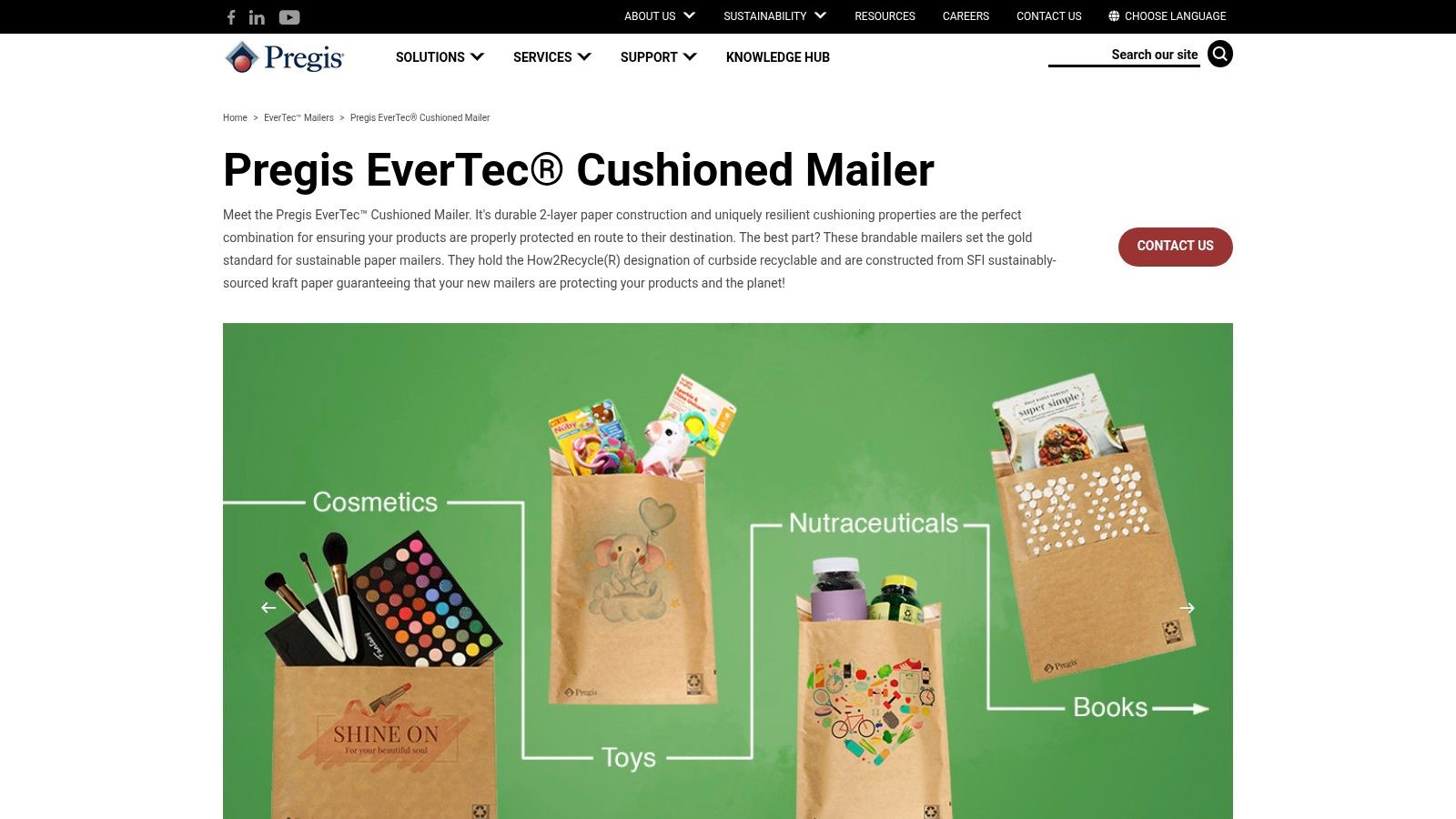
If your current habit is dropping small goods into poly bubble mailers, Pregis EverTec Paper Padded Mailers are one of the cleanest upgrades. They replace the usual plastic-lined feel with an all-paper padded format that’s much easier to position as a curbside-recyclable option.
For small businesses, the appeal is simple. A mailer is faster than building an entire carton pack-out. When it works, it saves labor, space, and extra packing material.
A Good Fit for Flat Fragile Shipments
These mailers make sense for goods that are light, relatively flat, and not too crush-sensitive. Items like books with some protection needs, apparel accessories, stationery sets, framed prints with internal support, or small boxed goods can be good candidates.
What I like:
- Cleaner material story: Customers can usually understand paper mailers immediately.
- Strong branding potential: Printed mailers look more premium than generic plastic bubble envelopes.
- Good for manual or automated flows: Useful whether you pack by hand or run a more structured shipping line.
Where they fall short:
- Less moisture tolerance than poly mailers: If the product can’t handle humidity exposure, add internal protection.
- Not for fragile depth: A padded mailer still isn’t a box. If the item can crack under compression, don’t force it.
A lot of damage claims start with one bad assumption: “It fit in the mailer, so it was safe in the mailer.”
If you’re local and want to compare mailers, cartons, wraps, and labels without ordering blind, it helps to work with a nearby supplier that understands actual parcel handling. A good starting point is this guide to shipping supplies near Sugar Land, TX, especially if you want hands-on advice instead of guessing from product photos.
6. Green Cell Foam (starch-based) – TemperPack / Green Cell Foam
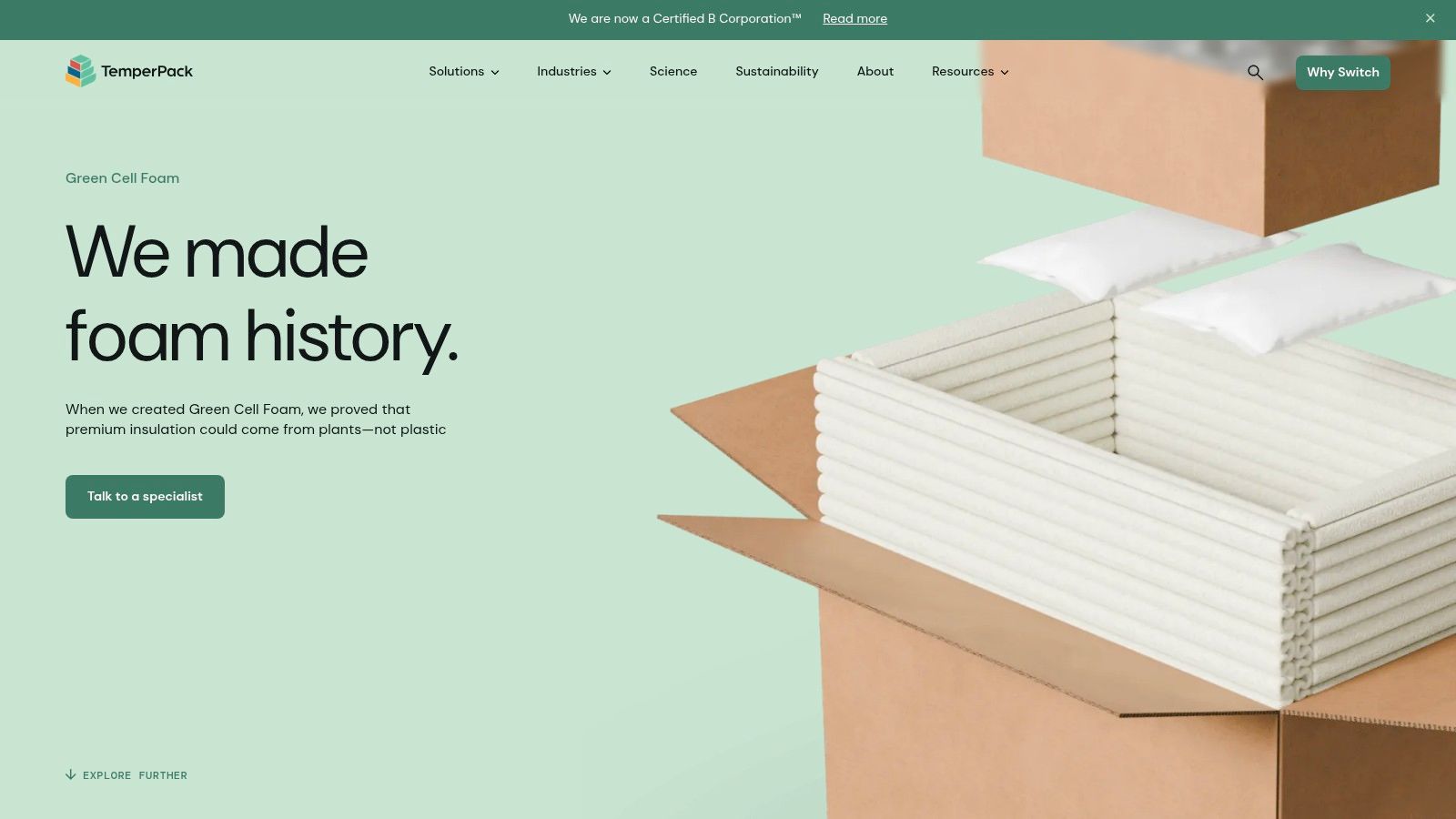
TemperPack Green Cell Foam is one of the more interesting bubble wrap alternatives because it doesn’t feel like paper and doesn’t act like standard plastic foam. It’s a starch-based material used for cushioning and insulation, and its disposal story is a major part of the appeal.
For customers, water solubility and compostability are easy concepts to understand. For brands, that can make the packaging itself part of the message. If you ship foods, temperature-sensitive items, or products that need a softer foam-like buffer, this material can fill a gap that paper doesn’t always cover well.
Strong Sustainability Story With Real Handling Limits
This option shines when your packaging needs include insulation or foam-style protection. It can also work where a premium eco story matters just as much as the protective function.
- Useful for cold-chain and specialty shipping: Foam sheets can cushion and insulate in one system.
- Different end-of-life experience: Customers don’t have to wrestle with a stubborn petroleum-based insert.
- Appealing for premium brands: The sustainability story is easy to explain.
The weakness is moisture sensitivity. That’s not a small footnote. If the shipment environment or the product itself introduces moisture, you may need a liner or secondary barrier.
There’s also a sourcing reality. This usually isn’t the kind of product a small seller grabs off a shelf with no planning. It’s often quote-based and better suited to businesses willing to work through a packaging provider.
The broader category is moving in this direction. Research highlighted earlier notes active development in starch-based compounds and mycelium-based foams aimed at matching the resilience of plastic while degrading quickly after disposal. That’s promising, but for many small businesses, the right choice still comes down to product fit and handling conditions, not just the sustainability pitch.
7. Mushroom Packaging (Ecovative) – Custom Molded Mycelium Cushioning
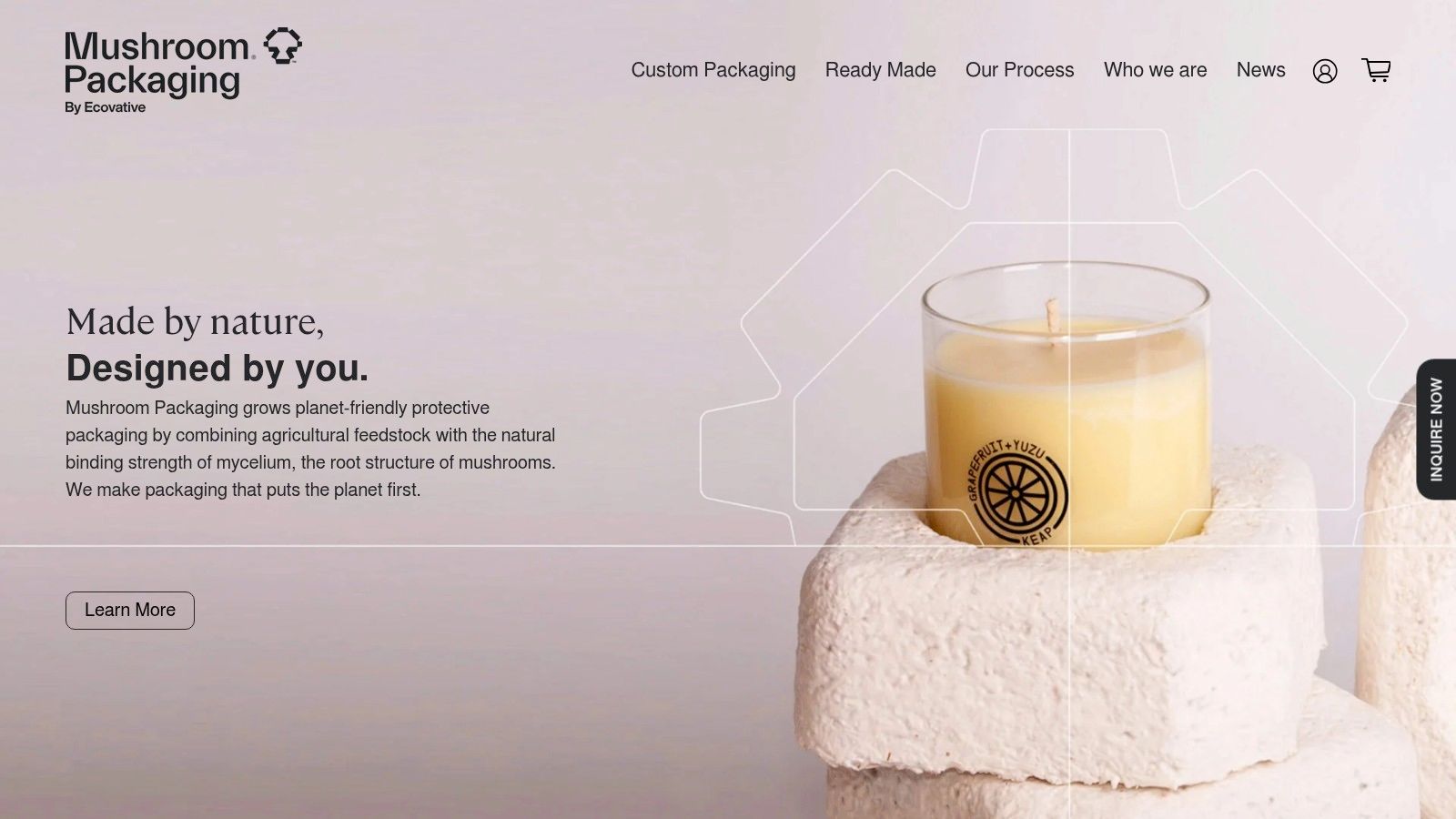
Mushroom Packaging by Ecovative is not a general-purpose bench material. It’s a custom insert solution. That difference matters because a lot of business owners hear “mushroom packaging” and imagine a drop-in replacement for a roll of bubble wrap. It isn’t.
What it does well is replace combinations of foam end caps, corrugated inserts, and wrapped cushioning for repeat products with stable dimensions. If you ship the same fragile item over and over, a molded mycelium insert can give you a snug, repeatable fit with a strong sustainability narrative.
Best for Repeat Products, Not One-Off Jobs
This is the most specialized option on the list. It works best for brands with a defined product line and enough shipping volume to justify custom design and production.
- Excellent geometry match: A fitted insert protects better than loose wrap for many shaped products.
- Strong brand alignment: Eco-forward companies often like the look and story.
- Reduces packing variation: Packers don’t have to improvise protection on every order.
The downside is flexibility. If your SKU mix changes often, custom molded inserts become a burden instead of an advantage. Lead times, design work, and quote-based ordering make this a poor fit for random one-off shipments.
For repeat fragile SKUs, custom inserts can remove a lot of human error from packing.
This kind of packaging also works best when you’ve already tested the product’s shipping profile. If you’re still figuring out where impact happens or how the item fails, start with professional packing and test shipments before committing to a custom insert path. For that process, this guide to shipping fragile items with pro-level packing methods is a useful reference.
Comparison of 7 Bubble Wrap Alternatives
| Item | ? Implementation complexity | ⚡ Resource & operational needs | ⭐? Expected outcomes & performance | ? Ideal use cases | ⭐ Key advantages |
|---|---|---|---|---|---|
| HexcelPack – HexcelWrap Honeycomb Packing Paper | ? Low–Moderate, manual roll or compact dispenser, minimal training | ⚡ Requires paper rolls and dispensers; heavier than air systems (can increase parcel weight) | ⭐ Good surface protection for irregular shapes; recyclable; lower puncture resistance vs plastic bubble | ? Small‑parcel e‑commerce, boutiques replacing bubble wrap for premium unboxing | ⭐ Plastic‑free, curbside‑recyclable; fast pack‑outs; low MOQ trial |
| Ranpak – Geami Wrap ’n Go | ? Moderate, bench converter required; simple operator steps | ⚡ Needs converter + die‑cut kraft supply; equipment + ongoing paper purchases | ⭐ Professional wrap with interlocking cells; not ideal for very sharp/oily items without add-ons | ? In‑store gift wrap, low–mid volume pack stations, retail counters | ⭐ Compact, retail‑friendly system; strong distributor support |
| Sealed Air – FasFil Paper Void‑Fill Systems | ? Low–High, range from manual fanfold units to high‑speed jet dispensers | ⚡ Equipment (various models), programmable settings, service footprint; best ROI at moderate+ volumes | ⭐? Efficient void fill and space savings; less drop cushioning than wrap/pads | ? Warehouses needing scalable void‑fill and consistency across volumes | ⭐ Scalable portfolio; programmable lengths; saves storage vs preformed pillows |
| Storopack – PAPERplus Paper Cushioning Systems | ? Moderate–High, machine operation and training for pad patterns | ⚡ Capital‑intensive equipment, multiple paper grades, maintenance/support | ⭐ High crush resistance and blocking/bracing for heavier SKUs; adds weight vs air | ? Shipping heavy items or mixed‑weight catalogues requiring layered protection | ⭐ Robust protection comparable to large‑bubble substitutes; strong service support |
| Pregis – EverTec Paper Padded Mailers | ? Low, drop‑in replacement for bubble mailers at packing stations | ⚡ Requires supply via distributor/contract; heavier than poly mailers; print options available | ⭐ Retains padding for mailables; curbside‑recyclable with lower moisture resistance | ? E‑commerce mailers seeking brandable, plastic‑free padded envelopes | ⭐ Eliminates plastic in mailers while maintaining padding; brandable |
| Green Cell Foam (starch‑based) – TemperPack | ? Low–Moderate, handle like foam sheets/inserts; some care for moisture | ⚡ Specialized material (quote‑based), may need liners for wet environments | ⭐ Compostable and water‑soluble with good insulation; moisture sensitivity can limit use | ? Cold‑chain, perishables, or cushioning where compostability is prioritized | ⭐ Strong end‑of‑life story (water solubility/compostable) vs petroleum foams |
| Mushroom Packaging (Ecovative) – Mycelium Cushioning | ? High, custom design, tooling, and lead times for molded parts | ⚡ Requires design work, custom molds, and higher per‑unit pricing at low volumes | ⭐ Precise fitted protection, premium unboxing; fully compostable | ? Repeat SKUs, premium eco brands wanting custom inserts | ⭐ Fully compostable custom inserts with high protection and brand impact |
Pack Smarter, Not Harder, with the Right Partner
A small business owner walks in with six candle orders, two framed prints, and one gift box going across the country. None of those shipments should be packed the same way. That is the mistake I see most often at the counter. Owners pick one material, buy it in bulk, and try to make it cover every job.
The better approach is to match the material to the risk. Honeycomb paper works well for surface protection on breakables with decent box fit. Paper void fill and paper pads do a better job when the item is heavy, has empty space around it, or needs blocking and bracing. Padded paper mailers save labor on flat items, but they are a poor substitute for a carton when the contents can bend, crack, or shift. Custom mycelium inserts can look excellent for repeat products, though the setup cost and lead time usually make sense only after volume is predictable.
That distinction matters in day-to-day shipping. Wrapping, cushioning, void fill, insulation, and presentation are different jobs. One material rarely handles all five well, especially for a small business trying to control supply cost, packing speed, dimensional weight, and damage claims at the same time.
National brands give you good product options. Local packing support helps you choose the right one before you waste money on the wrong case quantity or machine setup. At the packing bench, with the actual SKU in hand, it becomes obvious whether a paper system is enough, whether a mailer is too light, or whether the product needs a fitted insert instead of more loose fill.
That hands-on testing saves time and returns.
If you are in Sugar Land and need help sorting that out, Business Mail Boutique LLC can help with material selection, pack-out decisions, and professional packing for fragile or awkward shipments. The value is practical. You get advice based on what holds up in transit, what slows a packing line down, and what costs more than it should. If part of your operation still calls for plastic while you phase in paper or compostable options, broader suppliers still offer bulk polythene packaging solutions for those specific use cases.
Business Mail Boutique LLC helps Sugar Land businesses pack, ship, print, and manage mail with less guesswork. If you need expert packing for fragile items, reliable shipping support, or help choosing the right materials for your products, stop by and work with a local team that handles these decisions every day.

Related posts

Graduation Gift Engraving Sugar Land | Business Mail Boutique
Graduation Gift Engraving Sugar Land | Business Mail Boutique.
A Personalized Texas A&M Graduation Gift: Custom Glass Engraving in...

Custom Name Tags in Sugar Land | Business Mail Boutique
Custom Name Tags in Sugar Land | Business Mail Boutique.
Custom name tags in Sugar Land with magnetic or pin backs and many colors. Ap...
SpeedX Drop-Off & Pickup in Sugar Land | Business Mail Boutique
Business Mail Boutique Is Now an Authorized SpeedX Drop-Off and Pickup Location in Sugar Land, Texas
Finding a convenient place to dro...