
- Print Business Cards in Sugar Land – Same Day Service
- Copying Services
- Document Printing, Finishing & Lamination in Sugar Land
- Flyers
- Print Banner in Sugar Land | Same-Day Banner Printing Near Me
- Graphic Design
- Photo Printing
- Postcard Printing
- Document Printing
- EDDM Full Service Postcards
- FotoZoomer Large Format Printing


Ship Packages for Less Near Me: Save in Sugar Land, TX
Businessmailboutique
11645 S. Hwy 6
Sugar land, Texas 77498 United States (US)
Email: info@businessmailboutique.com
Route
You walk into a shipping counter with one box, one label, and what feels like a simple job. Then the quote lands higher than expected, the clerk asks if you need a bigger box, and suddenly a routine shipment feels like a guessing game. That’s when the search begins for ship packages for less near me.
The good news is that cheaper shipping usually isn’t about one magic carrier or one coupon. It comes from three decisions that work together: choosing the right service for the package, packing it so you don’t trigger avoidable charges, and knowing when local help saves more than a do-it-yourself label. If you ship for an online store, send customer orders, or just want to stop overpaying in Sugar Land, that combination matters more than any single “lowest rate” ad.
I’ve seen the same pattern over and over. People focus on the label price, but the actual cost often comes from the box choice, missed dimensional weight issues, and using a convenient drop-off point that adds fees without making the savings visible. If you also ship food products, gift boxes, or catering items, this UK guide for catering shipping is a useful example of how packaging and handling decisions change your final cost long before the carrier touches the package.
Table of Contents
- The Hidden Costs of Shipping and How to Beat Them
- USPS vs UPS vs FedEx Which Is Cheapest for Your Package
- Mastering Your Package Size and Weight to Cut Costs
- The Local Advantage Why a Shipping Expert Saves You More
- Your Sugar Land Shipping Checklist for Maximum Savings
- Frequently Asked Questions About Local Shipping
The Hidden Costs of Shipping and How to Beat Them
Shipping gets expensive fast when you pay attention only to the first number you see. A rate can look fair online, then climb once the package is measured differently, bumped into a faster service than you needed, or dropped at a retail counter that layers on packaging and handling charges. Most overpaying starts there.
The better approach is practical. Treat shipping like a matching problem. The package, destination, speed, and packaging have to line up with the right carrier and service level. When they don’t, you pay for unused speed, wasted space, or avoidable surcharges.
The three places people lose money
One problem shows up at carrier selection. Some packages are naturally better fits for USPS, some for UPS, and some for FedEx. If you always default to one carrier, you’ll eventually pay more than necessary.
Another problem starts with packaging. A box that’s too large can turn a light shipment into a costly one. Extra air inside a carton doesn’t just look sloppy. It can change how the carrier prices the shipment.
Practical rule: The cheapest label on the wrong box often becomes the expensive option.
The third issue is local convenience. A nearby counter can save time, but not every local shipping point is built the same way. Some are true multi-carrier advisors. Others are little more than pass-through drop sites with added fees and limited guidance.
What actually works
If you want to ship packages for less near me, use this simple lens before you buy postage:
- Match speed to reality: If the item doesn’t need rush delivery, don’t pay for it.
- Measure before you assume: Weight matters, but dimensions can matter just as much.
- Compare at least a few services: Especially when the package sits in the middle ground between light parcel and heavy box.
- Use local expertise selectively: The right local shipping pro can prevent a pricing mistake before it becomes an expensive lesson.
That’s where savings usually happen. Not in chasing one universal cheapest option, but in avoiding the small errors that pile up shipment after shipment.
USPS vs UPS vs FedEx Which Is Cheapest for Your Package
Carrier choice gets easier when you stop asking, “Which one is cheapest?” and start asking, “Cheapest for what kind of package?” Each major carrier has a lane where it usually makes the most sense.
To make the differences easier to scan, here’s a quick visual.
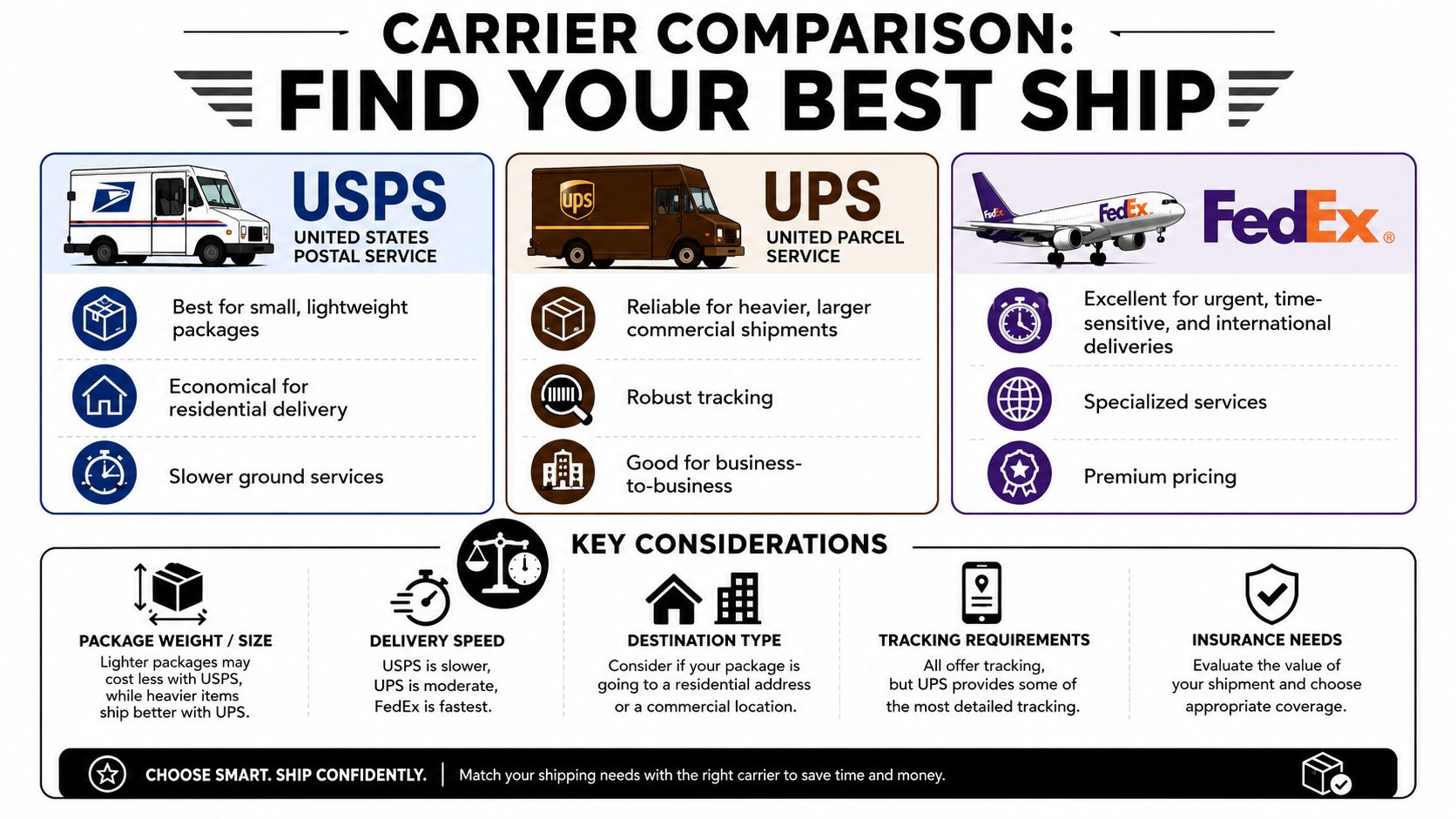
What the major carriers do best
For current rate positioning, USPS Ground Advantage starts at $5.85 and UPS Ground Saver starts at $5.81 for standard packages under 10 pounds, while USPS First Class Mail is typically the most affordable for packages under 16 ounces. For heavier shipments, UPS Ground and FedEx Ground become the most cost-effective choices at 10 pounds or more, according to this 2026 shipping comparison from Easyship.
That tells you something useful right away. USPS often wins the light-package conversation. UPS and FedEx become stronger as weight increases or when business shippers need sturdier tracking and broader service options.
A quick example helps. If you’re mailing a small clothing item, a lightweight accessory, or paper goods, USPS usually belongs on your shortlist first. If you’re sending a denser box with tools, multiple products, or equipment, UPS and FedEx deserve a closer look.
Later in the decision process, service style matters too. If you need a broader overview of business-friendly service options, this roundup of top shipping services for small business is useful because it frames carrier choice around actual operating needs, not just a one-time rate.
Quick carrier comparison by package type
| Package Profile | Best Carrier for Cost | Best Carrier for Speed | Pro Tip |
|---|---|---|---|
| Small t-shirt or lightweight apparel shipment | USPS | USPS | Use a mailer when the item doesn’t need a box |
| Compact 5 lb box of books or dense merchandise | UPS | FedEx | Compare ground service and check whether flat rate makes sense only if the item is compact |
| 15 lb equipment or hardware shipment | UPS or FedEx | FedEx | Focus on ground options first unless delivery timing is critical |
That table isn’t a promise. It’s a decision shortcut. The actual lowest-cost choice can shift with dimensions, zone, and how the package is packed.
If your shipment is light, start with USPS. If it’s heavier or more commercial in feel, compare UPS and FedEx before you commit.
This video gives a helpful overview of the broader shipping decision process.
A final point that new sellers often miss: the cheapest service on paper isn’t always the cheapest real-world choice. If a carrier has the best base rate but your package shape, delivery promise, or packaging needs don’t fit that service well, the “winner” changes. That’s why the best shippers think in package profiles, not brand loyalty.
Mastering Your Package Size and Weight to Cut Costs
Most shipping overpayments begin before the label is printed. They begin on the packing table. If you use a box that’s too large, choose filler that adds bulk, or skip measuring entirely, you can raise your shipping cost without changing the item inside.
That’s why experienced shippers don’t ask only, “How much does this weigh?” They also ask, “How much space does this box take up?”
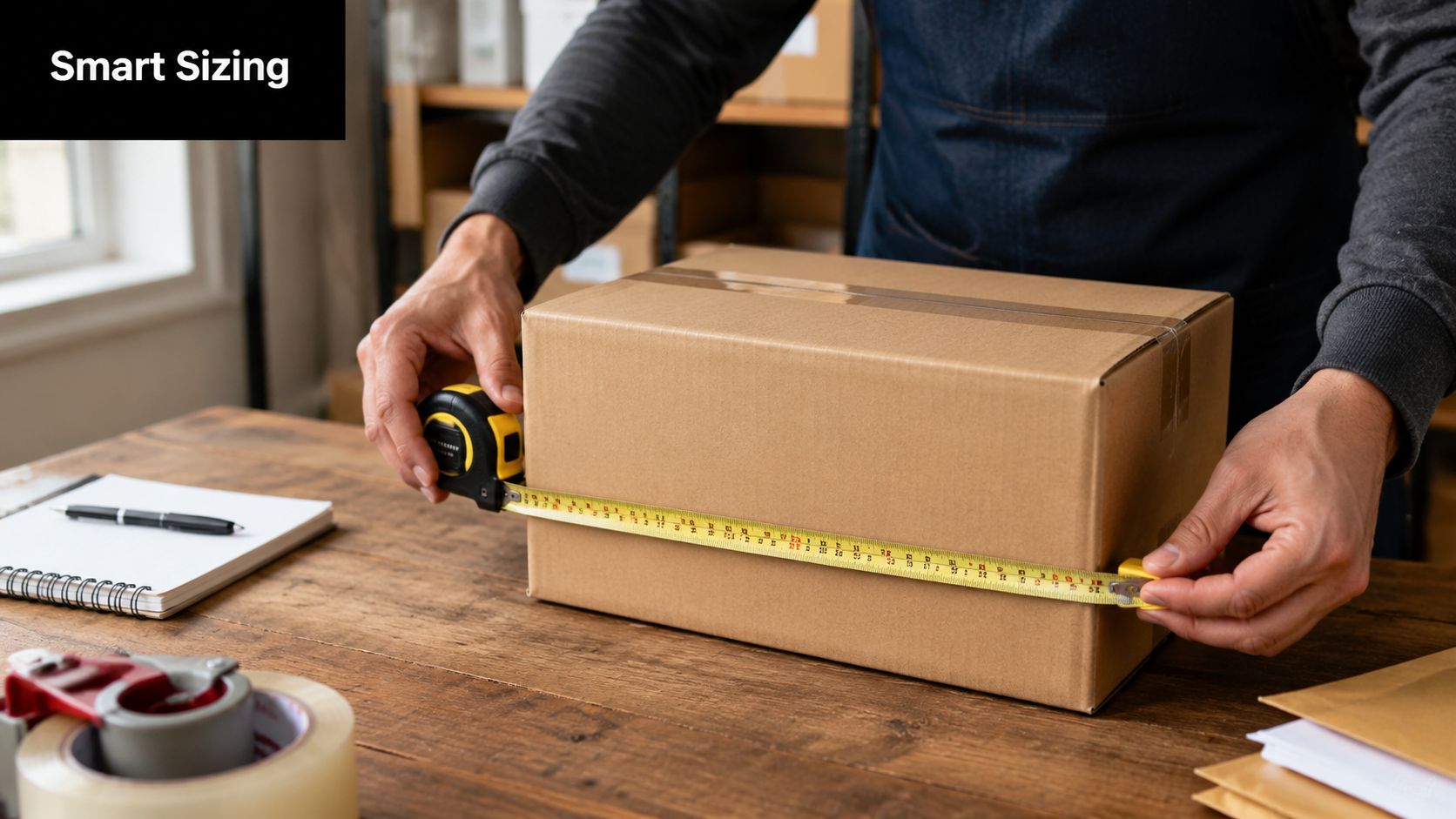
Why box choice changes the final rate
Carriers don’t price every shipment by scale weight alone. They also look at package dimensions. That’s where people get surprised. A light item in a bulky box can price like a heavier shipment because the carrier is charging for the space it occupies.
That’s also why careful measurement matters more than many people expect. The Pitney Bowes packaging guide notes that the best packaging strategy includes using USPS flat-rate boxes for heavy, compact items under 70 lbs, using regional carriers for local orders where available, and avoiding dimensional weight pricing, which can trigger significant surcharges.
When flat rate helps and when it does not
USPS Flat Rate is a smart tool, but it’s not the answer for everything. It usually works best when the item is heavy for its size and fits the approved box neatly. If you’re shipping dense products, printed materials, or compact hardware, flat rate can simplify the math.
It’s less useful when the item is lightweight or awkwardly shaped. In those cases, your own packaging may price better, especially if you can keep the box tight around the contents.
Here’s the packing routine I recommend to people who want to ship packages for less near me:
- Start with the smallest safe container: Don’t use a standard carton when a bubble mailer or slimmer box protects the item just as well.
- Reduce dead space: Empty space invites larger dimensions, more filler, and higher pricing.
- Use carrier packaging strategically: Flat-rate packaging is a tool, not a default.
- Group local shipments intelligently: If a regional option fits your destination, it can reduce the cost tied to distance.
A well-fitted box does two jobs at once. It protects the item and protects your margin.
If you need boxes, mailers, tape, and cushioning that fit the shipment instead of forcing the shipment to fit the leftovers on your shelf, this local guide to shipping supplies near me in Sugar Land can help you think through the right materials.
One more point matters for small businesses. Good packaging isn’t just about postage. It also lowers the chance of damage, returns, and repacking. A cheap box that fails in transit was never the low-cost option.
The Local Advantage Why a Shipping Expert Saves You More
A lot of people assume DIY online shipping is always the cheapest path. Sometimes it is. If you already know your package dimensions, understand the service rules, and have the right packaging on hand, buying a label yourself can work well.
But local expertise becomes valuable when the shipment is unusual, fragile, high-value, or easy to misprice. That’s where a shipping expert earns their keep by preventing bad assumptions before they turn into extra charges.
Where DIY shipping goes sideways
The biggest hidden issue is often dimensional weight. A lot of small shippers think a light package should always be cheap. That’s not how pricing works when the box is oversized.
A verified 2026 National Shipping Association study found that 55% of small businesses using local packing services were hit with unexpected dimensional weight fees, averaging $4.20 extra per shipment, because many stores didn’t warn customers that a 12 oz box measuring 10x8x6 can be billed as a 2 lb package. That single mistake is one of the fastest ways to turn a “cheap” shipment into an annoying one.
Another trap is the difference between true shipping guidance and a generic drop-off experience. Some local stores are convenient, but they don’t actively help you optimize the package, compare services intelligently, or explain why the rate changed. They process the transaction. That’s not the same thing as advising on cost.
What a real shipping expert catches before you pay
A good local shipping pro should do more than print labels. They should flag packaging problems, catch address issues, suggest a better service level, and tell you when your box is hurting you.
That’s especially useful for small businesses with repeat shipments. Once you know your common package profiles, local experts can help standardize them so you stop reinventing the wheel at every order.
What local expertise does well:
- Catches box problems early: Oversized cartons, weak packaging, and poor void fill all show up before the label is purchased.
- Compares carriers in context: Not just “cheapest brand,” but the best fit for your item, destination, and promised delivery speed.
- Protects fragile shipments: Professional packing can lower the chance of damage and the cost of replacing goods.
- Supports more than outbound shipping: Returns, package receiving, and business shipping routines get simpler when one location handles multiple needs.
The cheapest shipment is the one that goes out correctly the first time.
If you’re comparing local options around Sugar Land, this roundup of shipping stores near me in Sugar Land is a practical place to start because it helps separate simple drop-off locations from fuller-service shipping centers.
For small sellers, there’s another benefit. Experienced centers often understand account-level shipping patterns, and that matters when your volume grows. They can point you toward smarter packaging standards and business shipping habits that DIY shippers usually learn only after months of trial and error.
Your Sugar Land Shipping Checklist for Maximum Savings
If you live or work in Sugar Land, the fastest way to lower shipping spend is to use a repeatable routine. Don’t make every shipment a fresh guess. Build a checklist and stick to it.
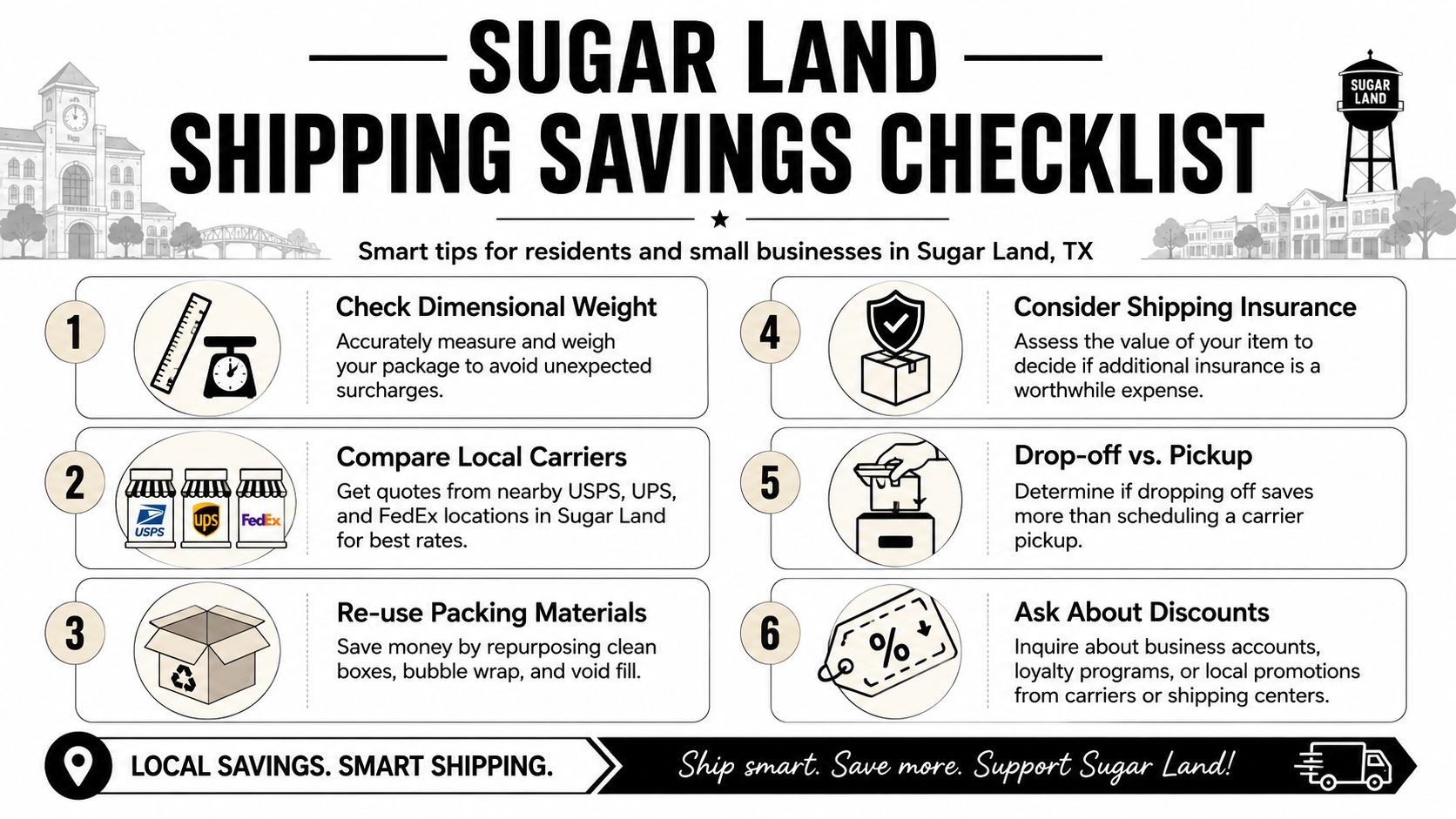
A better routine for local shippers
Use this before you send your next package:
- Measure the parcel before leaving home: Bring the weight and dimensions with you. That prevents counter surprises and helps you compare services accurately.
- Reuse clean materials when they still protect the item: A sturdy reused box can be perfectly fine if it fits well and doesn’t weaken the shipment.
- Bundle tasks into one trip: If you have returns, outgoing packages, copies, or mailbox errands, combining them saves time and keeps shipping from becoming a series of small interruptions.
- Ask whether insurance makes sense for that specific item: Not every shipment needs added coverage, but valuable or delicate items deserve a real conversation.
- Check whether drop-off or pickup is better for your workflow: Some shippers save more by controlling drop-off timing. Others save more by reducing labor and interruptions.
- Think beyond one package: If you ship regularly, standardize box sizes and service choices for your most common orders.
For business owners, there’s one more item that often gets overlooked. The Pitney Bowes shipping guidance recommends annual rate negotiations with UPS and FedEx representatives, and notes that this can potentially reduce costs by 10–15% per year. That’s not just for large operations. Small businesses can benefit too, especially once shipping becomes a regular part of the business.
A few local habits also help in day-to-day operations:
| Task | Best low-stress approach |
|---|---|
| Amazon and retail returns | Combine them into one errand instead of making separate trips |
| E-commerce orders | Keep two or three tested package sizes ready for your common products |
| Fragile gifts or specialty items | Let a packing expert build the shipment if replacement would be painful |
| Frequent deliveries | Consider a secure mailbox or package receiving solution |
That’s how Sugar Land shippers usually save the most. Not through one dramatic trick, but through consistent small decisions that remove waste from every shipment.
Frequently Asked Questions About Local Shipping
Smart shipping is a mix of three things. Pick the right carrier, keep the package tight and correctly packed, and use local expertise when the shipment has enough complexity to justify it.
Common questions from everyday shippers and small businesses
Is it cheaper to use my own box?
Often, yes. If your box is sturdy and sized closely to the item, using your own packaging can help you avoid paying for unnecessary space. But if the item is compact and heavy, a carrier flat-rate box may still be the better value.
Is buying a label online always cheaper than going to a local shipping center?
Not always. Online labels can look cheaper at first glance, but they don’t always account for packaging mistakes, dimensional pricing surprises, or poor service selection. A knowledgeable local shipper can sometimes save you more by preventing the wrong choice.
Do I need shipping insurance?
It depends on the item, not the habit. If the contents are costly, fragile, hard to replace, or tied to a deadline, insurance deserves a serious look. For inexpensive, easily replaced items, you may decide the extra cost isn’t necessary.
What’s the difference between parcel shipping and freight?
Parcel shipping handles the everyday boxes individuals send through USPS, UPS, and FedEx. Freight applies when shipments become too large, too heavy, or too numerous for standard parcel networks. Small businesses usually hit this threshold when they move from individual orders to palletized inventory or oversized equipment.
What’s the best local move if I ship often?
Standardize. Use repeat box sizes, save your common recipient information, know which services usually fit your products, and get help when a package falls outside your normal pattern. That turns shipping from a recurring headache into a manageable routine.
If you’re in Sugar Land and want a simpler way to compare carriers, pack items correctly, handle returns, print business materials, or set up a secure mailbox, Business Mail Boutique LLC gives you one local place to do it. They handle UPS, FedEx, USPS services, professional packing, returns, printing, mailbox rentals, notary support, and more, which makes them a practical stop for small businesses and busy residents who want fewer errands and fewer shipping mistakes.

Related posts

Custom Memorial Glasses Engraved in Three Hours in Sugar Land
When a customer needed eight personalized glasses for a memorial, Business Mail Boutique completed the engraving or...

Custom Martini Glass Engraving in Sugar Land, TX
Custom Logo Engraving on Martini Glasses in Sugar Land, Texas.
Business Mail Boutique recently completed a beautiful custom engravin...

Custom Engraved Wine Glasses for a Golf Club Event in Sugar Land, TX
Custom Engraved Wine Glasses for a Golf Club Event in Sugar Land.
Custom wine glass engraving in Sugar Land, TX at Business Mail Bouti...