
- Print Business Cards in Sugar Land – Same Day Service
- Copying Services
- Document Printing, Finishing & Lamination in Sugar Land
- Flyers
- Print Banner in Sugar Land | Same-Day Banner Printing Near Me
- Graphic Design
- Photo Printing
- Postcard Printing
- Document Printing
- EDDM Full Service Postcards
- FotoZoomer Large Format Printing


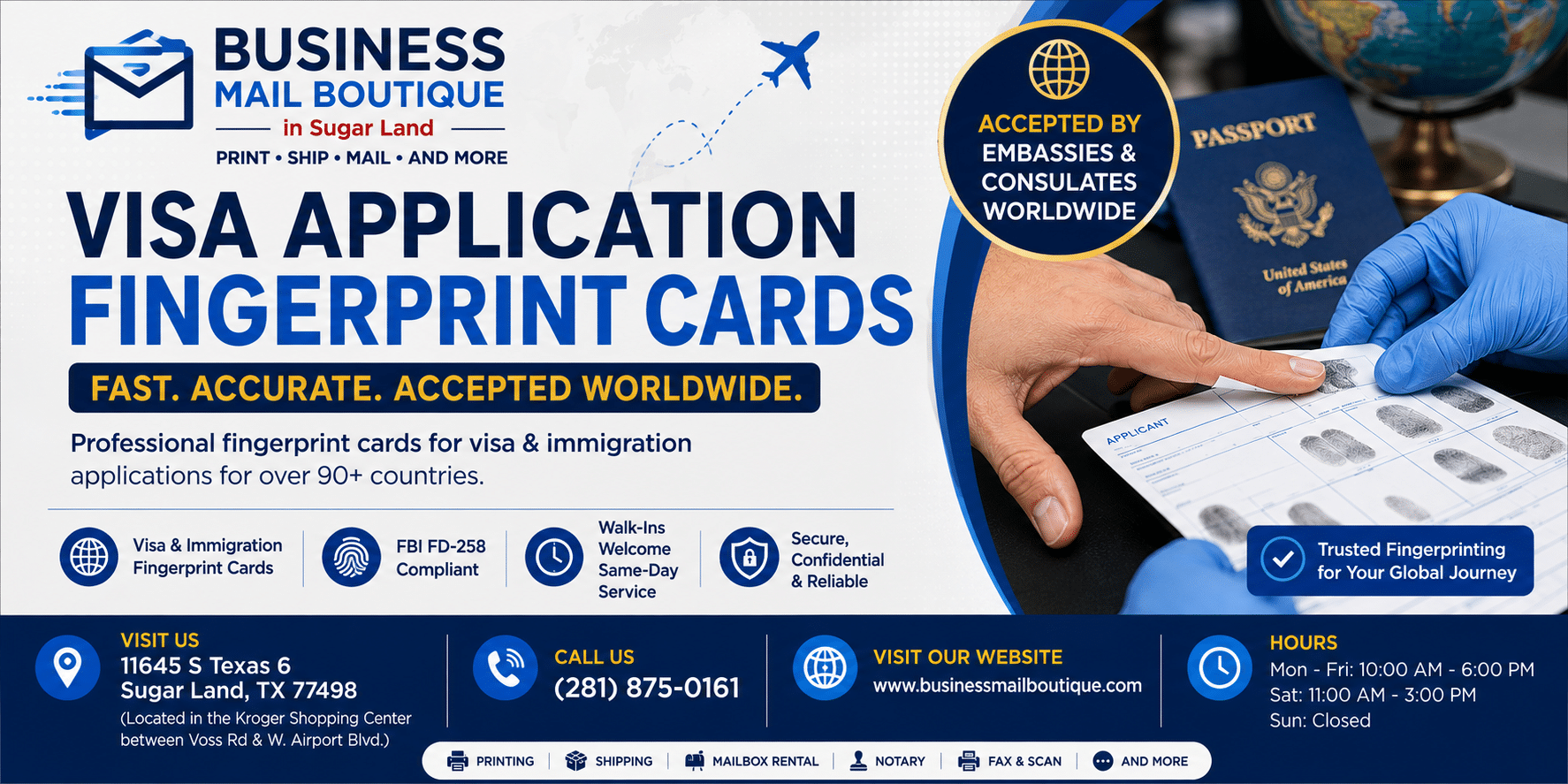
Visa Application Fingerprint Cards.
Learn everything about visa application fingerprint cards, from proper completion to submission tips for a smooth process.
Businessmailboutique
11645 S. Hwy 6
Sugar land, Texas 77498 United States (US)
Email: info@businessmailboutique.com
Route
You’ve been told to submit fingerprints for a visa or immigration application, but the instructions seem contradictory. One page tells you to attend a consular appointment for digital biometrics. Another mentions an FBI FD-258 card. A third suggests visiting a local fingerprinting provider, while the agency’s instructions may require you to mail an original card. Choosing the wrong process can lead to re-collection, delays, or rejection.
The practical answer is simple: digital consular biometrics and paper fingerprint cards are different workflows. The correct option depends on the agency, country, application type, and submission instructions. This guide separates those systems and explains how to prepare a visa application fingerprint card without the common errors that cause avoidable problems.
Table of Contents
- What Visa Application Fingerprint Cards Actually Are
- Why Paper Fingerprint Cards Still Matter in a Digital World
- How to Obtain and Complete Your Fingerprint Card
- Rolled Versus Plain Impressions Explained
- Avoiding Common Errors and Rejection Risks
- Submission Tips and Processing Timelines
- How Business Mail Boutique Simplifies Fingerprinting in Sugar Land
What Visa Application Fingerprint Cards Actually Are
A visa application fingerprint card is a standardized paper form used to capture fingerprints for identity verification and background checks. In U.S.-style workflows, the form is commonly the FBI FD-258, which records rolled impressions of each finger along with plain impressions and identifying information.
Consider a typical applicant preparing an immigration file. The consulate says fingerprints will be taken during an appointment, but the background-check instructions mention an FD-258. Those instructions may both be correct. The consular office may collect a digital photograph and electronic fingerprints, while a separate FBI, USCIS-related, licensing, or overseas background-check process may still require a physical card.
The card is therefore not a printed version of a digital visa appointment. It’s an evidence form that connects a person’s identifying details to a specific set of inked or digitally printed impressions.
The form and the appointment aren’t interchangeable
For U.S. visa processing, the Department of State describes biometrics as a digital photo plus electronic fingerprints collected through the visa process, rather than an inked live-scan at the consular stage. You can review the department’s explanation of U.S. visa border biometrics before assuming that a paper card is required.
A physical card may still be requested when:
- An agency specifically names FD-258 or an equivalent fingerprint card.
- An FBI background check requires a card-based submission.
- An immigration or regulatory workflow accepts or requests paper fingerprints.
- The applicant is outside a jurisdiction with compatible digital collection infrastructure.
- A foreign authority requires a complete ten-print set on an original card.
The safest approach is to identify the receiving agency first. A provider can capture excellent fingerprints, but it can’t decide whether a consulate, FBI channel, immigration authority, or licensing board will accept that format.
Practical rule: Never book fingerprinting based only on the word “visa.” Confirm whether the receiving office wants digital biometrics, a physical FD-258, or both.
Applicants handling broader immigration matters may also benefit from professional Golden Visa processing help, particularly when the fingerprint requirement is part of a larger residence or investment application. The fingerprint card should always be matched to the exact authority named in the application instructions.
Why Paper Fingerprint Cards Still Matter in a Digital World
Paper cards remain relevant because biometric systems haven’t replaced every administrative workflow. They’ve created parallel channels. Consulates and visa application centers can collect fingerprints electronically, while agencies conducting background checks or processing paper-based submissions may still need an original card that travels with the applicant’s file.
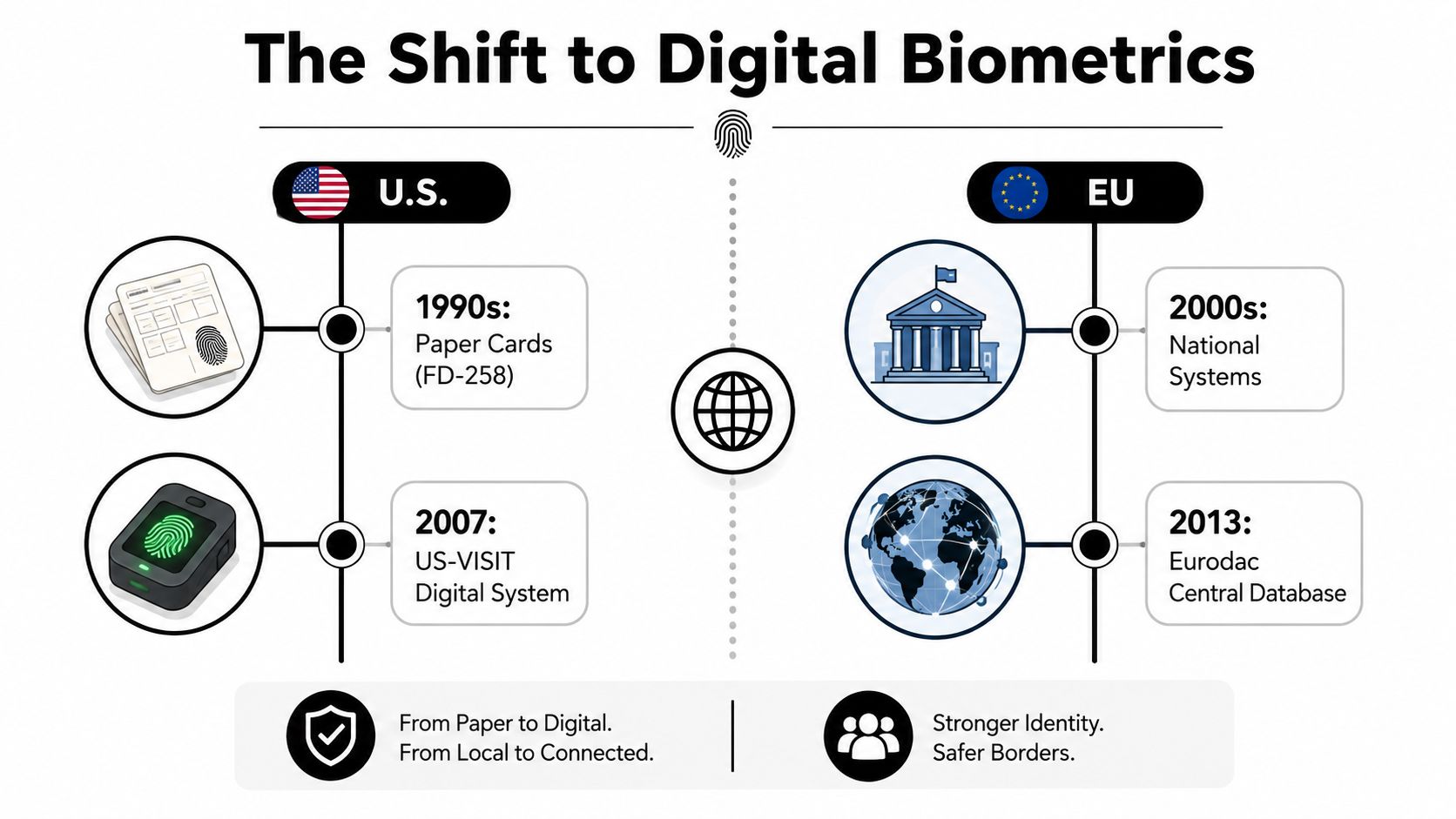
The U.S. shows how that transition developed. In October 2004, all U.S. visa-issuing posts began collecting scanned fingerprints from nonimmigrant visa applicants. In June 2005, the Homeland Security Council decided that the process should move from two fingerprints to ten. By late August 2008, the Department of State had published a final rule requiring most nonimmigrant visa applicants to provide ten fingerprints, subject to limited exceptions. These milestones are documented in this history of U.S. visa fingerprint collection.
Scale makes standardization necessary
The European Union’s Visa Information System illustrates why a consistent ten-print format matters. The system recorded about 52 million visa applications in 2021, 47 million in 2022, and 59 million in 2023, according to the eu-LISA Visa Information System factsheet. The same factsheet reports almost 211 million annual operations by the end of the reporting period, with about 65 million visa applications and 57 million facial images stored in 2023.
The U.S. infrastructure operates at comparable institutional scale. The factsheet states that DHS IDENT holds more than 320 million unique identities and processes more than 400,000 biometric transactions per day. Those figures explain why agencies insist on standardized forms, complete fields, and legible impressions. A damaged or ambiguous card creates a matching problem inside a system designed to process structured records.
Paper cards also remain relevant because administrative systems change at different speeds. USCIS states that fingerprint cards submitted with applications after March 29, 1998 are rejected in favor of appointments at authorized sites, as described in the historical reference above. That doesn’t mean every immigration-related fingerprint workflow is digital. It means applicants must follow the instructions for the particular benefit or check instead of treating all biometrics as one process.
How to Obtain and Complete Your Fingerprint Card
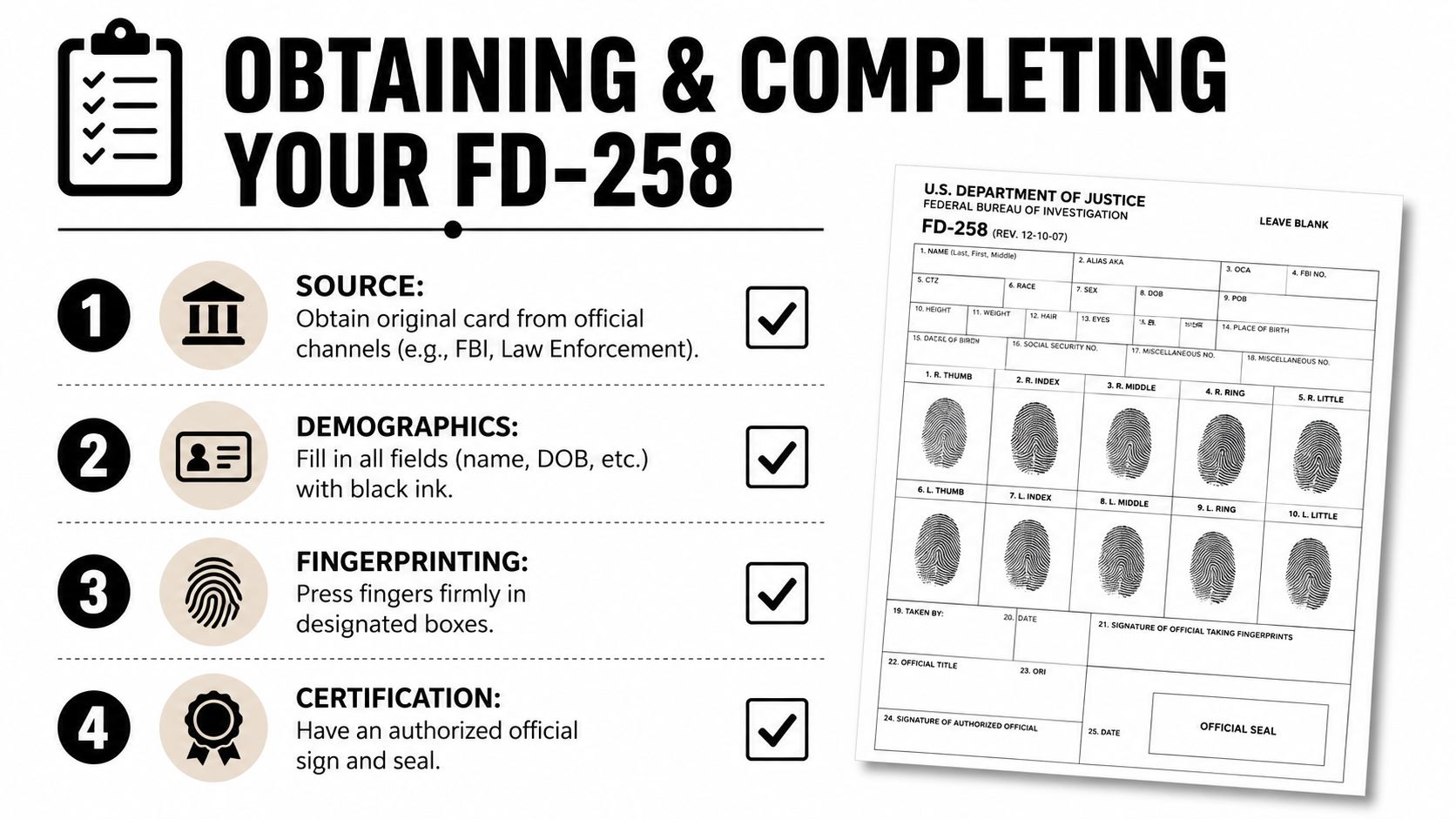
Start with the receiving agency’s instructions. If they require an FD-258, obtain an original card, not a photocopy. California’s Department of Justice states that California residents generally use Live Scan, while applicants outside California must mail an original FD-258 hard card. Its guidance also explains that hard-card processing can take 2–4 weeks, compared with 2–3 days for Live Scan in that specific workflow. Review the California DOJ visa and immigration fingerprint guidance before choosing a collection method.
Follow the card from source to signature
- Get the correct form. Request the card through the agency, an authorized fingerprint provider, or another source specifically accepted by the receiving authority. Check whether the agency has issued its own version or requires particular routing information.
- Complete identity fields carefully. Enter your name, date of birth, address, citizenship or identifying information, and other requested fields exactly as they appear on your passport and application. Use clear black ink where handwritten entries are permitted. Don’t leave required fields blank, and don’t guess at agency codes.
- Capture the complete set. A standard ten-print submission generally includes rolled impressions for all ten fingers and plain impressions. The technician should inspect every box before you leave. A missing thumb, partial roll, smudge, or impression placed in the wrong box can require another appointment.
- Confirm certification. The authorized collector should complete the certification area and sign where required. Keep the card flat and protected after collection. Don’t fold it, laminate it, trim it, or replace it with a scan unless the receiving agency expressly permits that format.
The card is the record the agency will evaluate. A technically correct fingerprint may still fail if demographic information is incomplete or the form doesn’t match the authority’s specifications.
For applicants coordinating fingerprints with a wider employment or immigration file, a guide to the 2026 UAE work visa process can help place the biometric step in the broader application sequence. In Sugar Land, applicants can also review FD-258 fingerprint card service information before arranging collection.
Before mailing the card, compare the printed details against your passport and application one more time. A clean card with mismatched identity data is still a defective submission.
Rolled Versus Plain Impressions Explained
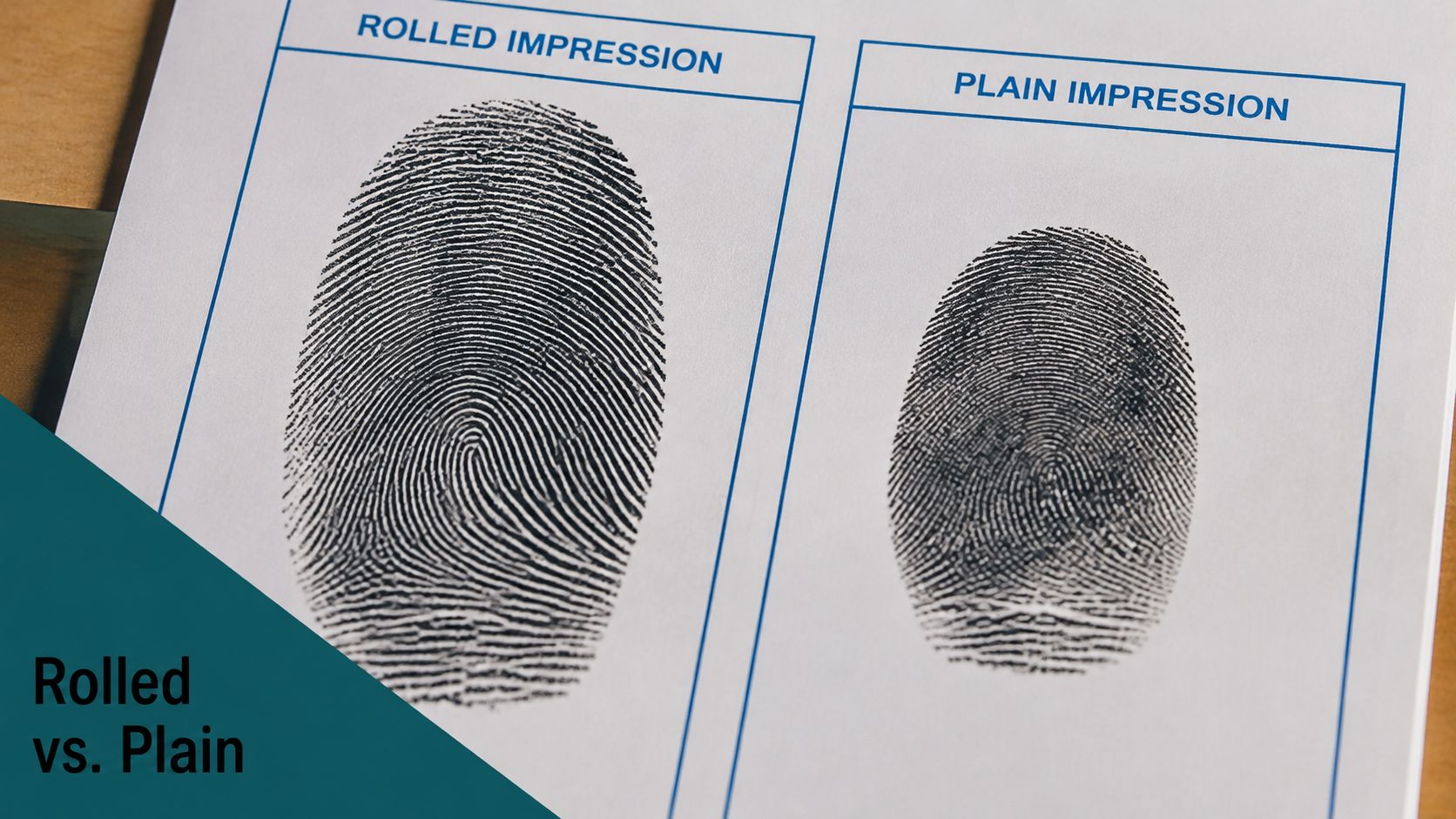
Rolled and plain impressions serve different purposes, and a complete FD-258 typically uses both.
A rolled impression records the individual fingerprint pattern from one side of the nail to the other. The finger moves across the designated space so the card captures more of the ridge detail. Think of it as turning a small wheel across the ink or scanner surface, rather than pressing the fingertip straight down.
A plain impression, also called a flat or simultaneous impression, is made without rolling. The four fingers of one hand are pressed together in the assigned area, followed by the four fingers of the other hand. The thumbs are usually recorded separately. This flat impression helps the examiner verify that the rolled prints belong to the correct fingers and provides a quick view of the hand grouping.
What a technician checks
| Impression type | How it’s captured | What to inspect |
|---|---|---|
| Rolled | Each finger moves from nail edge to nail edge in its assigned space | Full ridge detail, correct finger, no gaps or heavy smearing |
| Plain | Fingers or thumbs are pressed flat without rotation | Correct grouping, clear contact, complete coverage |
| Demographic section | Applicant or technician enters identifying details | Exact spelling, matching date of birth, complete required fields |
A common mistake is assuming that ten rolled fingerprints alone make the card complete. They may not. Government instructions for card-based submissions typically call for rolled impressions of all ten fingers plus simultaneous plain impressions, so the applicant should inspect both areas before leaving.
The technician should also avoid excessive pressure. Too little contact creates faint or incomplete patterns. Too much pressure spreads the ridges and produces a dark, blurred impression. Dry or damaged skin may need careful preparation, but lotions or oils can also reduce clarity if applied immediately before collection.
Applicants seeking a digital method can review digital ink roll fingerprinting in Sugar Land and then confirm whether the resulting card meets the receiving agency’s requirements. The collection technology matters less than the final format, original-card status, and acceptance rules.
Avoiding Common Errors and Rejection Risks
The most expensive fingerprinting mistake is using a provider that isn’t approved for the agency receiving the card. The U.S. Embassy in India warns applicants not to use outside vendors for USCIS-requested fingerprints abroad because those vendors aren’t approved and may cause delays or rejection. Read the embassy’s fingerprinting and criminal background-check instructions before arranging collection outside the United States.
California DOJ provides another clear example. It says the agency can accept only an original FD-258, not a copy, and instructs applicants to request the card directly when needed. That requirement makes a “digital copy” offer a warning sign unless the receiving authority has specifically authorized electronic submission.
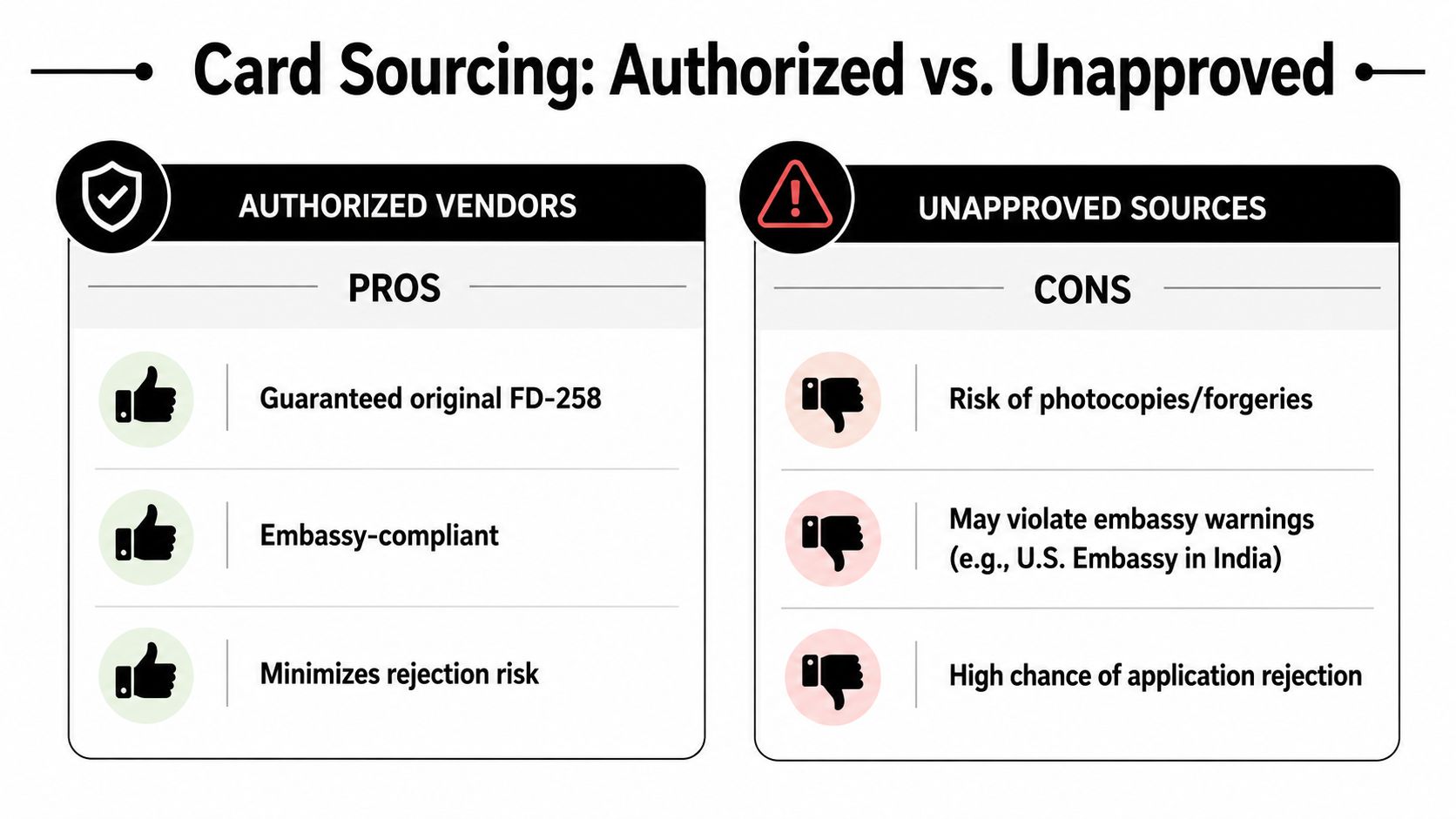
Red flags before collection
- Photocopy presented as an original: A copied card may not satisfy an original-document requirement.
- No agency questions: A provider should ask which authority will receive the card and what form is required.
- Unclear certification: The technician can’t explain who will sign, certify, or complete the collector section.
- Missing plain impressions: The provider plans to capture only rolled prints.
- No quality review: The technician doesn’t inspect every finger, field, and signature before returning the card.
- Unapproved overseas collection: The provider ignores embassy or immigration instructions about authorized locations.
- Generic digital-file promise: The vendor offers a scan without confirming whether the agency accepts electronic fingerprints.
A vendor can be experienced and still be wrong for your application. Authorization is application-specific, not a general label that transfers from one agency to another.
Before you pay, show the provider the agency instruction page or form request. Confirm the card version, whether ink or digital capture is allowed, how the original will be handled, and whether the completed card will be returned to you for submission. That short verification can prevent a second collection.
Submission Tips and Processing Timelines
Treat the completed card as a fragile original document. Keep it flat in a rigid mailer, separate it from liquids and loose objects, and avoid folding or stapling it. Place a copy of the completed card in your private records if permitted, but mail the original only when the receiving authority requests it.
Use the exact mailing address and cover sheet specified by the agency. A tracking service can show delivery, but delivery confirmation doesn’t prove that the agency accepted the fingerprints. If the instructions provide a case number, applicant identifier, or receipt procedure, include it exactly as directed and retain the tracking record.
Build the schedule around the slowest step
California DOJ’s published comparison is useful for planning: its hard-card processing can take 2–4 weeks, while Live Scan can take 2–3 days in that jurisdiction. Those timelines aren’t universal, so don’t transfer them automatically to an embassy, FBI submission, or immigration authority. They do demonstrate why applicants should begin with the receiving agency’s processing estimate rather than waiting until an interview or filing deadline is close.
A practical submission sequence is:
- Confirm the required form and collection method.
- Obtain the original card and complete identity fields.
- Have all impressions reviewed before leaving.
- Photograph or scan the card for personal records only if allowed.
- Package the original flat and mail it using a trackable service.
- Confirm receipt through the agency’s stated channel.
- Monitor requests for re-collection or additional documentation.
Some visa systems reduce repeat appointments through reuse rules. For example, China’s visa rules exempt certain applicants whose fingerprints were already collected at the same embassy, consulate, or service center with the same passport within the past five years, as described in the FBI fingerprint instructions and forms. That exemption is limited, so verify whether your location, passport, and application qualify.
For applicants comparing paper and electronic collection options, Live Scan and FBI FD-258 fingerprint services can clarify which path may fit a particular background-check workflow. The final decision still belongs to the receiving agency.
How Business Mail Boutique Simplifies Fingerprinting in Sugar Land
Applicants in Sugar Land often need more than a fingerprint capture. They may also need a correctly printed card, identity documents, mailing support, or a related notary and document service. Business Mail Boutique LLC provides fingerprinting through authorized PrintScan services, including support for FD-258 and FD-1164 cards, with digital and ink collection options for visa, immigration, regulatory, and background-check workflows.
The location at 11645 S. Hwy 6 offers walk-in availability, though applicants should bring the agency’s instructions and confirm whether an appointment is advisable. Staff can help prepare the card, review the impressions for obvious defects, and keep the workflow aligned with the form the applicant needs.
The central lesson remains the same: a consular digital biometrics appointment isn’t automatically a paper-card submission, and an FD-258 isn’t automatically accepted by every agency. Confirm the authority, use the required original form, capture all required impressions, and protect the card until submission.
Business Mail Boutique LLC offers FD-258 and related fingerprint card services, digital and ink fingerprinting, printing, packing, shipping, and document support in Sugar Land. Bring your agency instructions to Business Mail Boutique LLC so the team can help you prepare the correct card and submit it with fewer avoidable errors.

Related posts

Custom Memorial Glasses Engraved in Three Hours in Sugar Land
When a customer needed eight personalized glasses for a memorial, Business Mail Boutique completed the engraving or...

Custom Martini Glass Engraving in Sugar Land, TX
Custom Logo Engraving on Martini Glasses in Sugar Land, Texas.
Business Mail Boutique recently completed a beautiful custom engravin...

Custom Engraved Wine Glasses for a Golf Club Event in Sugar Land, TX
Custom Engraved Wine Glasses for a Golf Club Event in Sugar Land.
Custom wine glass engraving in Sugar Land, TX at Business Mail Bouti...